
Guide
What Happens When We Come Out for a Blue Springs Garage Door
In Blue Springs, MO, a garage door service call checks spring tension, track alignment, and opener wiring shaped by 1960s-70s housing stock and cold winters.
Local detail
What Is Going On
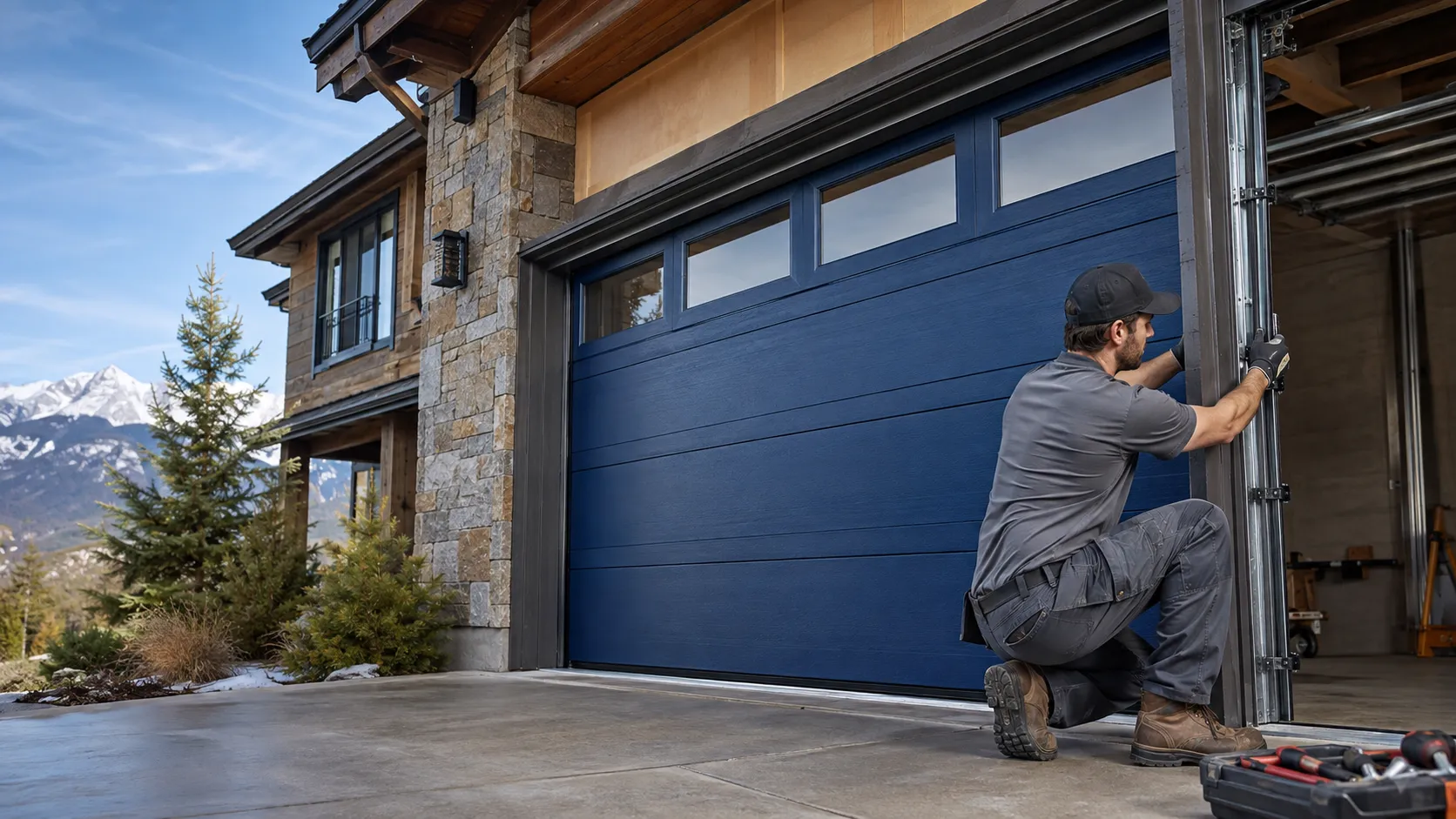
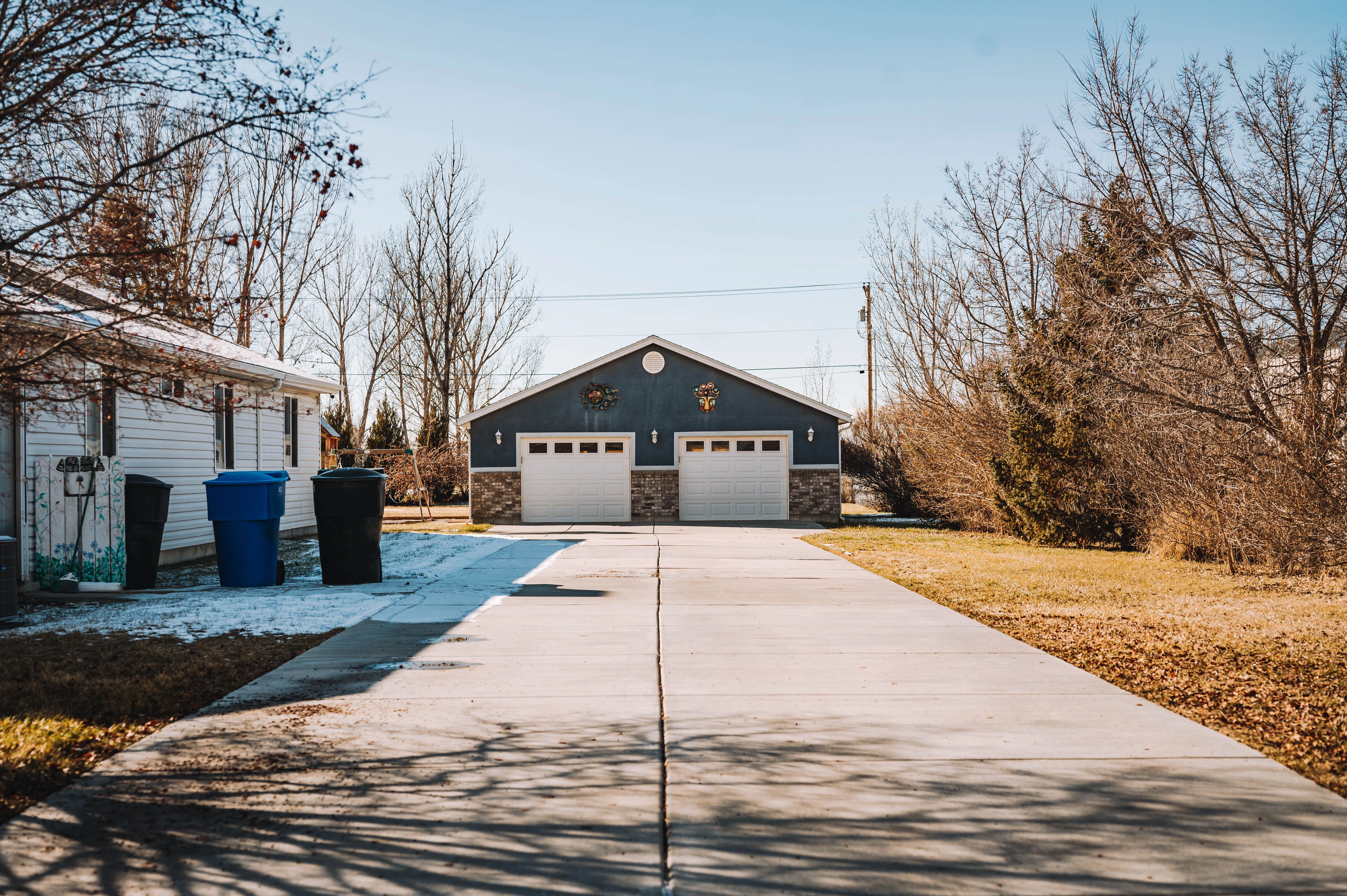
Most of the houses we get called to in Blue Springs went up between 1951 and 2005, with the bulk clustered in the 1960s and 70s, so a lot of the original torsion hardware is nearing 50 years old. When a homeowner calls about a door that groans, drops fast, or won't open past a foot, the first thing we're doing is placing that door in its era. A spring wound in 1968 doesn't fail the same way a 2015 spring does - the steel has fatigued slower but the end bearing plates and cones are often the original stamped parts, not the galvanized replacements sold today.
A service call starts with us checking the spring's wind, the cable condition, and whether the track is the older narrow-gauge style common on doors from that build window. We're not guessing at a generic 'garage door problem.' We're matching what's in front of us to what a house of that vintage in this area typically carries, then deciding whether a part swap fixes it or whether the whole assembly has outlived its parts supply.
The area
What Changes With the Season
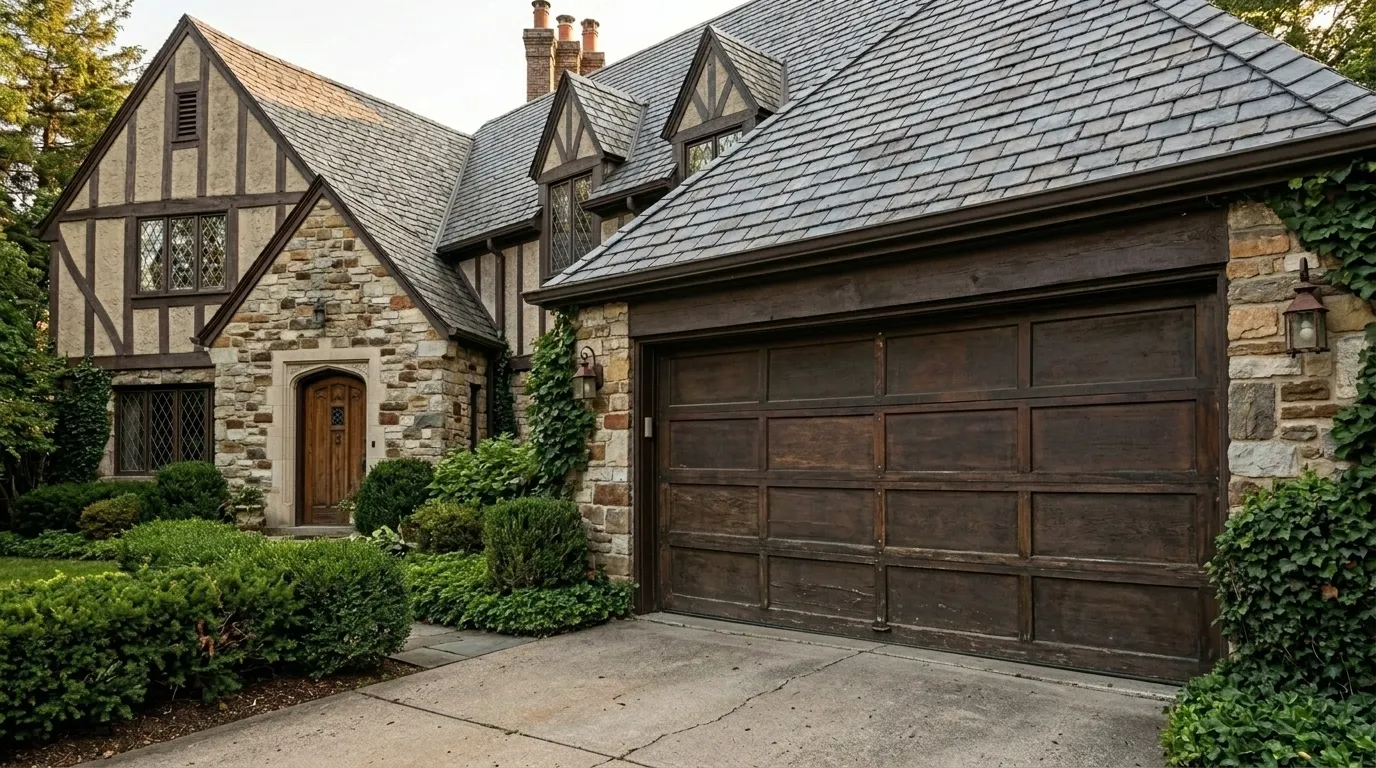
Blue Springs sits in a cold moderate climate band, which means the steel torsion spring on your door is working through wider temperature swings each winter than a door in a milder zone. Cold steel loses a measurable amount of lift, so a spring that felt balanced in September can feel underpowered by January - not because it broke, but because it's cold. Lithium grease on rollers and hinges thickens in the cold too, which is why a door that ran quiet all summer starts grinding once temperatures drop.
We see the inverse in spring: as the slab warms and moisture works into wood-trim doors or old wood jambs, alignment can shift enough that the door binds on one side. None of this means the door is failing. It means the hardware is responding to the swing, and a service call in December is going to turn up different symptoms than the same door checked in July, even with nothing mechanically wrong in between.
What we find
How Local Conditions Play In
Across the 22 named areas in this service territory, the housing stock skews the same way: 1960s and 70s builds with the same era of opener and spring. That matters because cold-climate stress and older hardware compound each other. A torsion spring wound decades ago has already lost some tensile margin from age; add a cold snap and the drop in lift becomes noticeable instead of theoretical.
Doors from this build era are also more likely to run on steel track with fewer adjustment points than newer track, so when a cold-stiffened door binds, there's less slack in the system to absorb it before something - a roller, a hinge, a cable - takes the load wrong. On a service call, we're checking both halves of that equation: is this an age problem, a cold problem, or both stacking on top of each other. Most of the time here, it's both, which is a big part of why the same repair on an older door can take more parts than the same fix on a house built in the last fifteen years.
How we work
What to Check
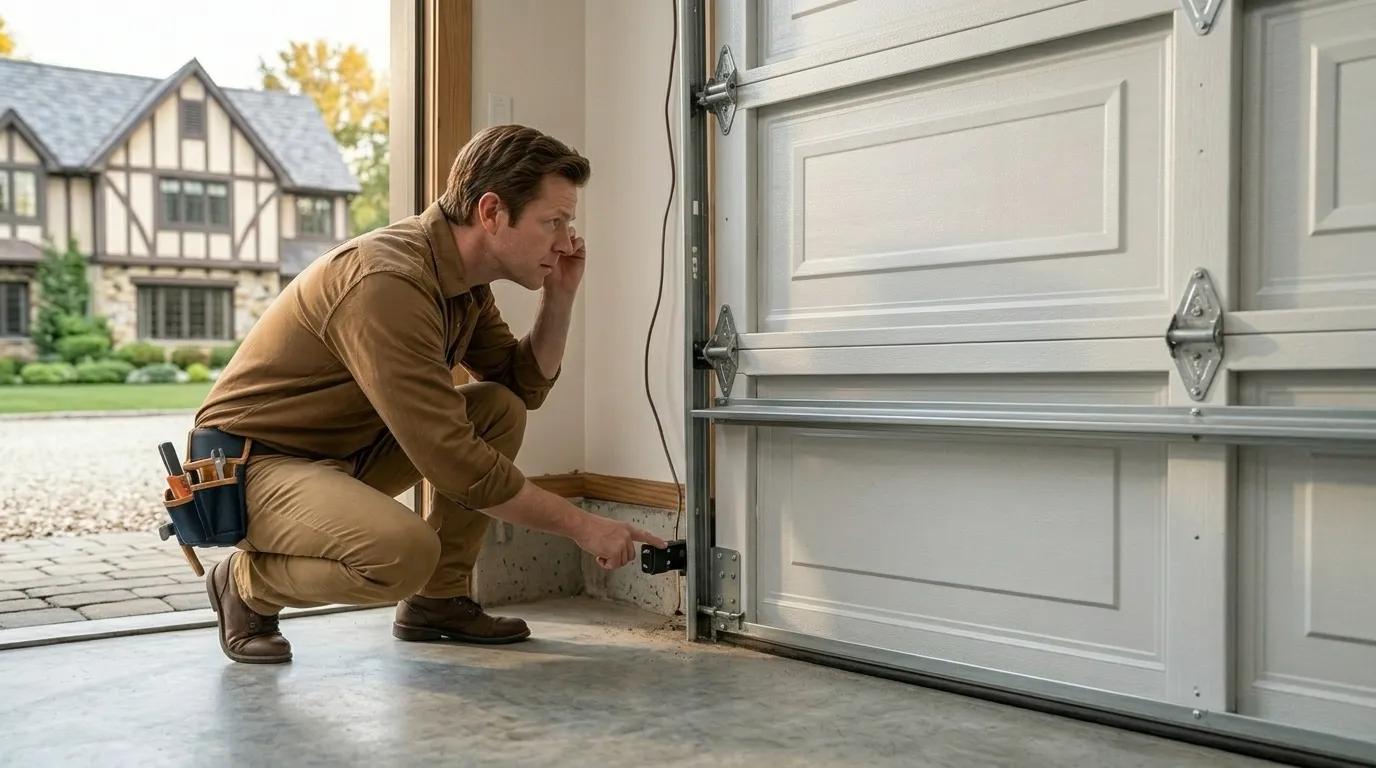
Before you call, a few things worth looking at yourself: does the door drop unevenly, with one side lower than the other (uneven spring tension or a bent track); does the opener strain and reverse partway up (weak spring, motor compensating); is there visible rust or flaking on the spring coils (age plus moisture exposure); does the door bind at roughly the same spot every time (track misalignment, often worse after a cold week). Write down what you notice and when it happens - first thing on a cold morning is different information than mid-afternoon in summer.
With 35,651 owner-occupied houses in the service area against a median household income of $71,881, most owners here are paying for a repair out of pocket rather than folding it into a remodel budget, so we'll tell you plainly if a repair is the cheaper move or if the door's age means you're better off replacing the assembly instead of chasing parts for hardware nobody stocks anymore. That's not always a fun answer, but it's the honest one.
Questions
Common questions
Why does my garage door struggle more in winter than summer?
Blue Springs sits in a cold moderate climate band, and steel torsion springs lose lift as temperatures drop. A spring that balanced the door fine in warm months can feel underpowered once cold sets in, even with no new damage. Grease thickening on rollers adds to the drag. It's a seasonal shift, not necessarily a broken part.
My house was built in the 1970s - does that matter for a repair?
Yes. Housing in this service area is mostly built between 1951 and 2005, with a lot concentrated in the 1960s and 70s. Doors from that window often run original torsion hardware and narrower steel track, which behave differently than newer setups and sometimes need parts that aren't stocked the way current hardware is.
Is it ever better to replace instead of repair?
Sometimes. If the spring, track, and cables are all original to a 1960s or 70s build and one part fails, the rest often aren't far behind. We'll tell you straight if patching one component means you're back out here in a year for the next one, rather than push a repair that isn't the better value.
Ready when you are
Need a garage door sorted in Blue Springs?
Blue Springs Garage Door Pros repairs and installs garage doors, springs and openers in Blue Springs, MO and the surrounding area.