
Guide
Why Your Garage Door Lets the Cold In
Blue Springs homes built mostly in the 1960s-70s feel cold-band draughts at the garage door first. Here's what that housing stock means for seals this season.
Local detail
What Is Going On
Most of the garage doors we look at in Blue Springs sit in houses built between 1951 and 2005, with the bulk of that stock going up in the 1960s and 70s across the area's older neighborhoods. That median build year of 1974 matters more than people think. A door and frame from that era were built to a lower bar for sealing than anything sold today, and forty-plus years of freeze-thaw cycles have usually warped the jamb enough that the factory seal never sat flush to begin with.
What you feel as a draught along the bottom or sides isn't usually a broken part - it's a gap that's been growing slowly since the house was framed. On the newer end of that range, from the 80s and 90s builds, the seals themselves are just old vinyl, cracked and shrunk, not the frame. Different problem, same result: cold air finds the door before it finds anything else in the house.
The area
What Changes With the Season
Blue Springs sits in a cold-moderate climate band, which means the swing that matters isn't a single hard freeze but the repeated cycle of cold nights and milder days through fall and winter. That cycling is what wrecks a weather seal. Vinyl and rubber contract in the cold, then relax again when temperatures climb, and over a season that stretching fatigues the material faster than steady cold ever would.
You'll usually notice it first as a whistle or a cold line along the bottom panel on the coldest mornings, easing off by afternoon. It's tempting to write that off as normal winter noise. It's actually the seal telling you it's already past flexible and heading toward brittle, which is the point where it stops doing its job at all, in any weather.
What we find
How Local Conditions Play In
Because so much of the housing here dates to the 1960s and 70s, a lot of these garages share the same builder-grade jamb detail - a wood frame with minimal flashing, never designed around a rubber gasket the way a modern steel jamb is. On those doors, a new bottom seal alone often doesn't fix the draught, because the gap is at the side jambs, not the threshold. We see this pattern across the older sections of town more than in anything built after the 1980s, where the framing tolerances were tighter to start with.
If your house falls into that older band, the fix usually needs to address the jamb fit, not just swap a seal and call it done. That's a bigger job, and it's worth knowing that going in rather than paying for a seal twice.
How we work
What to Check
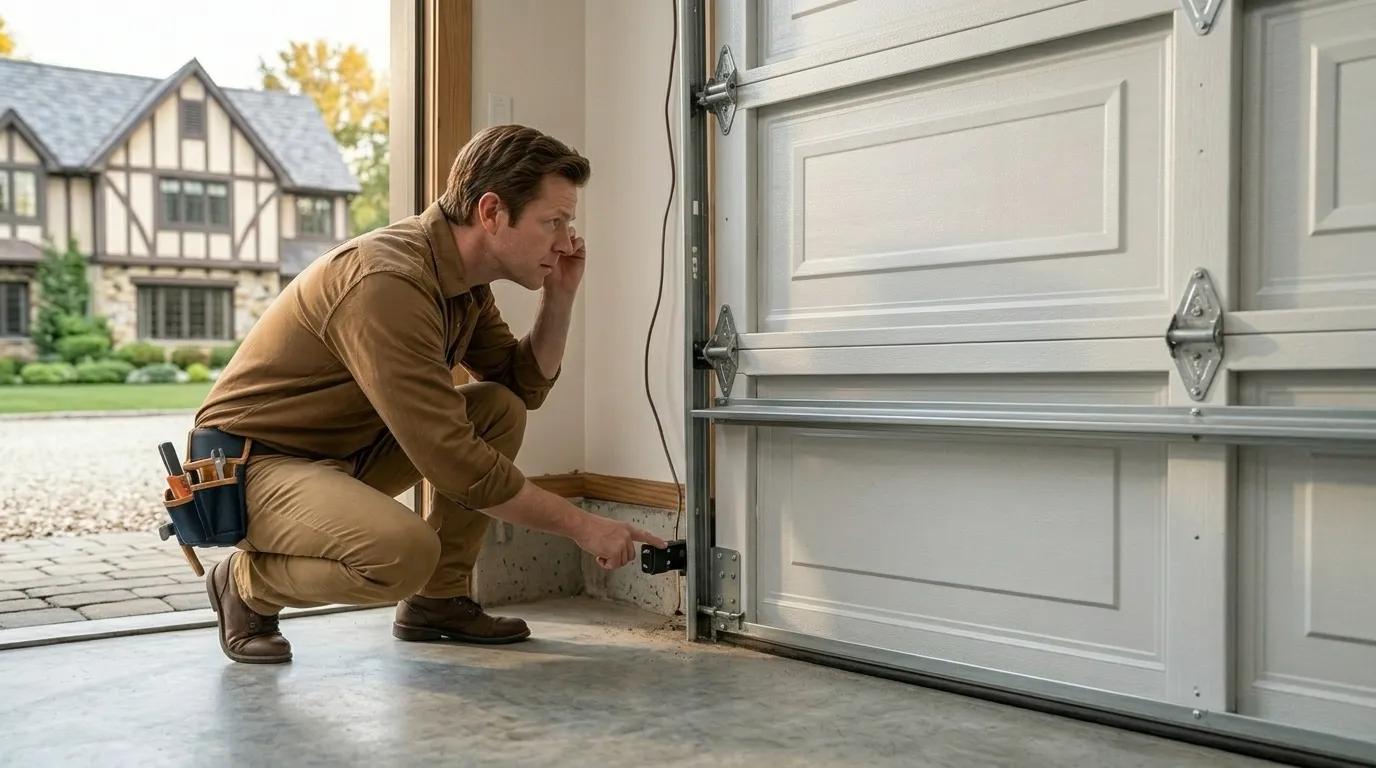
Start at the bottom seal - if it's flat on one side and rounded on the other, it's compressed past useful life. Then run a hand along both side jambs on a cold morning; if you feel air where the door meets the frame rather than at the seal itself, the issue is the fit of the frame, not the rubber.
On homes from the 1960s and 70s stock common here, check whether the jamb has twisted - a level held against it will show a gap a seal can't fill. We won't sell you a seal replacement if the real problem is a warped jamb; that's a repair, not a maintenance item, and it's worth saying plainly rather than billing you twice for the same draught.
Questions
Common questions
Why does my garage door only whistle on the coldest mornings?
That's the seal cycling between cold-stiff and warmer-flexible through the day, which is typical in our cold-moderate climate band. As the material fatigues over a season it whistles more often and for longer, which is usually the sign it needs replacing before it fails outright.
Is a new bottom seal enough to stop the draught?
Depends on the house. If your garage was built in the 1960s or 70s, the gap is often at the side jambs, not the threshold, so a new bottom seal alone may not fix it. We check the jamb fit before recommending just a seal swap.
How old does a seal usually get before it needs replacing?
We don't have a fixed lifespan figure to give you, but flat spots, cracking, or a seal that's lost its round shape are the signs to watch for regardless of age.
Ready when you are
Need a garage door sorted in Blue Springs?
Blue Springs Garage Door Pros repairs and installs garage doors, springs and openers in Blue Springs, MO and the surrounding area.