
Guide
When the Power Goes Out, What Happens to Your Opener
Blue Springs homes built between 1951 and 2005 carry openers from several eras. Here's how winter power cuts affect them and what to check before you call.
Local detail
What Is Going On
Most houses in Blue Springs went up between 1951 and 2005, with the bulk of the stock dating to the 1960s and 70s across the area's 22 named neighborhoods. That spread matters more than people think when the power drops. A house built in 1968 likely has had at least one or two openers since, and depending on when that last swap happened, you could have a unit with no battery backup at all, one with a battery that's been sitting unused for years, or a newer model that switches over without you noticing. The failure mode is different in each case.
An opener with a dead or missing backup battery just stops - the door sits wherever it was when the lights went out, and if that's halfway up, you've got a gap in the wall until power returns or someone pulls the manual release. Homes on the older end of that 1951-2005 range are more likely to be running an opener that predates battery backup as a standard feature, since those became common in the mid-2000s. That's not a flaw in the house - it's just the math of when things get replaced.
The area
What Changes With the Season
Blue Springs sits in a cold-moderate climate band, which means winter brings the kind of weather that knocks out power for reasons that have nothing to do with your garage: ice on lines, wind, grid strain during a cold snap. That's exactly when you don't want to find out your opener has no backup power, because a stuck-closed door in freezing weather is worse than an inconvenience - it's a door you can't get open without going out to the release cord in the cold, or a car trapped inside during an outage that runs longer than expected.
The seasonal pattern here is straightforward: outages cluster in the colder months, and that's also when people are least willing to stand in the driveway fighting with a manual release mechanism they haven't touched in years. If your opener doesn't have a battery backup and you live in one of the older sections of town, winter is when that gap actually costs you something.
What we find
How Local Conditions Play In
With 35,651 owner-occupied houses across the service area and a median household income of $71,881, most of these homes are owned and maintained long-term rather than flipped, which means an opener installed decades ago often just keeps running until it fails outright rather than getting swapped out on a schedule. That's not a criticism - it's a reasonable way to manage a house.
But it means the opener population here skews older than you'd expect for a market this size, and older units are less likely to have the battery backup and surge protection that newer ones ship with standard. Cold-moderate winters add a second layer: cold makes lubricant stiffen and metal contract slightly, which is a separate issue from power loss but tends to show up in the same season, so a homeowner dealing with a power cut might also be dealing with a door that's already moving stiffer than usual before the outage even hits.
How we work
What to Check
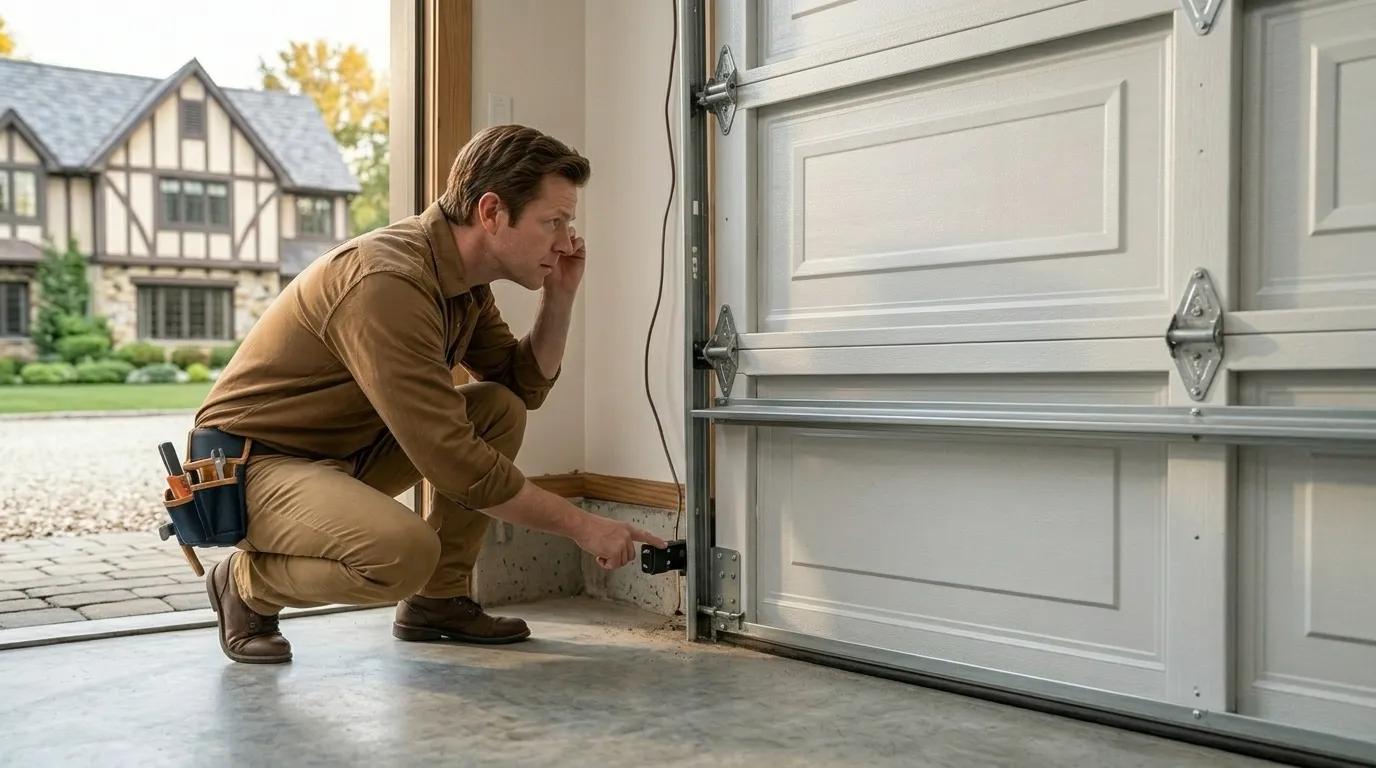
First, find out if your opener has a battery backup at all - look for a small compartment near the motor unit with a battery icon. If it's not there, you don't have one, and that's worth knowing before winter rather than during an outage. Second, if you do have a backup battery, check when it was last replaced; these batteries typically last a few years and won't announce their own failure until you need them.
Third, locate your manual release cord now, not during a blackout, and make sure it moves freely - on some of the older 1960s and 70s installs in this area, that mechanism hasn't been touched since the house was built and can stick. One honest limitation: we can tell you whether your existing opener supports a battery backup retrofit, but on some of the oldest units in town the drive mechanism itself is outdated enough that a backup battery isn't worth adding - replacement makes more sense than patching an opener that age.
Questions
Common questions
Does my garage door opener have a battery backup?
Check the opener unit on the ceiling of your garage for a small compartment, usually near the motor, with a battery symbol on it. If you don't see one, your opener likely doesn't have backup power, which is common on older installs still running in Blue Springs' 1960s and 70s housing stock.
Can I open my garage door manually during a power cut?
Yes, every opener has a manual release cord, usually a red handle hanging near the motor unit. Pull it to disconnect the door from the opener, then lift by hand. Test this before an outage happens, since older release mechanisms can stick if they haven't been used in years.
Is it worth adding a battery backup to an older opener?
Sometimes. Newer openers often support a backup battery retrofit. On some of the oldest units still running in this area's older housing, the drive system itself is outdated enough that replacement makes more sense than adding a battery to a unit near the end of its life.
Ready when you are
Need a garage door sorted in Blue Springs?
Blue Springs Garage Door Pros repairs and installs garage doors, springs and openers in Blue Springs, MO and the surrounding area.