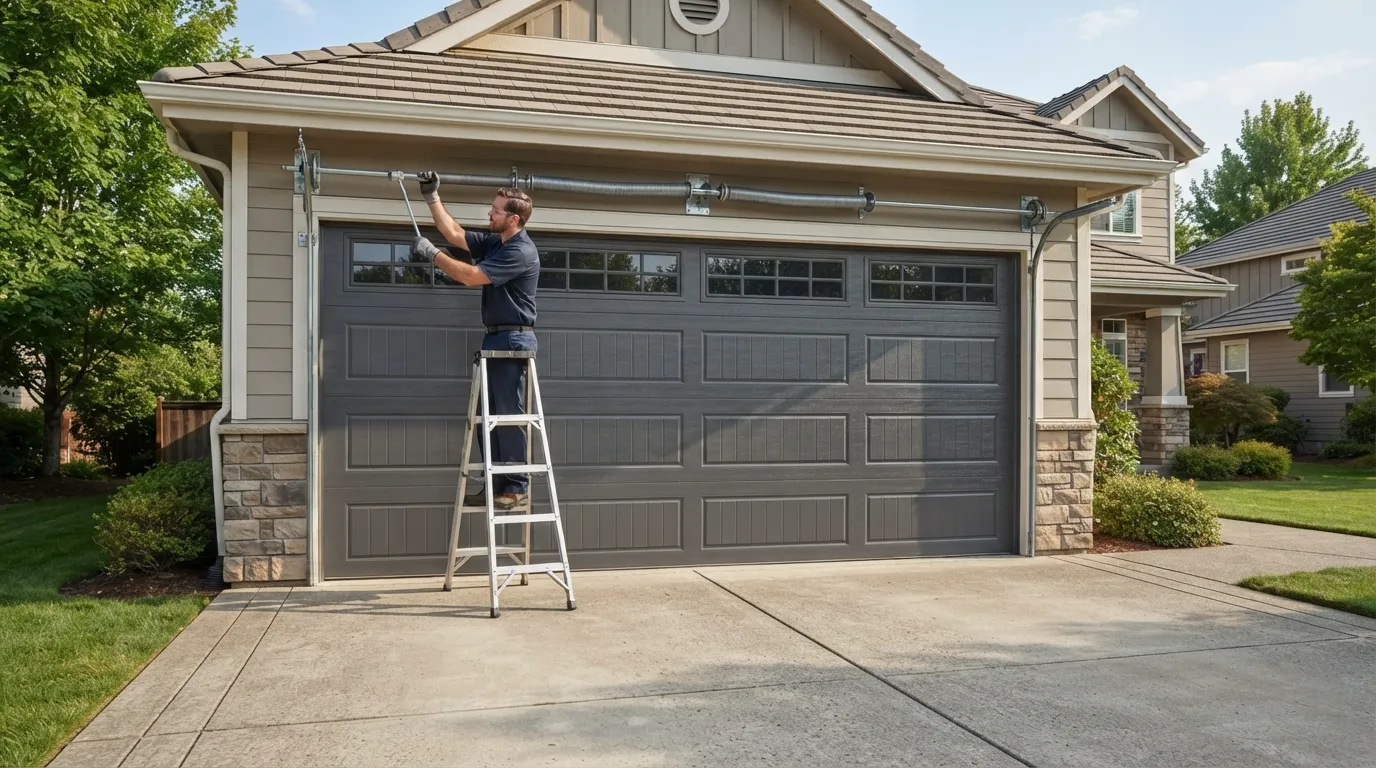
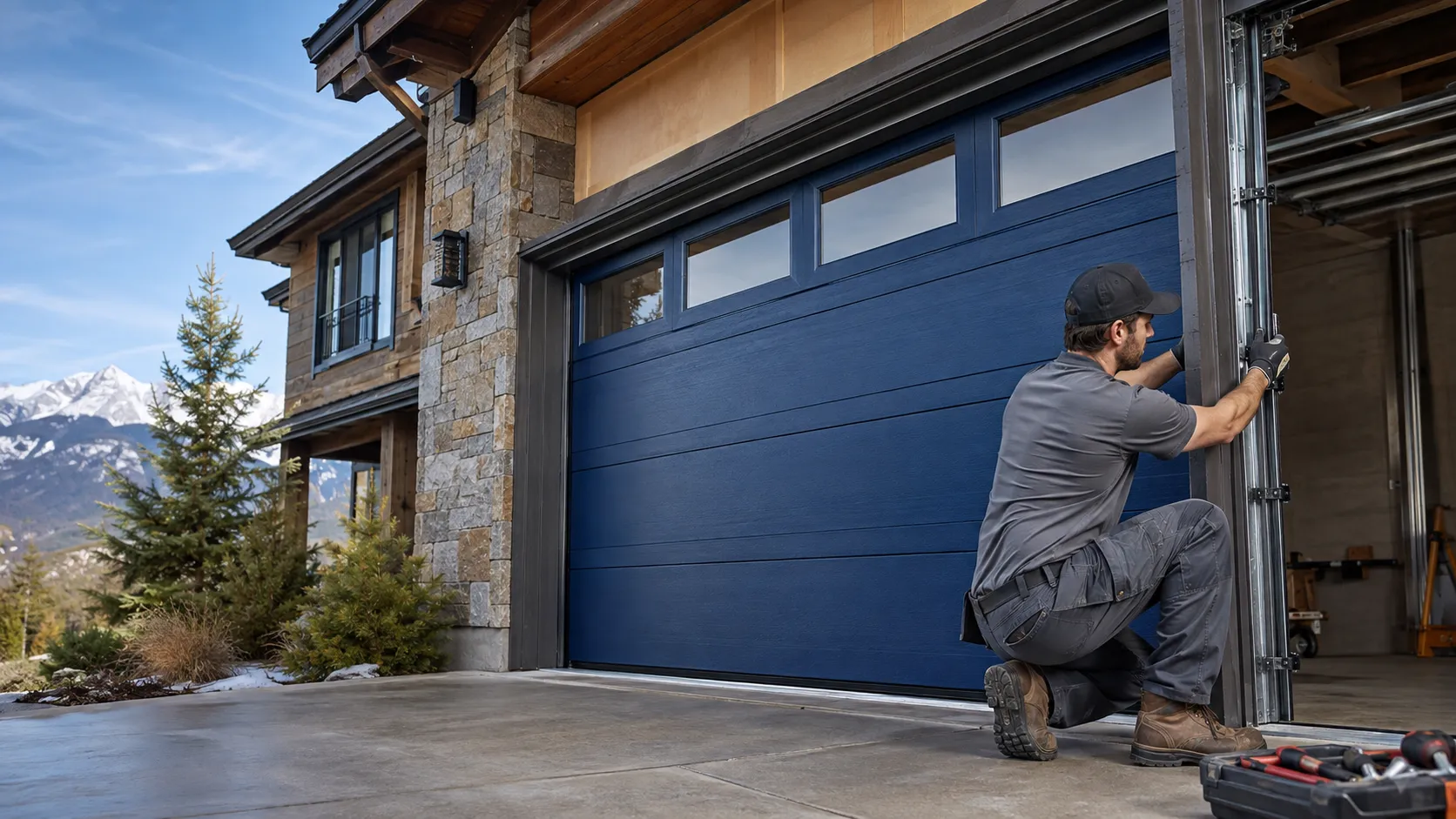
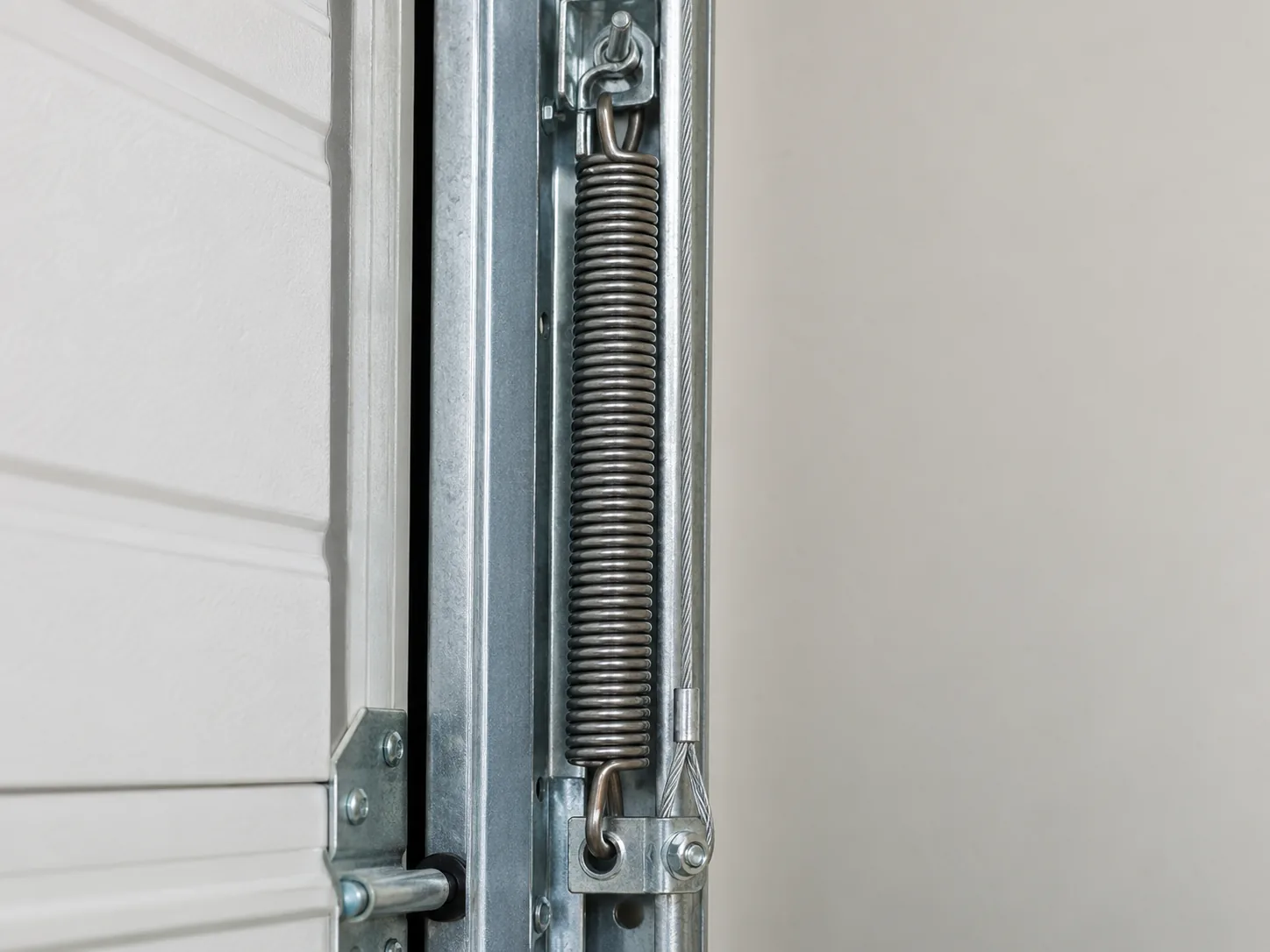
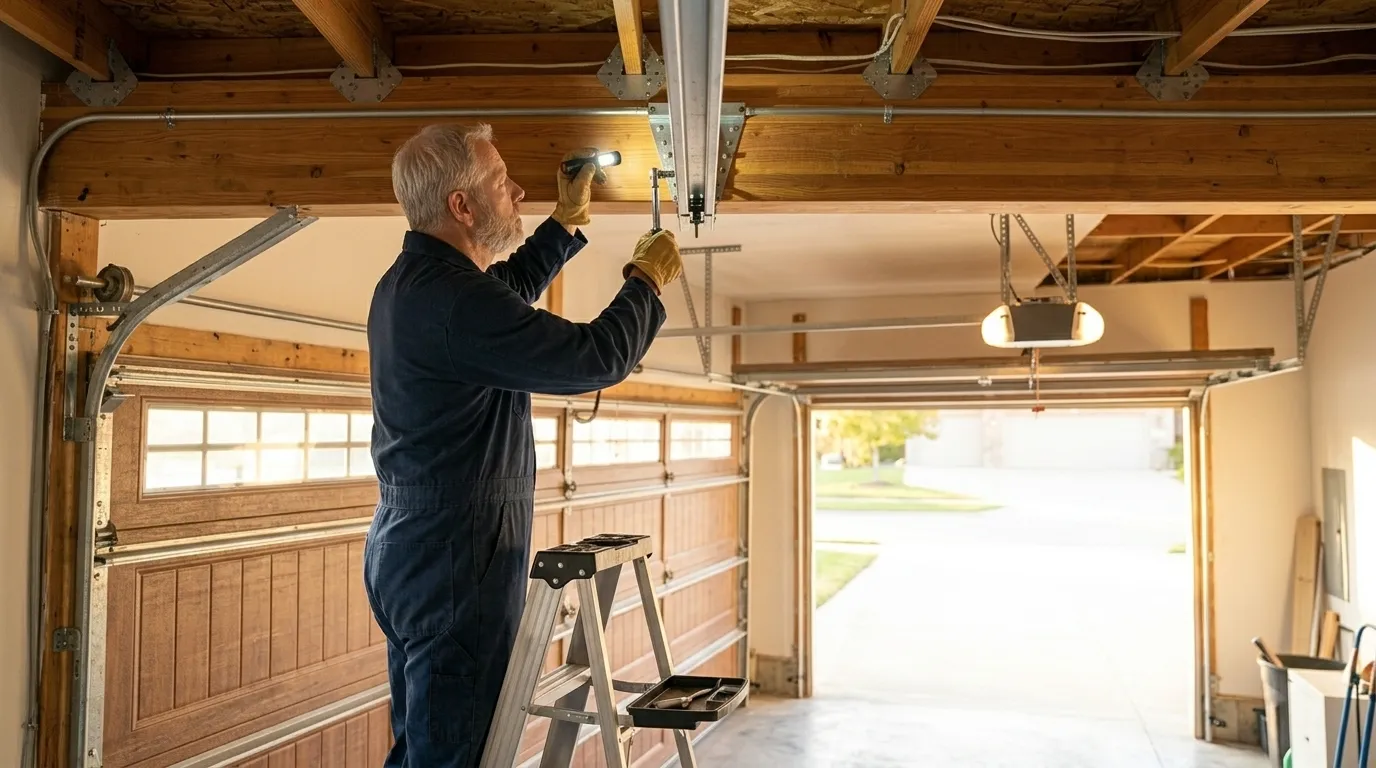
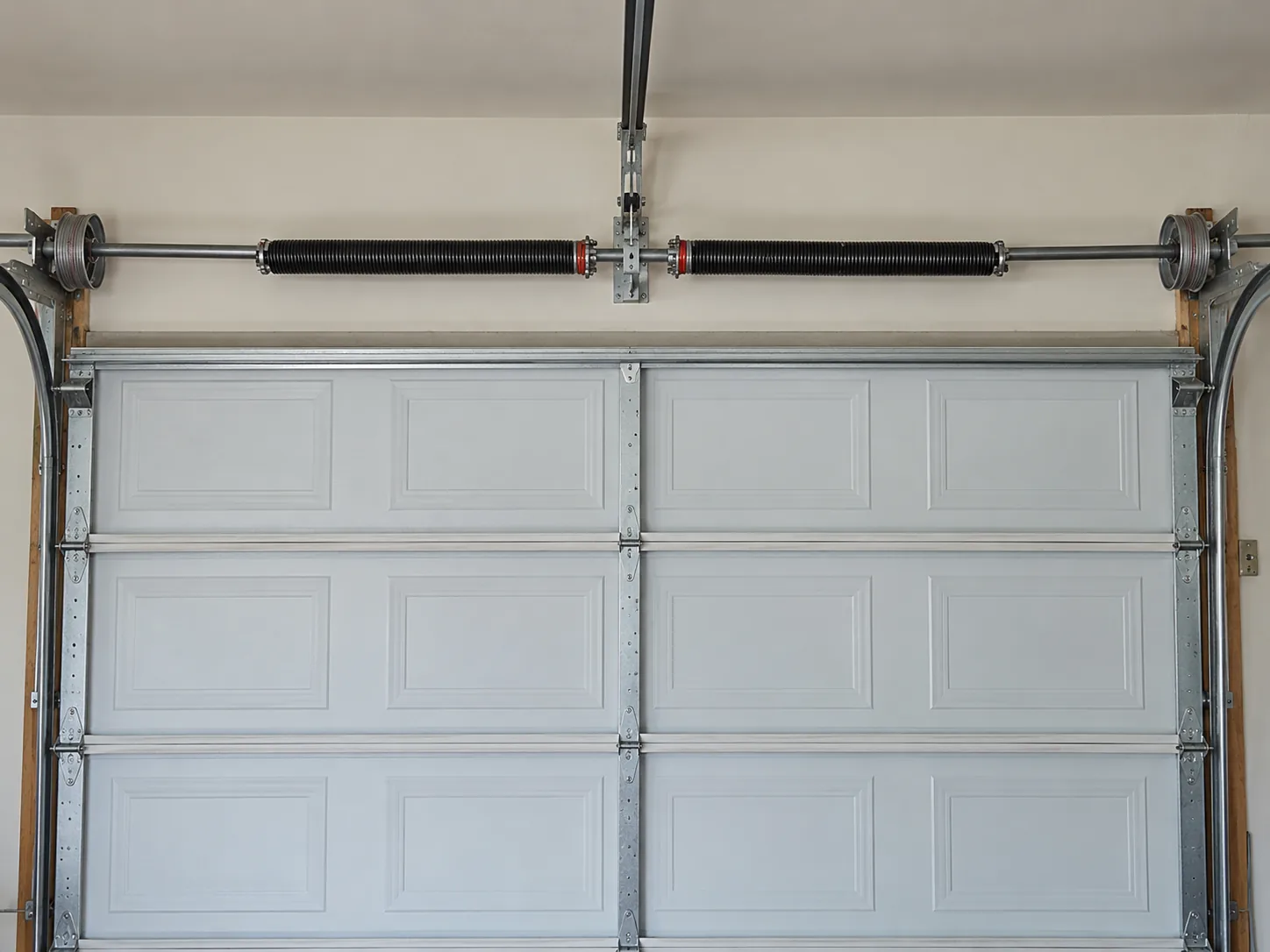
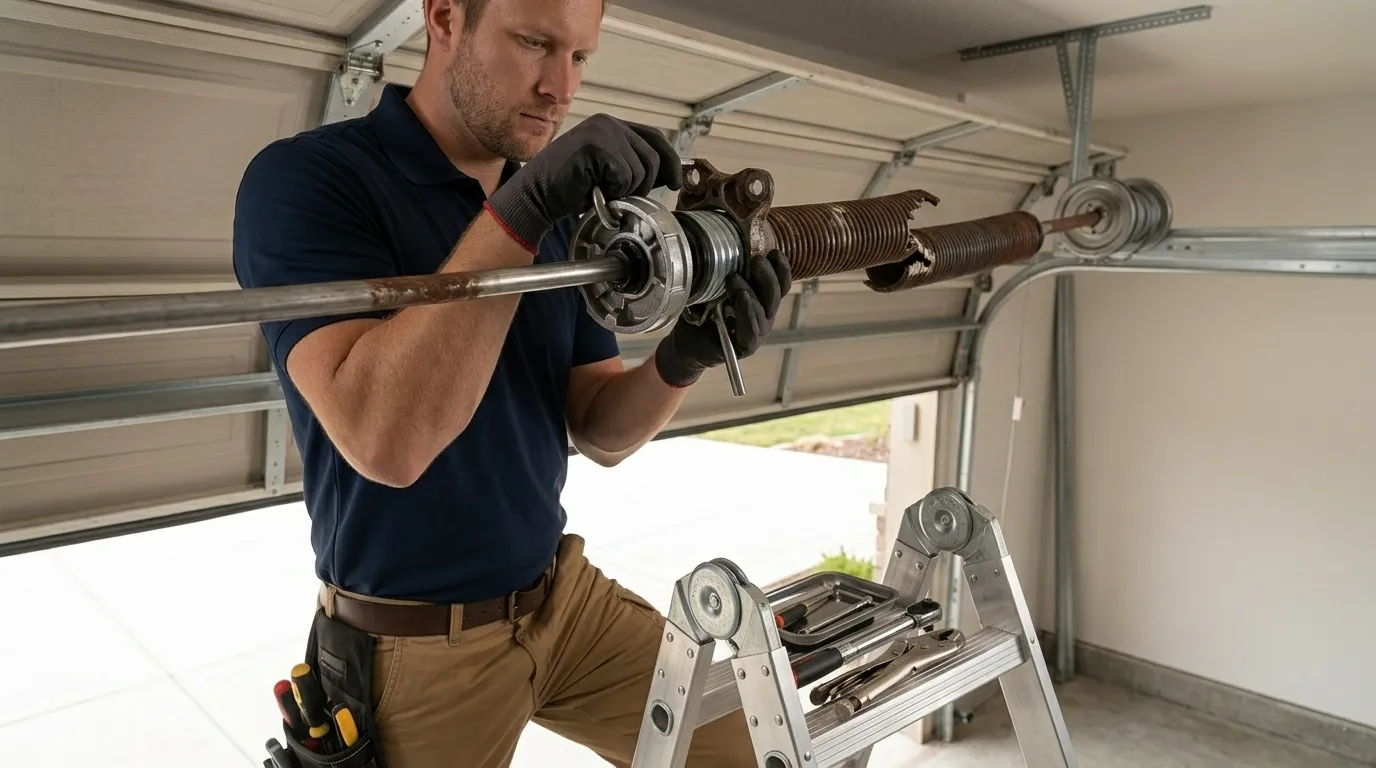
Springs on 1990s-and-later construction usually aren't the weak point people expect. The hardware is younger, the drums and cables are usually still original but not decades-original, and the failure mode is almost always cycle count catching up with a spring rated for so many thousand openings, not rust eating through old steel. Higher household incomes in this area also tend to track with two-car, two-opener households running the door more times a day - more cycles, faster wear, even on a door that looks new.
Colder months are still the accelerant. This area sits in a moderate-cold climate band, and cold steel loses flex before it loses strength - a spring that's been slowly fatiguing all year is more likely to finally snap on a January morning than a July afternoon. That's not a Greenwood-specific mechanism, but paired with the newer, higher-cycle hardware typical here, it's the combination that actually explains most of the calls we get from this side of the service area, rather than the broken-old-spring story that fits older neighborhoods better.