
25-year hardware life cycle
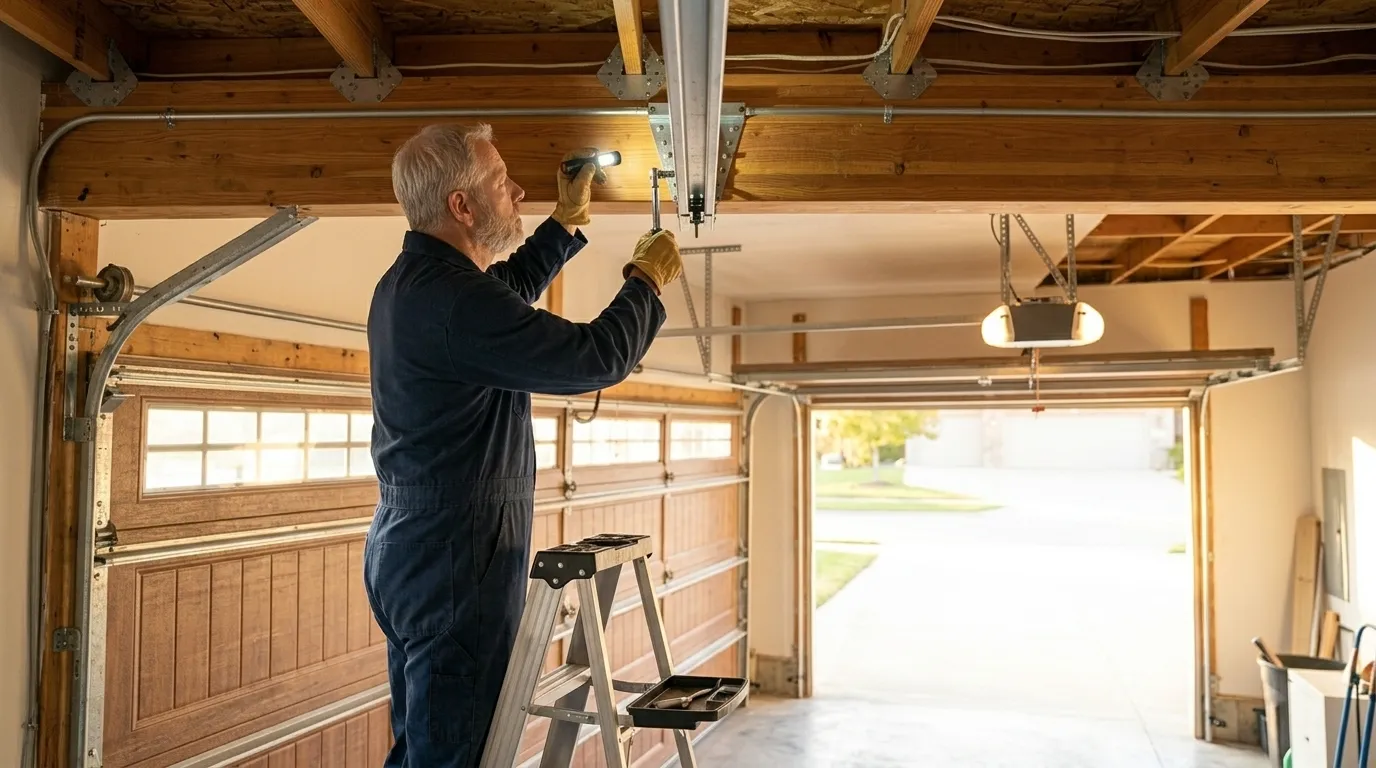
When one of those springs finally gives, or a gear set inside a 25-year-old opener strips, you're not paying for a quick adjustment. You're paying to replace parts that have been running the full life of the house.
Greenwood, Blue Springs
Greenwood homes built mostly after 1995 still run original openers and springs. Blue Springs Garage Door Pros drives 12 miles out to fix broken doors fast.
Popular Services
Pricing
Most houses in Greenwood went up around 1995, which is later than a lot of the ground we cover out of Blue Springs. That matters for cost because a door built in the mid-90s usually still has its original torsion spring and its original chain-drive opener - nobody's swapped them out yet, because nothing forced the issue.
When one of those springs finally gives, or a gear set inside a 25-year-old opener strips, you're not paying for a quick adjustment. You're paying to replace parts that have been running the full life of the house.
We come from Blue Springs, about 12 miles out, so the trip itself isn't the driver of the bill - the age and condition of what's already on the door is.
A broken spring on a double door is a different job than a stripped opener gear, and both are different from a bent track that's been pulled loose from a slammed door. We'll tell you which one you've got and what it actually takes to fix it before any work starts, not after.
Local causes
Greenwood households sit at a median income of $104,638, well above a lot of the surrounding service area, and that shows up in the housing - bigger garages, heavier doors, and openers rated for that weight. A heavier door puts more load on a spring that's been doing its job quietly since 1995. When it finally lets go, it tends to let go all at once, not with a slow squeak that gives you warning.
Missouri winters put cold, moderate-humidity stress on steel hardware every year - springs contract, lubricant thickens, cables get brittle at the ends. On a door this age, that's three decades of freeze-thaw cycles the original hardware has absorbed without complaint. It's not that Greenwood doors are built worse than anywhere else we work. It's that 1995-era hardware in a house this size has more weight riding on parts nobody's inspected since the day they were installed.
Warning signs
The door won't move at all, and the opener light blinks or clicks without lifting - that's usually a broken spring, not a dead opener.
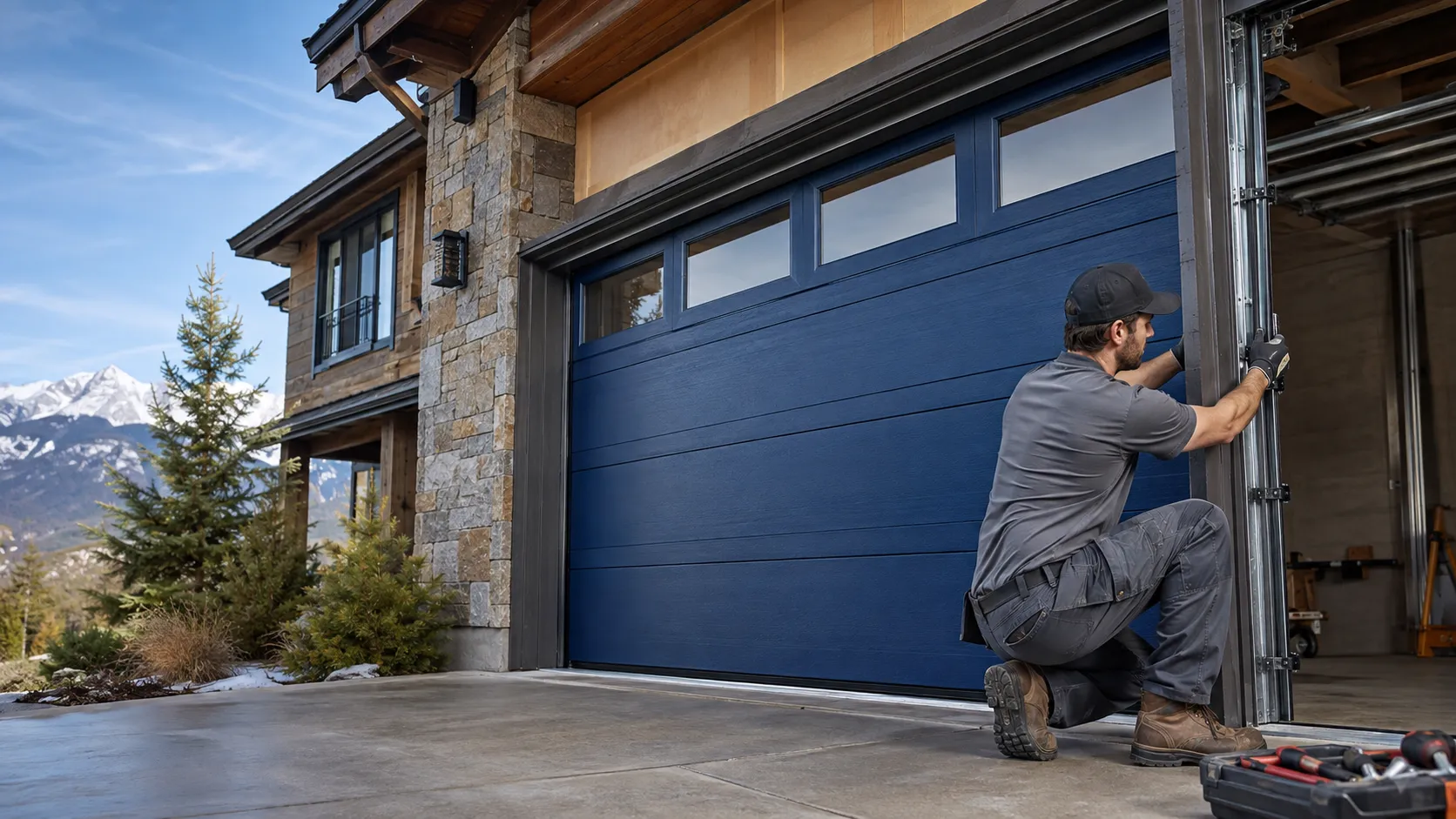
If the door starts up and then reverses or drops back down, look at the cables before you blame the motor. A door that runs off one side of the track, or that's visibly bowed at a corner, has usually taken a hit - a car backing out too fast, a basketball, a bent roller bracket that's been working loose for months.
In a 2,193-household town this size, we don't get a huge volume of calls, but the ones we do get tend to be the same story: hardware original to the build, now failing under a heavier door than it was ever stress-tested against by daily use.
If your opener runs but the door barely lifts, or lifts then sags, that's a spring losing tension, not a motor problem - don't keep hitting the button hoping it clears itself.
DIY or pro
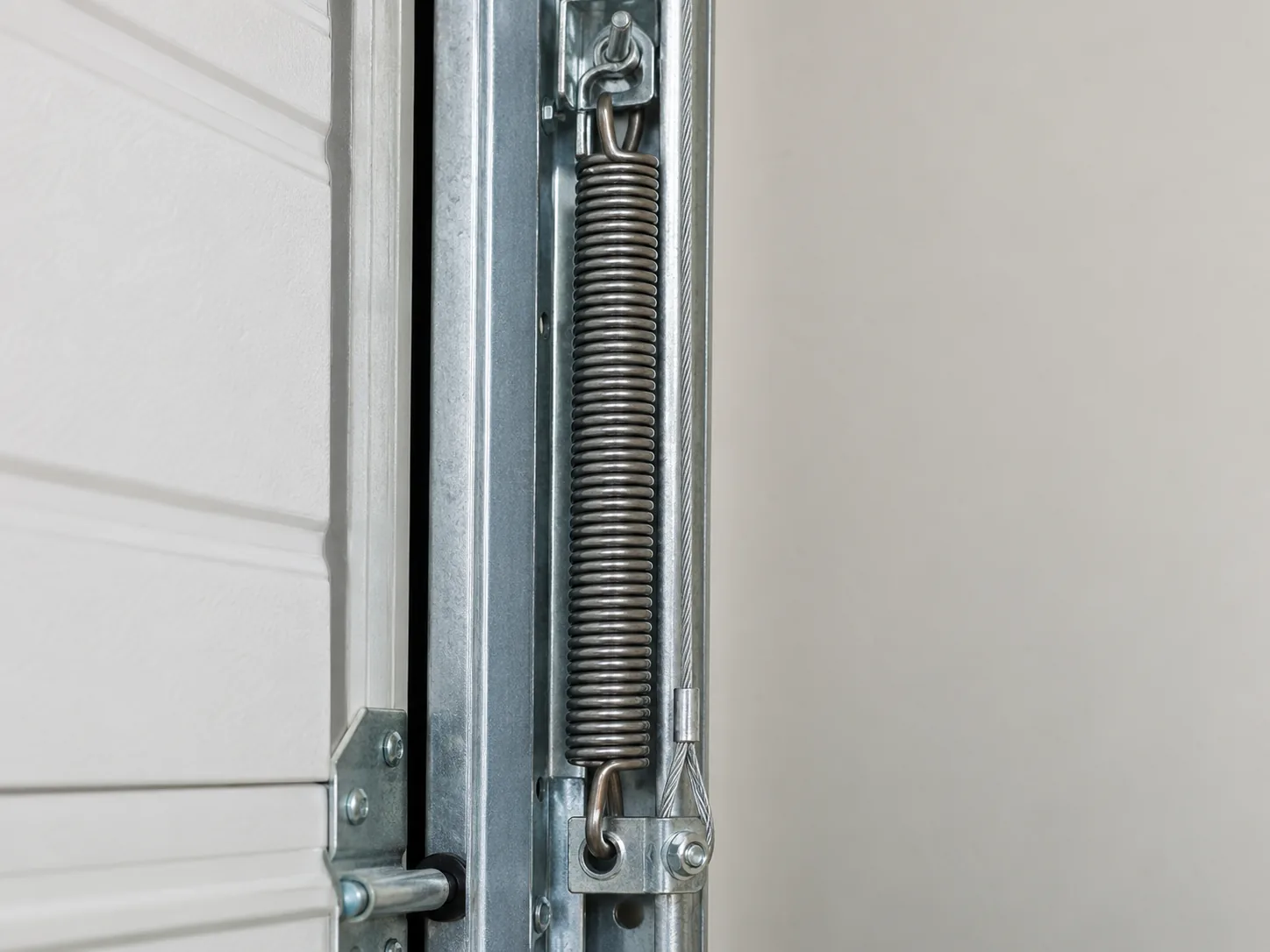
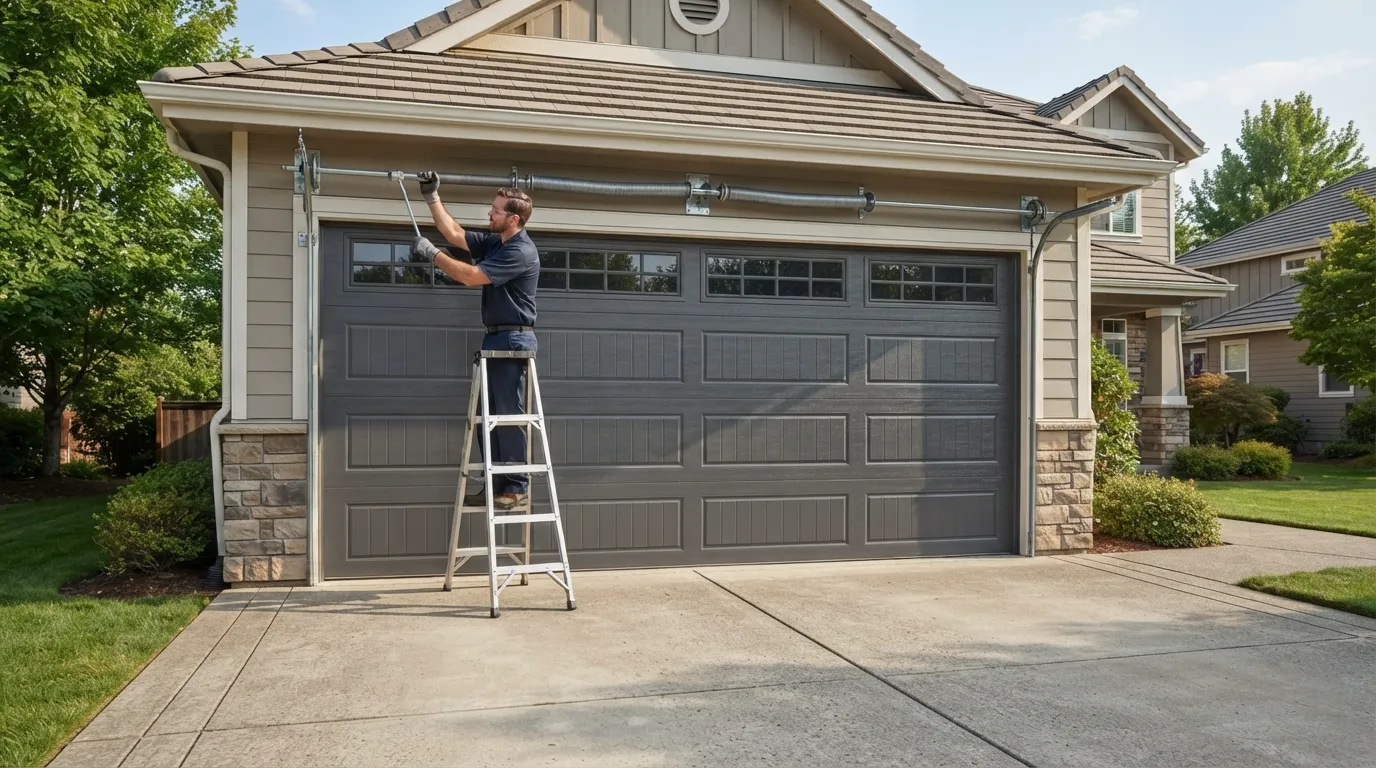
Don't touch a torsion spring yourself. It's wound under enough tension to break a hand or worse, and that's true whether the door is five years old or thirty. That's not a judgment call we make lightly - it's the one repair on this list we won't walk a homeowner through over the phone.
What you can safely check: the manual release cord (pull it and see if the door moves freely by hand - if it doesn't, the track or rollers are binding, not the spring), and the photo-eye sensors near the floor, which get knocked out of alignment more often than people expect and will stop the door from closing at all. If cleaning dust off the sensor lenses and re-aiming them doesn't fix a door that won't close, the problem is electrical or mechanical, and that's a call, not a fix.
Questions
Very likely, yes. If nobody's had it replaced already, the spring installed when the house was built is still doing the work almost 30 years later. That's long enough for fatigue to set in, especially on a heavier door, so a sudden break isn't unusual on hardware this old.
About 12 miles. We work out of Blue Springs and cover Greenwood as part of our regular service area, so there's no separate branch or depot here - just a drive we make regularly for calls like this one.
No. A torsion spring is wound under high tension and can cause serious injury if it releases while you're working on it. This is one repair we don't recommend doing yourself regardless of the door's age or size - call it in instead.
Weight. Heavier doors need stronger springs and openers rated for that load, and those parts cost more to replace. Greenwood's housing tends toward larger garages, so the hardware failing is often a heavier-duty version of the same part that fails on a smaller door.
Explore more
Ready when you are
Blue Springs Garage Door Pros repairs and installs garage doors, springs and openers in Blue Springs, MO and the surrounding area.