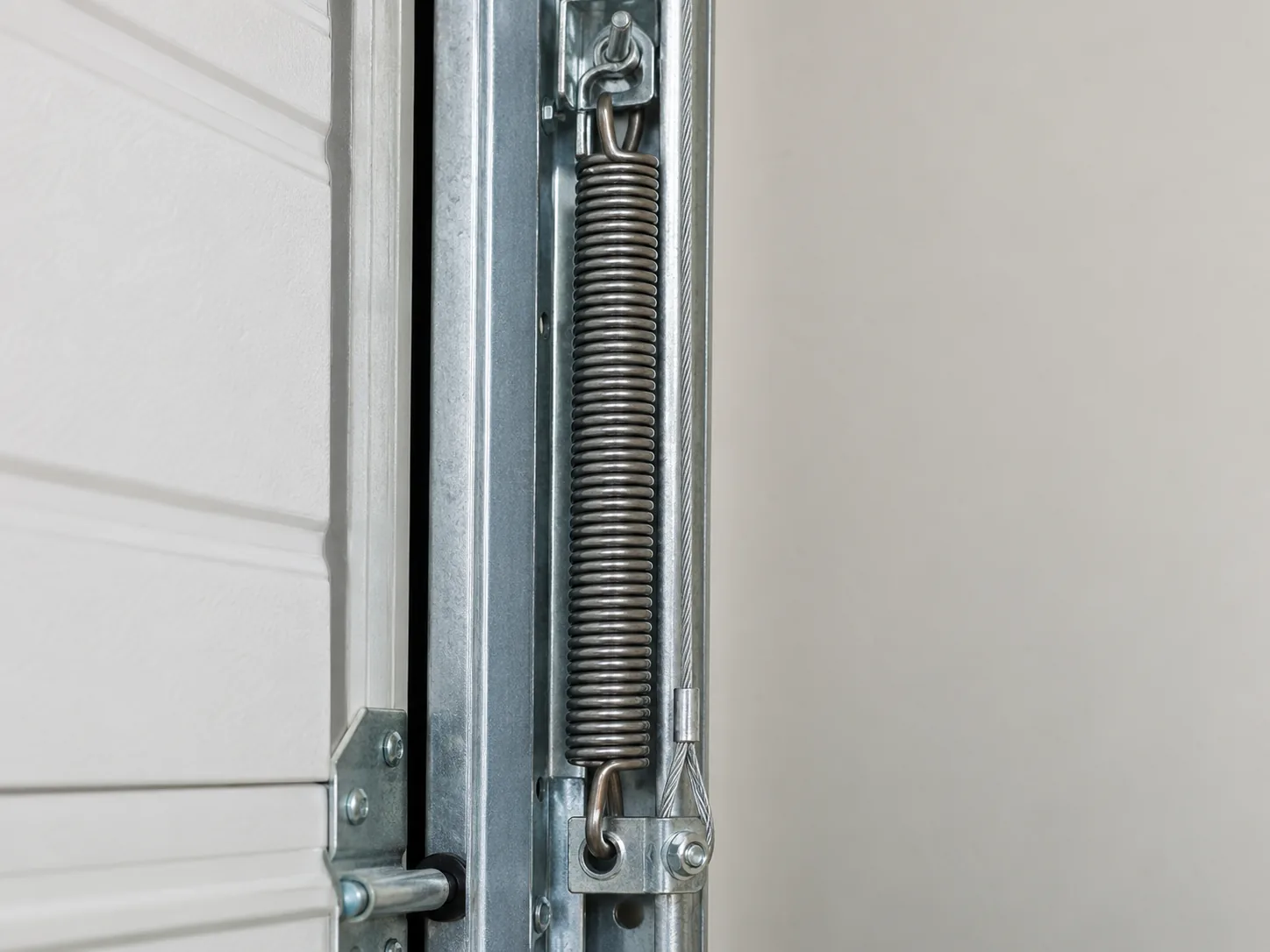
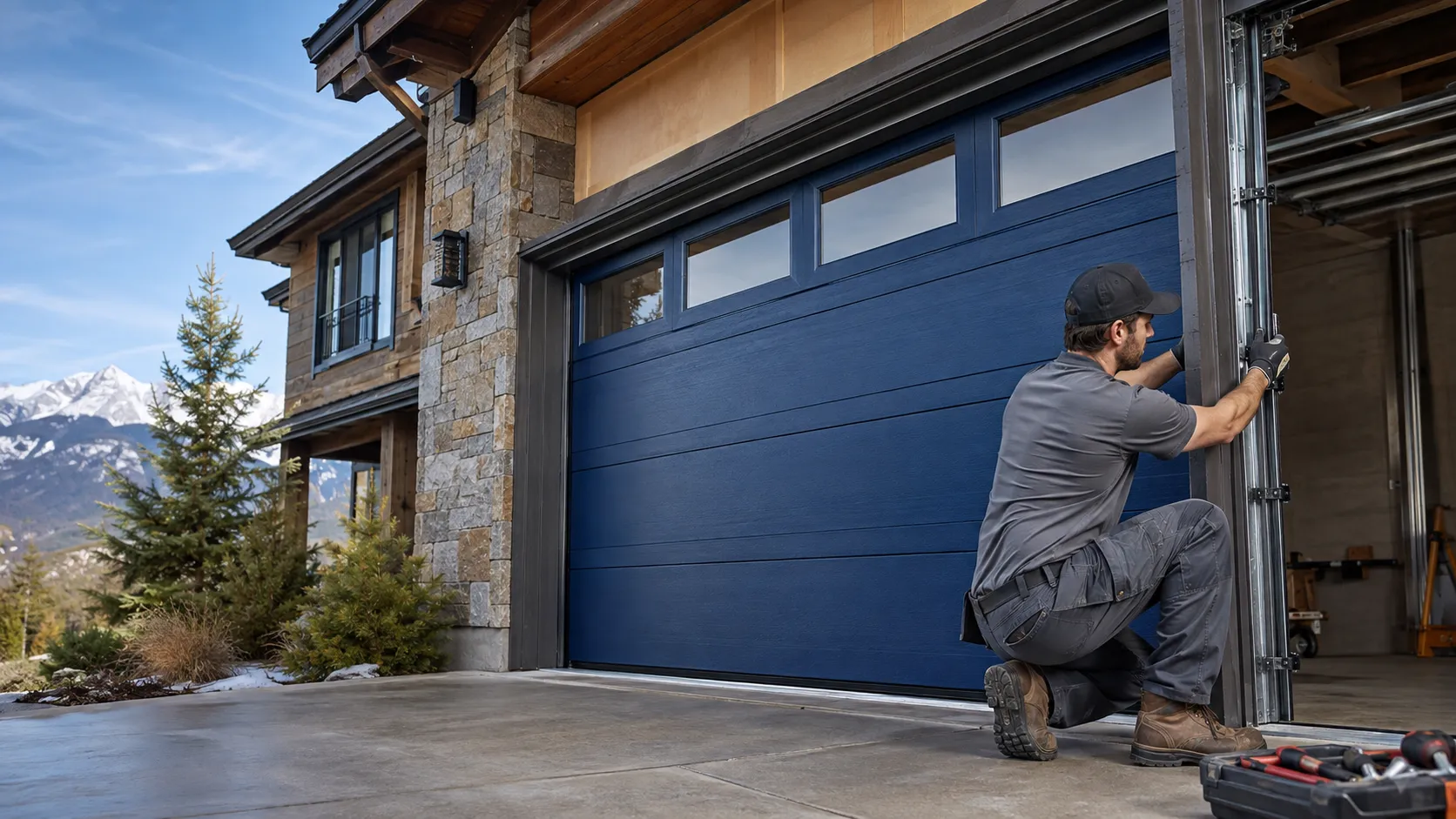
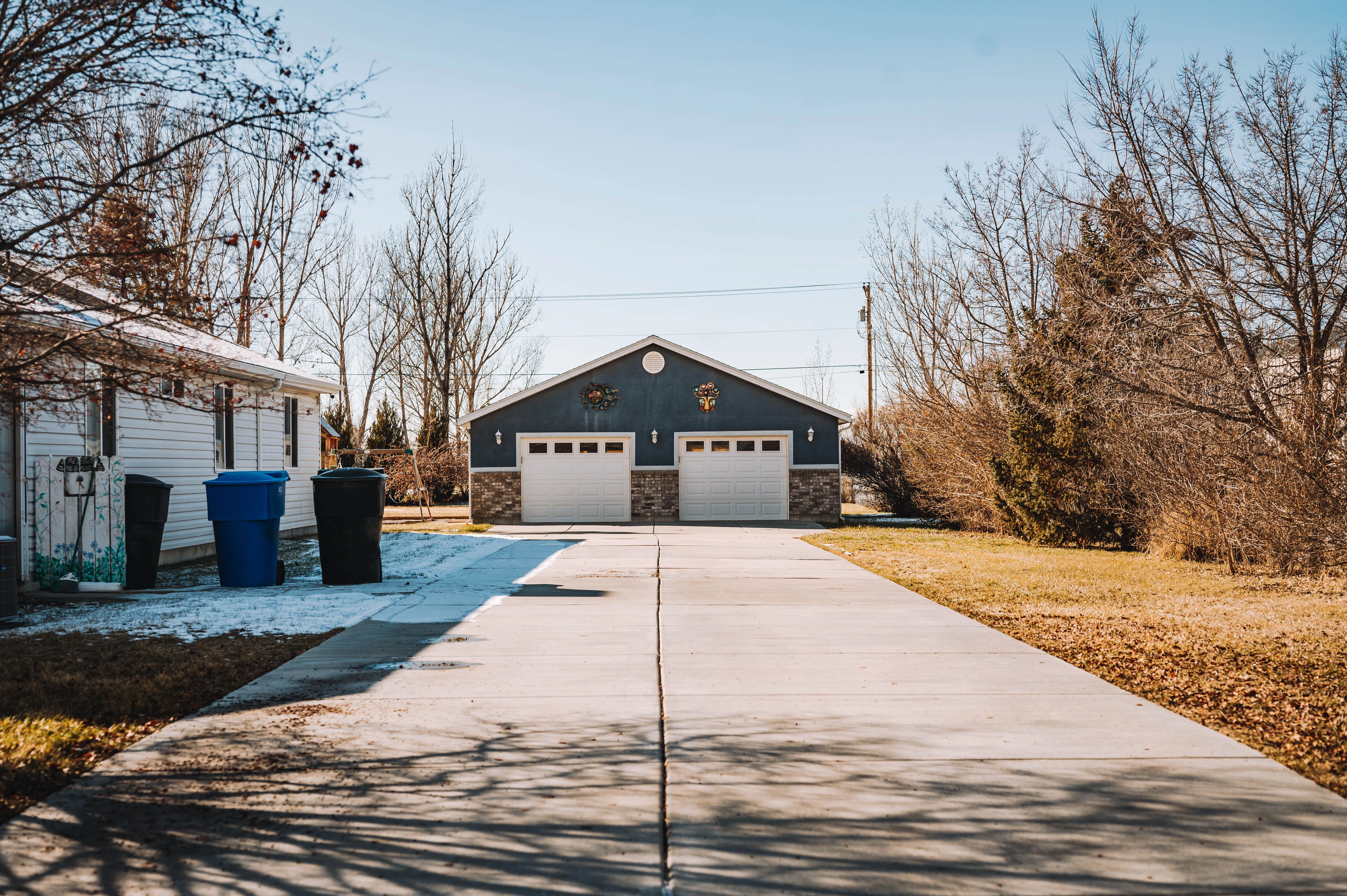
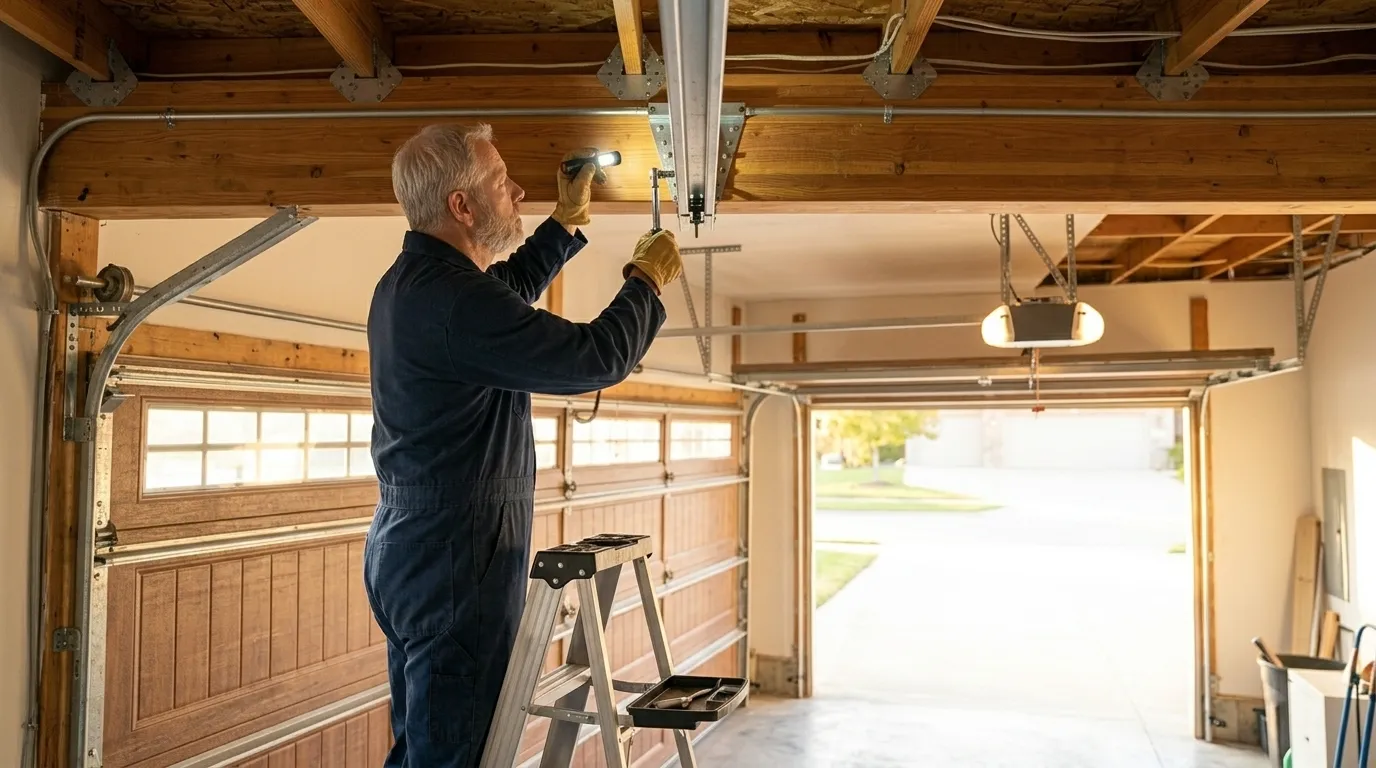
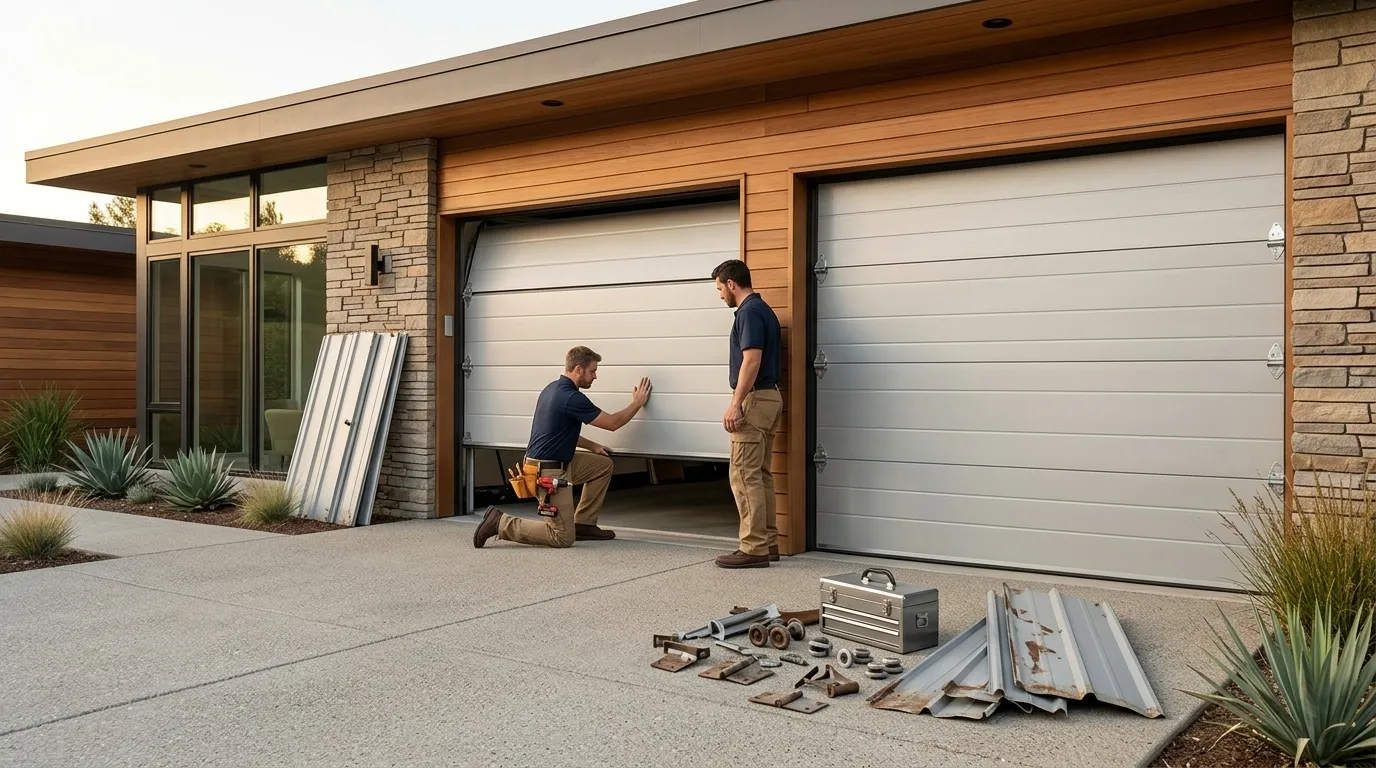
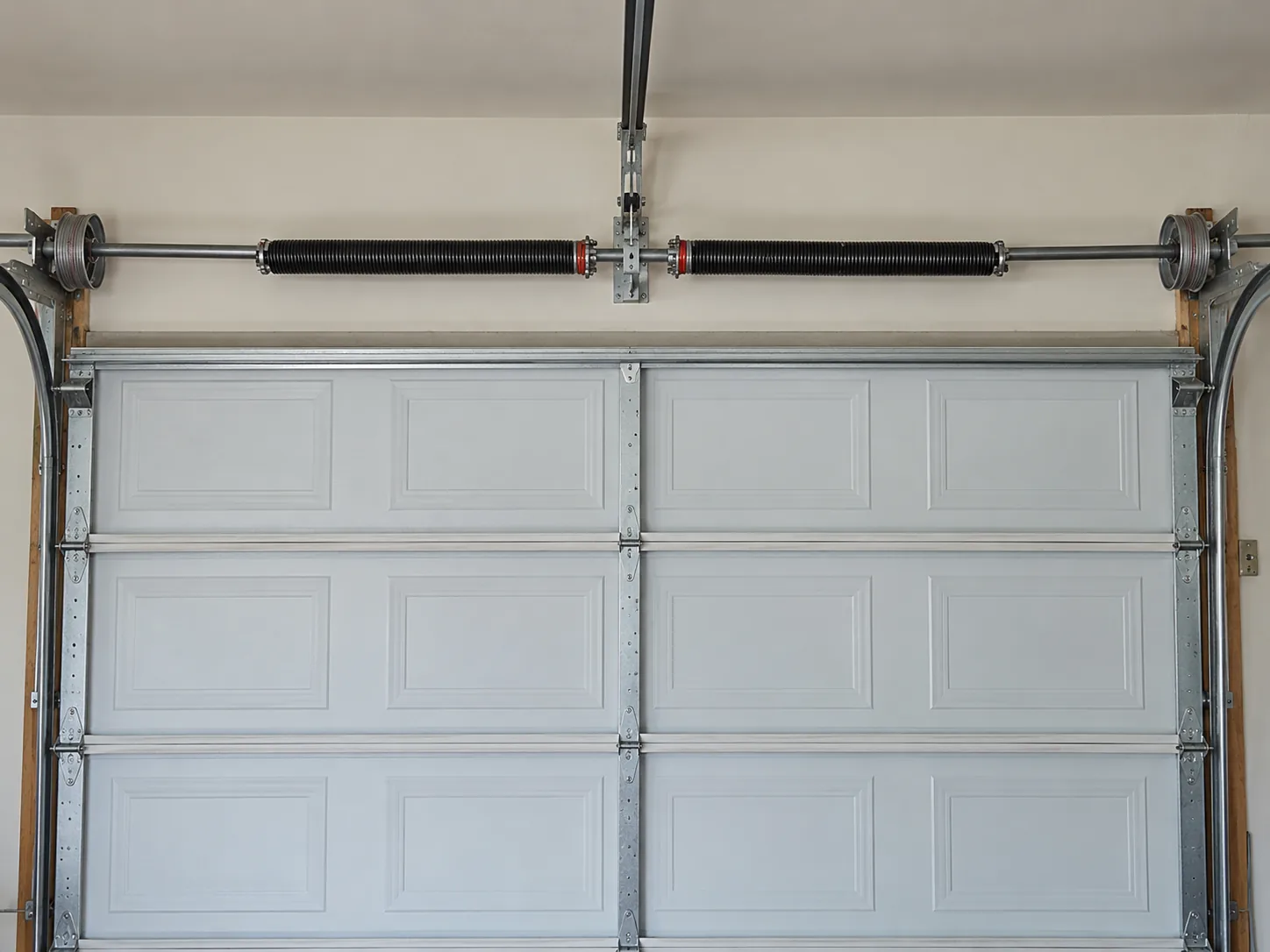
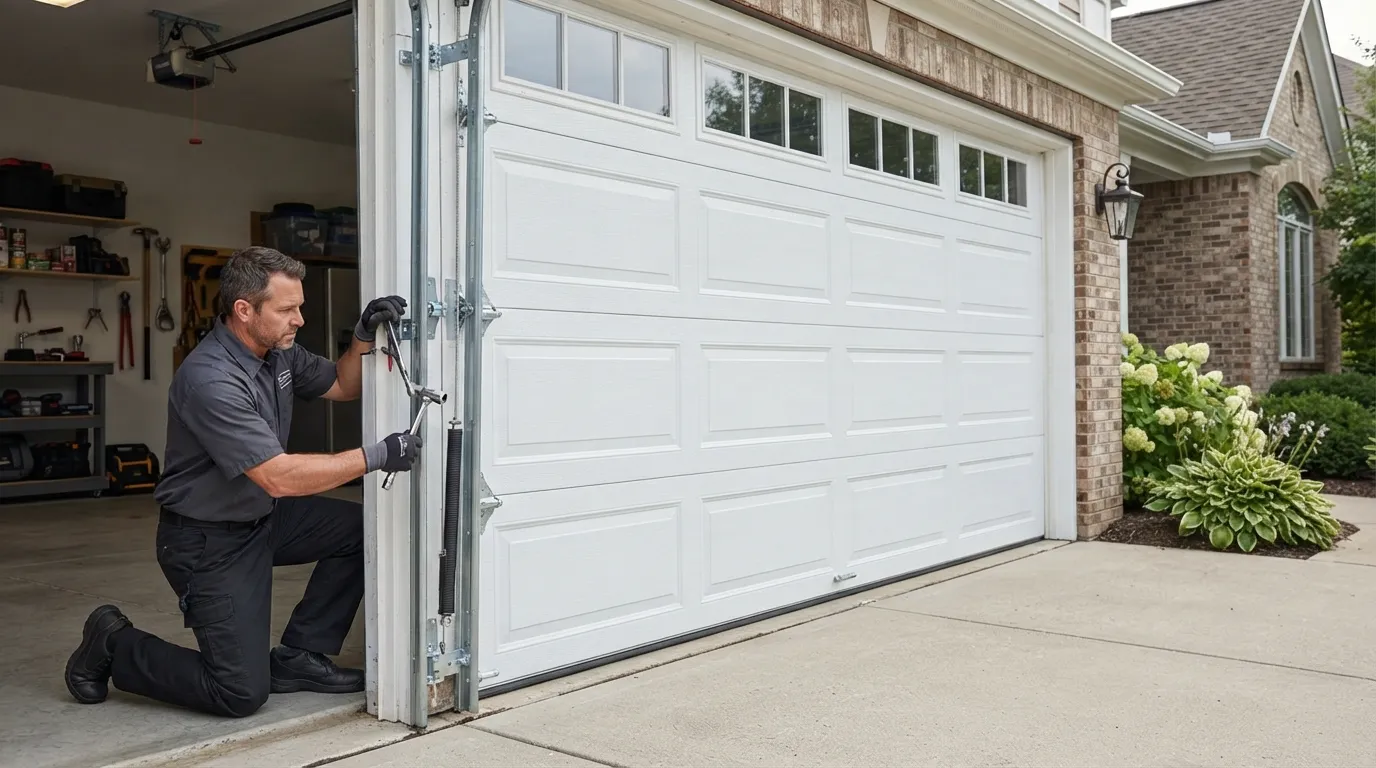
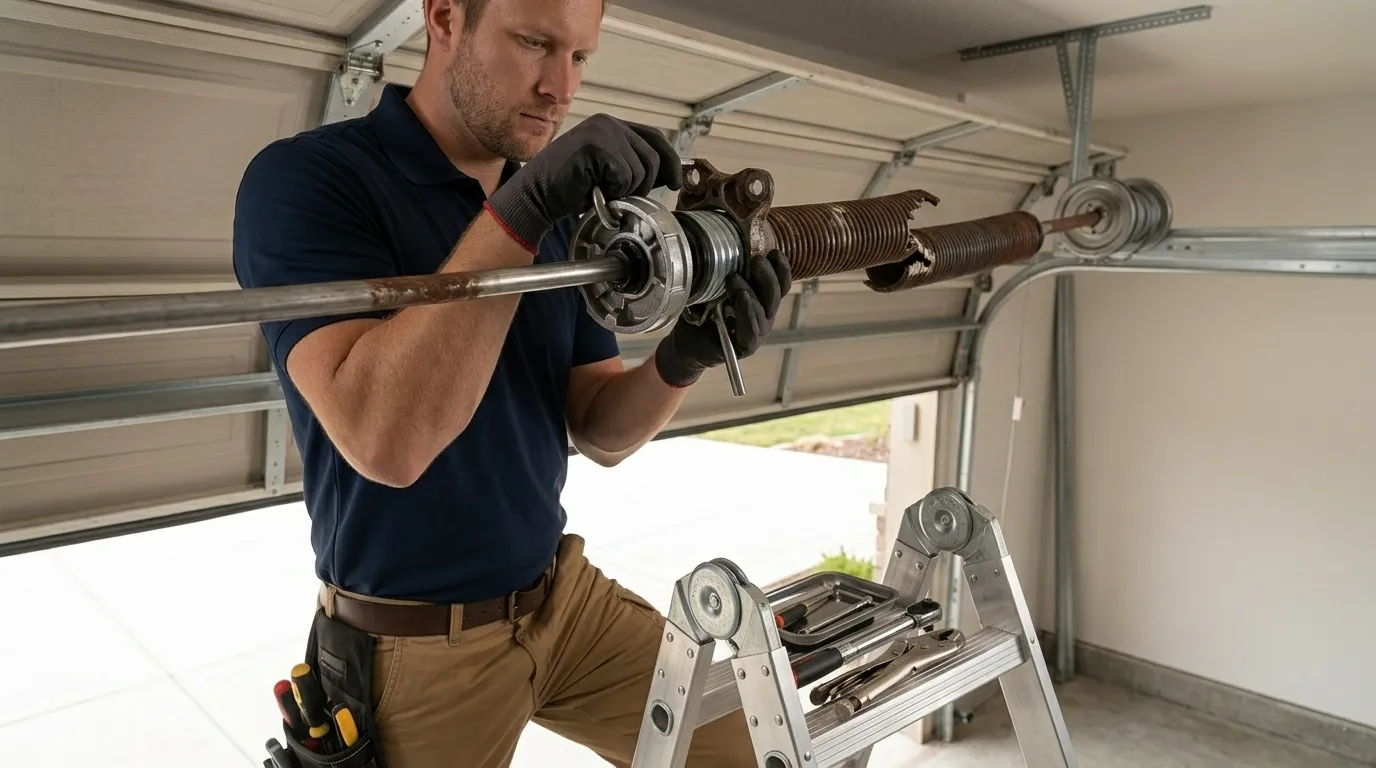
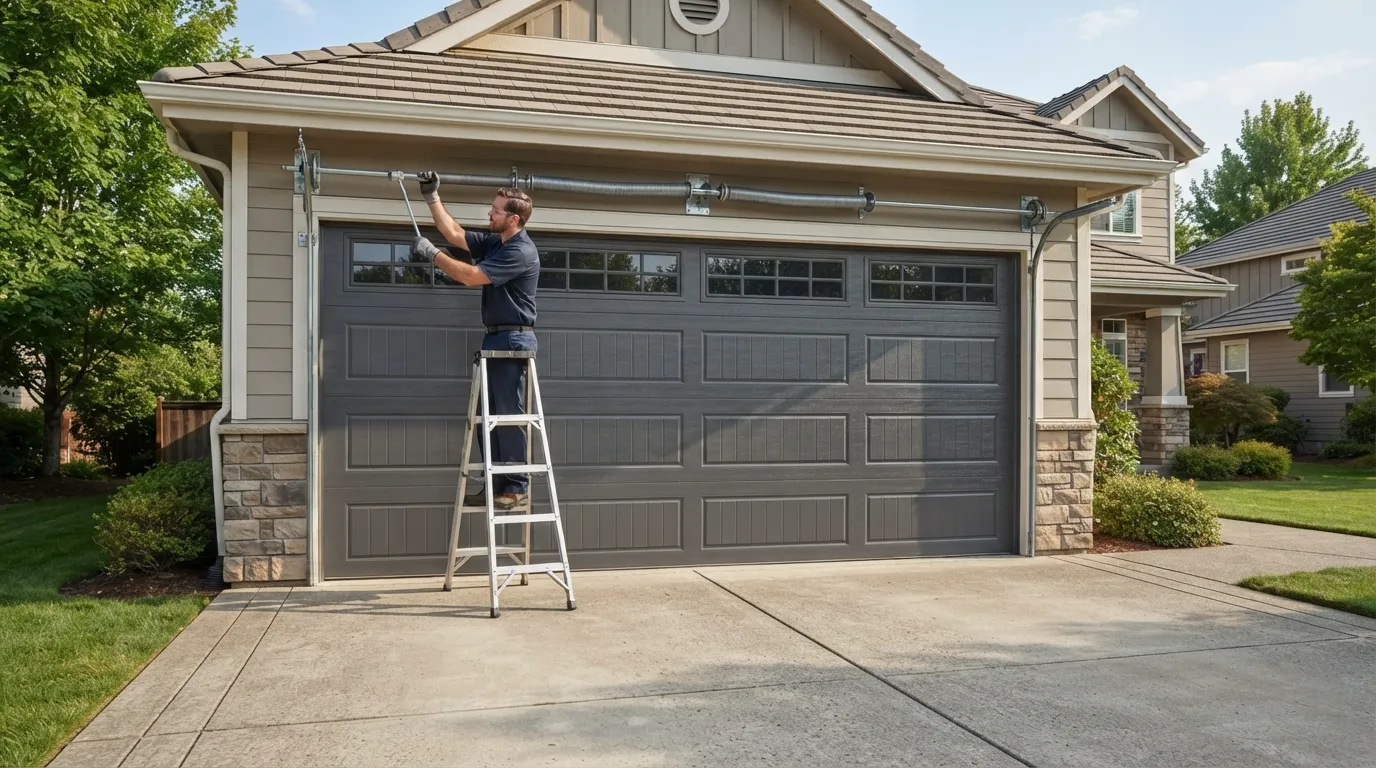
A building put up around 1995 was built to a different set of assumptions than one built in the 1970s. The steel sections are wider, the tracks carry more load per foot, and the springs are sized for that load - which means when a spring goes, it goes hard, and the door doesn't limp along the way an older, lighter residential door sometimes will. Owners in Greenwood tend to notice a failure all at once: the door won't move, not that it's gotten slow.
Cold-moderate winters put stress on this hardware too. Steel contracts in the cold, cables and springs lose a little give, and a spring that was already near the end of its cycle count is more likely to snap on a January morning than a July afternoon. On a commercial door with two or three springs carrying real weight, one going can put strain on the others fast. That's a maintenance conversation as much as a repair one, and it's worth having before the second spring follows the first.