High-cycle door sagging
On high-cycle doors, a frayed cable or a spring losing tension shows up as the door sagging unevenly on one side, heavier on the end where the spring failed. In winter months here, the complaint changes shape.
Blue Springs, MO
Commercial garage door service for Blue Springs, MO businesses: rolling steel doors, high-cycle springs, operators, and track repair for cold-weather wear.
Popular Services
The repair
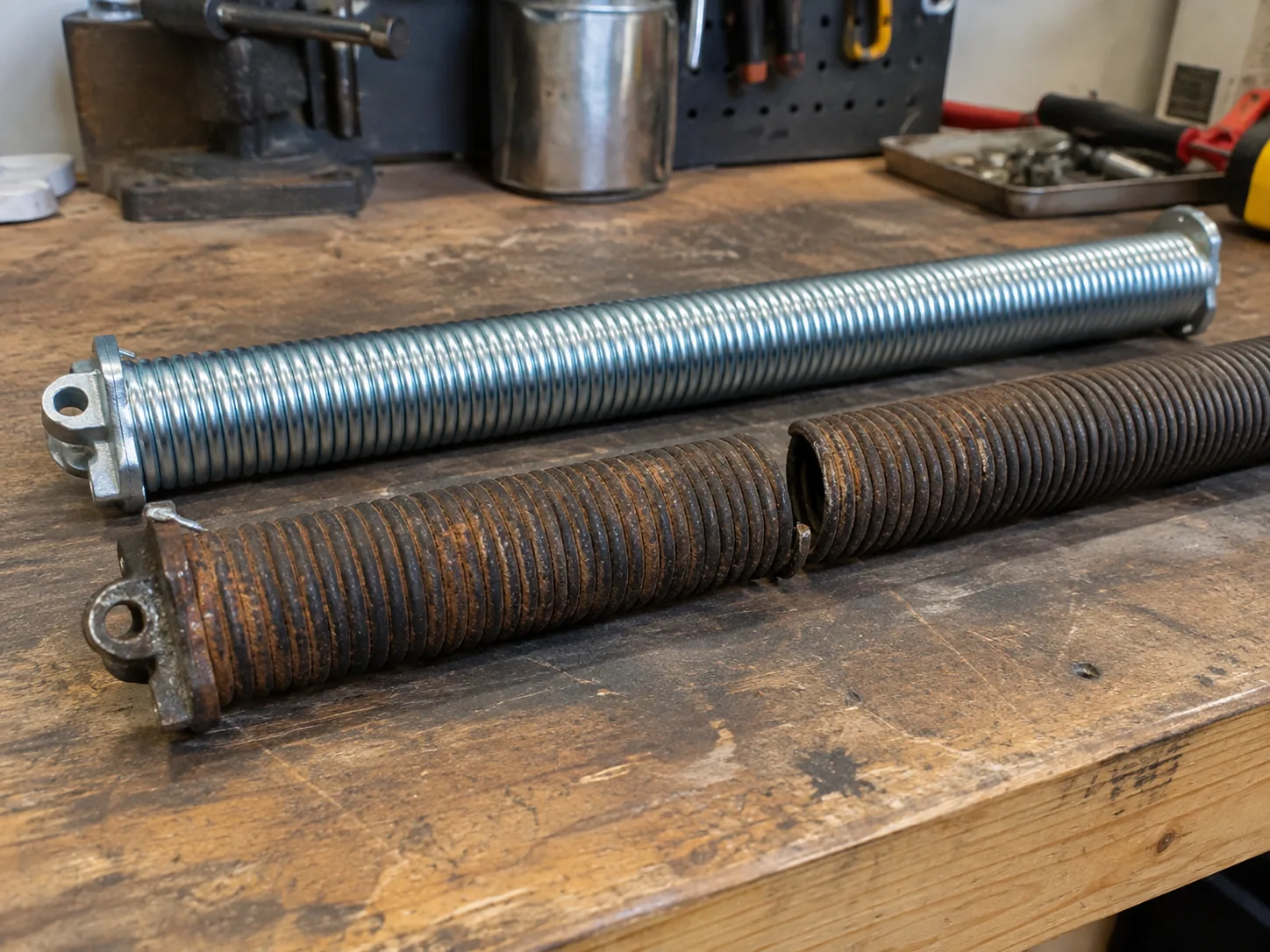
Commercial work is a different animal from a homeowner's single-car door. We're dealing with rolling steel doors, heavier sectional units, high-cycle torsion springs rated for dozens of daily openings instead of a handful, and commercial-grade operators with chain or jackshaft drives.
The fix usually starts with the spring system, since it's under the most load and takes the most abuse, then moves to track alignment, cable condition, and the bottom seal. Blue Springs sits in a cold-moderate climate band, which matters more for commercial doors than most owners think.
A door that cycles fifteen or twenty times a day pushes grease out of the rollers and hinges faster in cold weather, and steel track contracts just enough in a hard freeze to throw a door out of alignment that was fine in October.
We check weatherseal compression, torsion spring wind, and track plumb as one job, not three separate calls, because on a commercial door they usually fail together. We don't touch fire-rated doors or anything requiring a licensed electrician for three-phase service - that's outside what we do, and we'll say so upfront rather than take the call and figure it out on-site.
Warning signs
The first sign is almost always noise or hesitation - a door that used to open in one smooth pull now grinds partway up, or the opener strains and reverses before it clears the header.
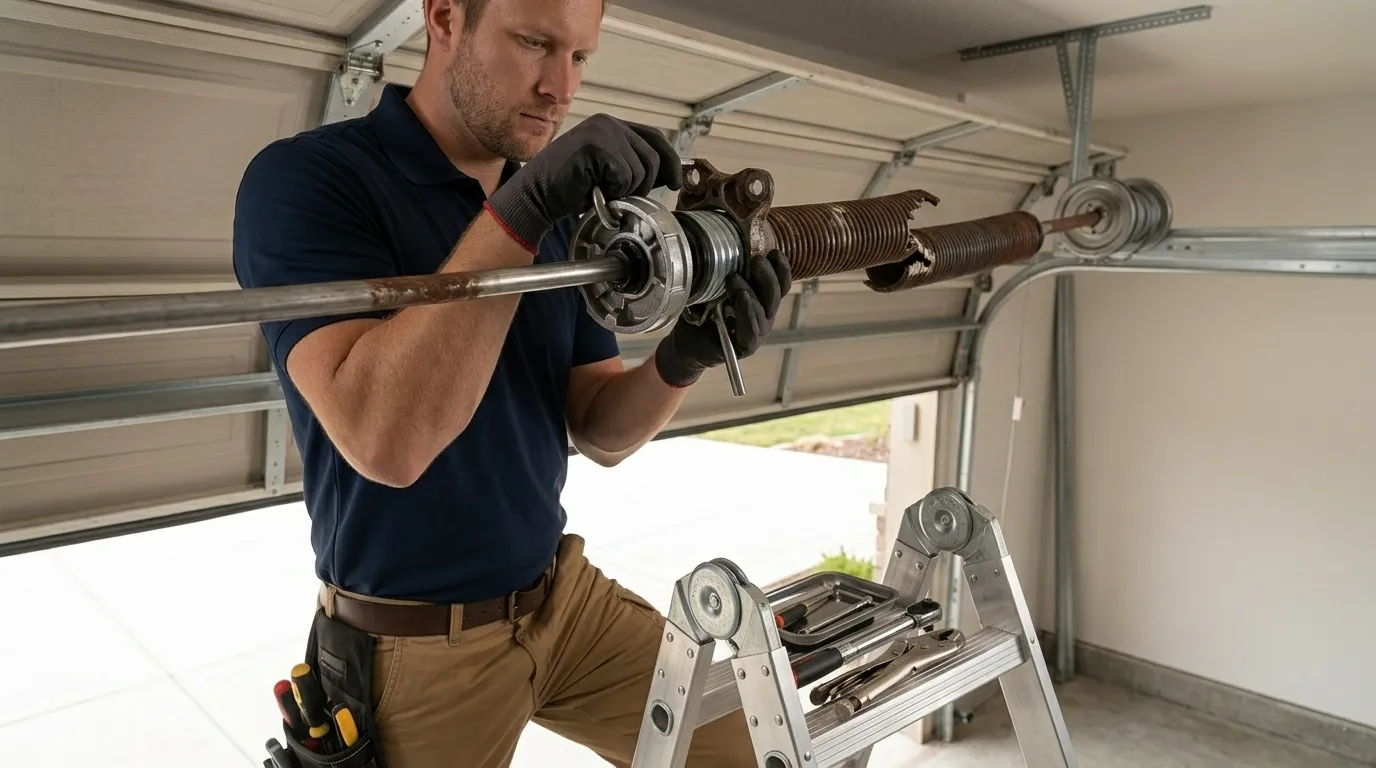
On high-cycle doors, a frayed cable or a spring losing tension shows up as the door sagging unevenly on one side, heavier on the end where the spring failed. In winter months here, the complaint changes shape.
Owners call about a door that worked fine at close on Friday and won't budge Monday morning, because the bottom seal froze to the slab overnight or the track tightened just enough to bind a roller that was already worn. A commercial operator working against that resistance will trip its overload sensor rather than force the door, which looks like the opener failing when the real problem is upstream in the track or spring.
A door that drifts closed on its own, or won't hold position halfway up, points to a spring that's lost tension gradually rather than snapped outright - more common on doors that get heavy daily use and less obvious than a dead-stop failure.
DIY or pro
Lubricating rollers and hinges, checking the bottom seal for gaps, and watching for uneven travel are things any facilities person can do on a schedule, and doing them regularly is the single best way to avoid a service call.
What you shouldn't do yourself is anything involving the torsion spring system on a commercial door. These springs are wound under far more tension than a residential door's, because they're lifting more weight through more cycles, and a spring that lets go while someone's adjusting it can put a person in the hospital.
Same goes for cable replacement and jamb bracket work - the tools and the winding bars for commercial hardware aren't something most maintenance staff keep on hand, and they shouldn't have to. If the fix is a worn roller or a loose track bracket, that's a reasonable in-house repair.
If it's a spring, a cable, or an operator that's tripping its overload repeatedly, that's a call, not a project. We'd rather tell you the $40 part you can swap yourself than sell you a service call for it.
Local causes
A lot of the commercial and light-industrial buildings around Blue Springs filled in during the same growth years that built most of the housing here - the service area's stock runs 1951 to 2005 with a median build year of 1974, and the heaviest concentration is 1960s and 70s construction. Doors installed during that stretch were sized for the duty cycle businesses ran back then, not the volume a lot of shops and warehouses push through them now. That mismatch between original hardware and current use is the root of a lot of the spring and track failures we see.
Layer the cold-moderate climate on top of that and you get a predictable pattern: original steel track and coil-spring hardware from that era, running harder than it was built for, going through a real freeze-thaw cycle every winter. That combination - older commercial doors, higher-than-designed cycle counts, and seasonal temperature swings - is why commercial door failures cluster here in a way they wouldn't in a market with newer building stock or a milder climate. It's not bad luck. It's the building age and the weather working against the same hardware, year after year.
Questions
It depends on cycle count, but a door opening more than a dozen times a day should get its track, rollers, and spring tension checked at least twice a year, with one of those checks before winter. Buildings from the area's 1960s-70s construction wave with original hardware benefit from more frequent checks since the parts are older and harder to source.
Cold contracts steel track just enough to throw off alignment, and it stiffens the grease in rollers and hinges so the opener works harder to move the door. On a commercial door cycling many times a day, that added resistance shows up as tripped overload sensors or a door that hesitates partway through its travel.
Not reliably. Commercial doors are heavier and cycle far more often than a home garage door, and a residential opener isn't built for that duty cycle. If a business is running a residential-grade unit on a heavy rolling steel door, it's usually a matter of time before the motor or gear set gives out under the load.
Explore more
Ready when you are
Blue Springs Garage Door Pros repairs and installs garage doors, springs and openers in Blue Springs, MO and the surrounding area.