Raymore, Blue Springs

Off-Track Garage Door Repair for Raymore Homes

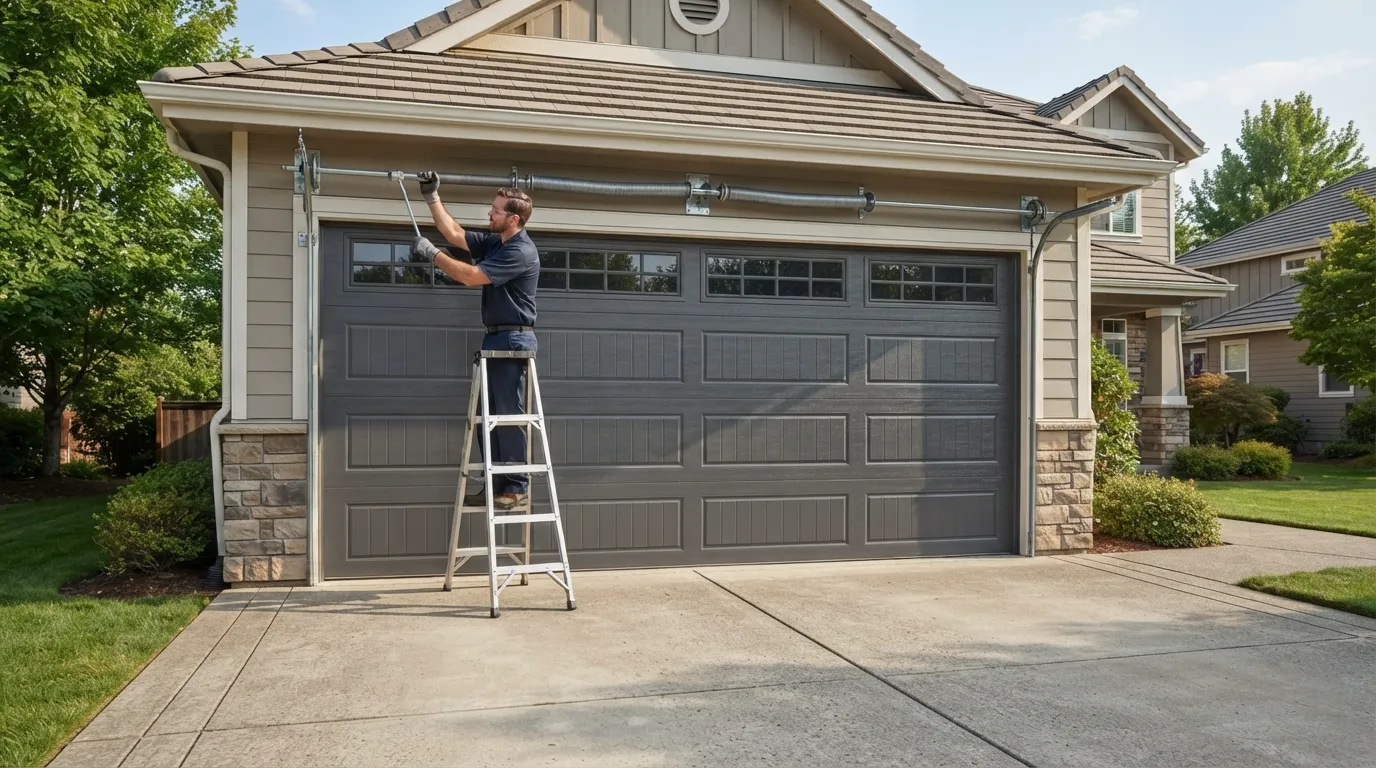
Raymore's housing mostly went up after 2000, so off-track doors here usually mean bent aluminum track or a knocked sensor, not the older torsion failures we see closer to Blue Springs.

Off-Track Garage Door Repair for Raymore Homes in Blue Springs
Serving Blue Springs, MOBackground-checked techsHonest, upfront pricingFast local response

Watch-outs

What Can Go Wrong

Raymore is a smaller town, around 8,944 households, which means the off-track calls we get from here are less frequent than from bigger, older parts of the service area, but they tend to look similar to each other because the housing stock is so consistent.

Post-2000 lighter-gauge track

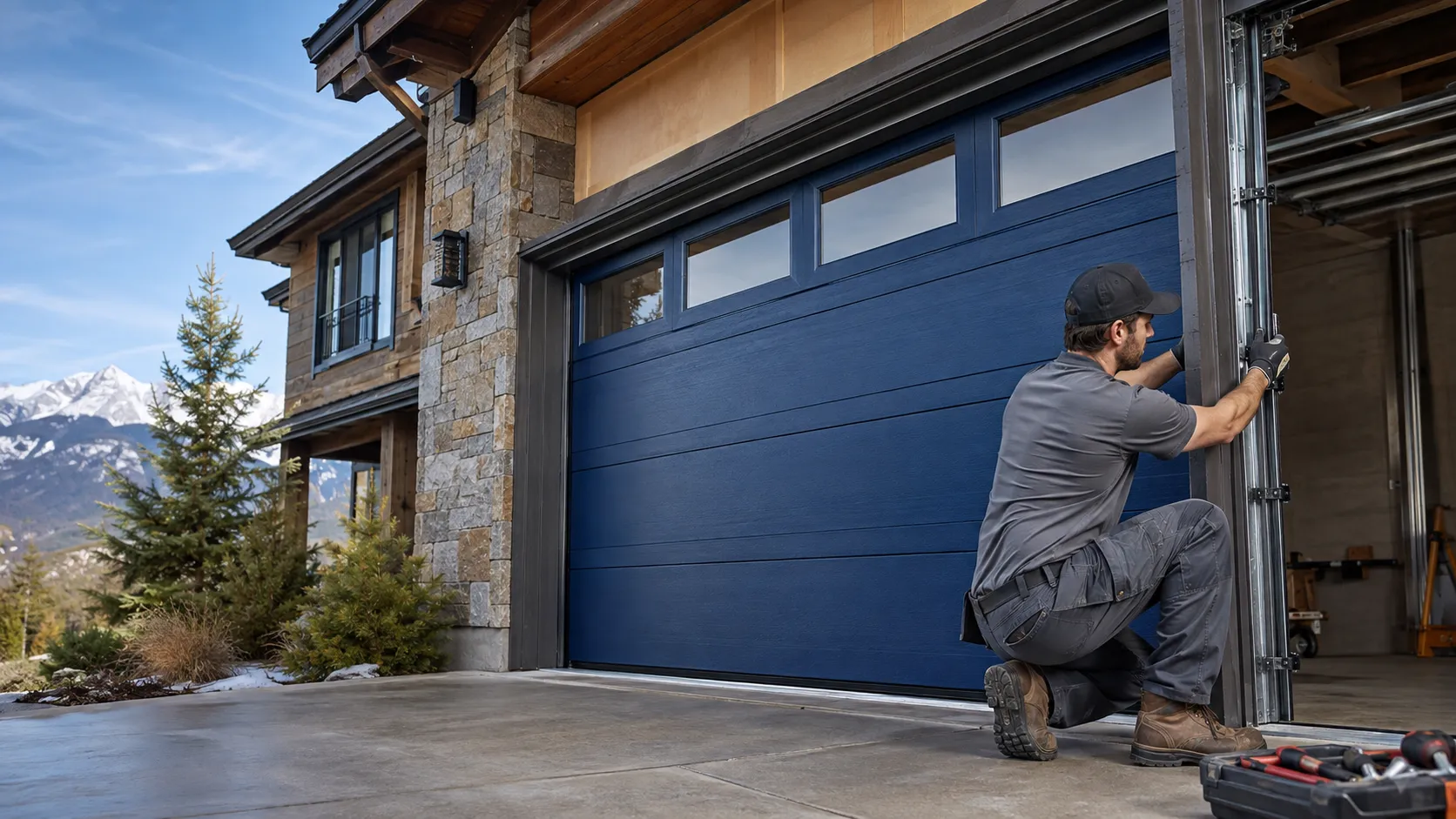
Most of Raymore's houses went up after 2000, well past the 1951-2005 build window that covers this whole territory, and that later construction changed what fails. Newer builds around here typically used lighter-gauge steel track and rollers designed to be replaced, not repaired, so the common failure is a track that's bent from a car bumper tap or a door that's been forced past a jammed roller until the wheel jumps the rail.
Plastic-sensor-bracket flexure

We also see doors knocked off track by a misaligned safety sensor bracket - a plastic bracket on a newer door flexes more than the metal brackets on older builds, and a bump from a bike or a trash can is enough to tilt it out of the track's path.

Basic newer-build wear patterns

We don't see much of the older one-piece door hardware here that we run into in the 1960s and 70s pockets of the territory - Raymore's stock is too new for that. What we do see is basic wear on tracks that were installed to a lower cost spec than what you'd find on a custom-built older home.

The repair

What the Fix Involves

First step is figuring out whether the track bent or the rollers jumped clean, because those are two different repairs and doing the wrong one wastes your money.

  1. Light-gauge track-replacement brittleness

    A bent track on a newer door usually gets replaced outright rather than hammered back into shape - the lighter gauge doesn't take re-bending well and will fail again at the same spot. If the rollers jumped but the track is straight, the fix is re-seating the door on the track, checking the roller brackets for looseness, and making sure the sensor eyes are still aimed correctly at each other since a knock hard enough to derail a door usually shifts the sensors too.

  2. Full-cycle re-seat verification

    We test the door through a full open-close cycle before calling it done, not just a partial run, because a door that looks re-seated can jump again on the next full travel if a bracket is still bent.

  3. Production-home off-spec track

    On the newer builds common in Raymore we're also checking whether the original installer used the door manufacturer's spec track or a generic aftermarket piece - a lot of production-home installs from the early 2000s cut this corner, and it shows up first as a door that comes off track more easily than it should.

On the truck

What Is on the Truck

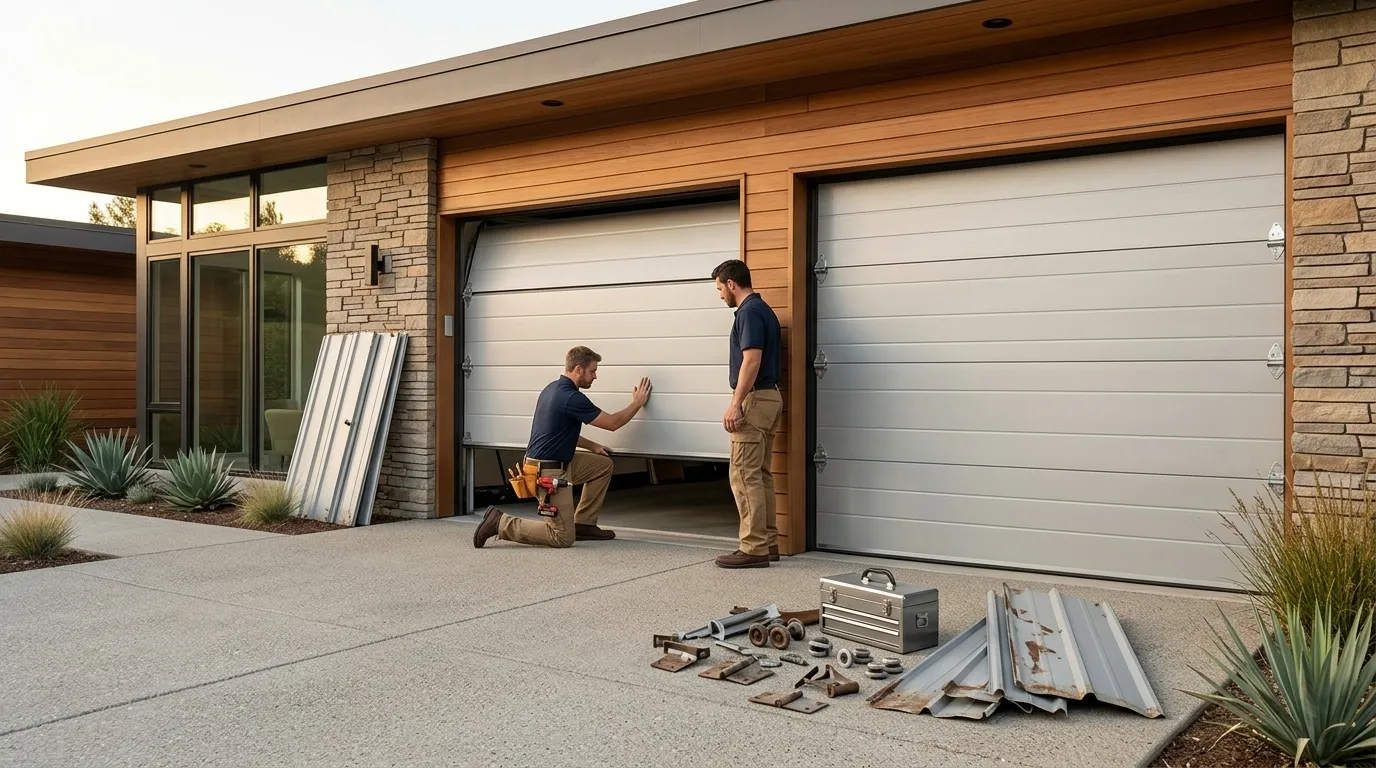
For an off-track call in Raymore we carry standard track sections, roller sets, and bracket hardware sized for the residential doors typical of 2000s-era construction, plus sensor brackets since those get knocked out of alignment along with the door more often than not.

Production-home roller hinge stock

We stock common roller and hinge sizes, not the specialty hardware for one-piece or side-hinge doors from much older houses, since that's not what this town's housing calls for.

18-mile service-base inventory

We're driving from Blue Springs to get here, about 18 miles, so what's on the truck when we arrive is what we've got - we don't keep a second stock at a Raymore location.

Non-spec part sourcing

For a straightforward track and roller job that's rarely an issue since it's common hardware. Where it can matter is if a door turns out to need a part outside the usual production-home spec, in which case we'll tell you on-site rather than guess and come back twice.

Warning signs

How It Shows Up

The door usually still opens, which is what throws people off. You'll notice one corner of the panel sitting lower than the rest, or the door running crooked partway up the track instead of flat.

Cold-snap loose-roller acting

Sometimes it's a grinding or scraping noise from one side only, which is a roller riding outside the track rather than in it. With the region's cold moderate winters, cold snaps can make an already-loose roller or bracket act up sooner, since metal contracts and hardware that was borderline gets pushed past the point where it holds.

Cold-morning-before fault timing

If your door came off track on a cold morning after working fine the day before, that's a common pattern - it wasn't the cold that caused the problem, it just brought forward a fault that was already there.

Jammed-door panel-tearing

If the door won't budge at all and one side looks jammed against the frame, stop trying to force the opener - that's usually the point where a bent track turns into a torn panel.

DIY or pro

Can You Do This Yourself

If the door is only slightly off and still closes flat, you can sometimes re-seat a jumped roller by hand with the door manually disengaged from the opener - lift the door partway, guide the roller back into the track channel, and let it settle before reconnecting the opener. That's about the limit of a safe DIY fix.

We won't pretend every call needs a truck. But if the track itself is visibly bent, or the door is jammed at an angle in the frame, leave it alone - forcing a bent track back into shape with a door under spring tension is how people get hurt, and it usually doesn't hold anyway. One limitation worth being honest about: we can't always tell you over the phone whether it's a five-minute re-seat or a track replacement, since that depends on how far the roller traveled and whether the bracket bent with it.

Can You Do This Yourself

Questions

Common questions

Why did my garage door come off track with no warning?

Usually there was a warning, just a small one - a scrape, a slight wobble, a roller that stuck for a second. In Raymore's newer housing stock, a knocked sensor bracket or a lighter-gauge track taking a bump is the most common trigger, and it tends to show up suddenly even though the underlying wear built up over weeks.

Do you keep parts stocked locally in Raymore?

No, we run out of Blue Springs, about 18 miles away, and carry standard track, roller, and bracket stock sized for the production-home doors common in Raymore. For most off-track jobs that's exactly what's needed, so it rarely causes a delay.

Is a bent track ever worth repairing instead of replacing?

On the newer, lighter-gauge track typical of Raymore's post-2000 construction, we usually replace rather than re-bend, since the metal doesn't hold a second bend well and the section is inexpensive relative to the labor of trying to straighten it.

Does cold weather cause off-track doors?

Cold doesn't cause it on its own, but in this region's cold moderate winters, contracting metal can push an already-loose roller or bracket past the point where it holds, so a fault that was building for weeks often shows up on the first cold morning.

Ready when you are

Need a garage door sorted in Blue Springs?

Blue Springs Garage Door Pros repairs and installs garage doors, springs and openers in Blue Springs, MO and the surrounding area.

CallGet a quote