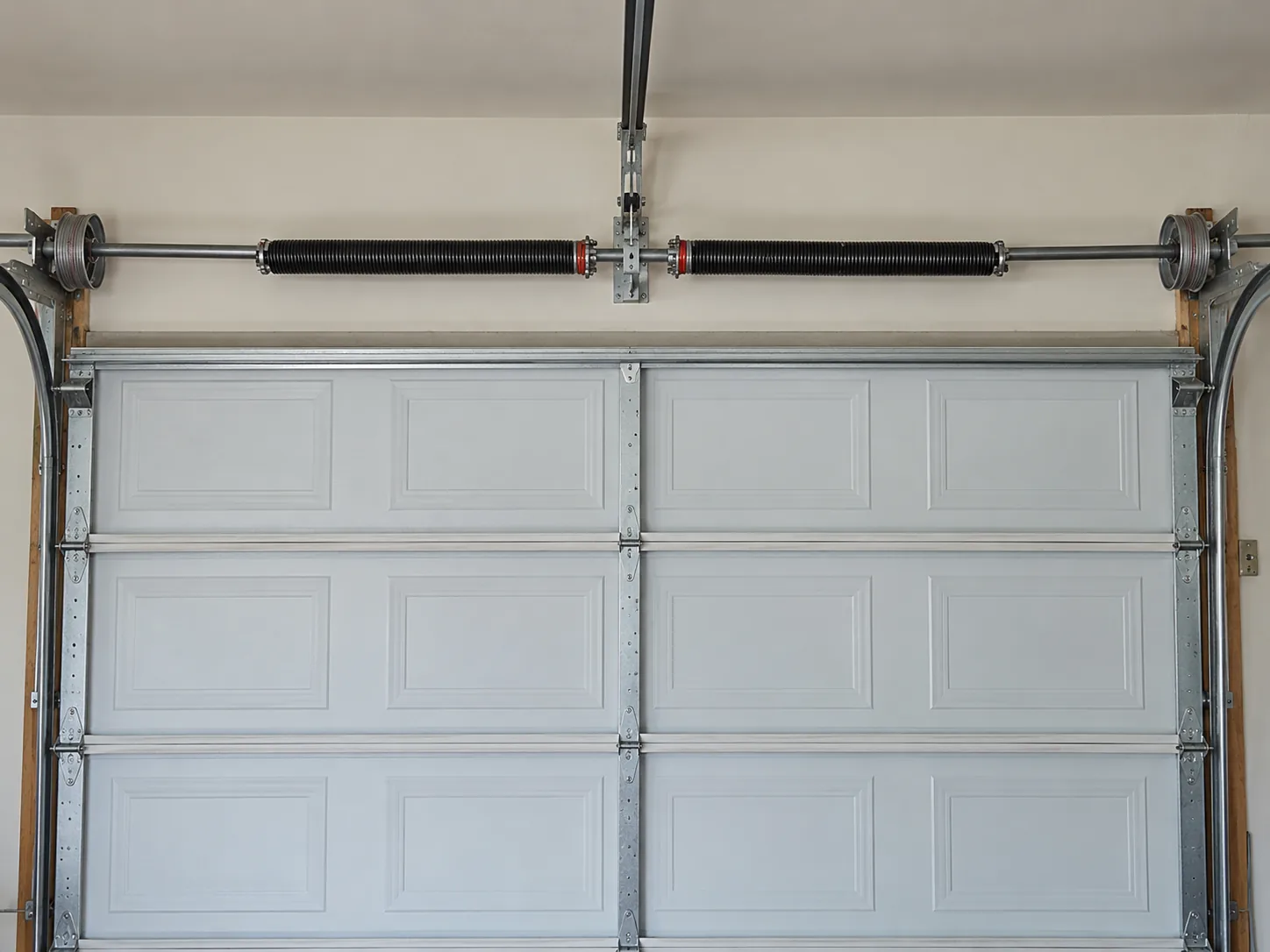
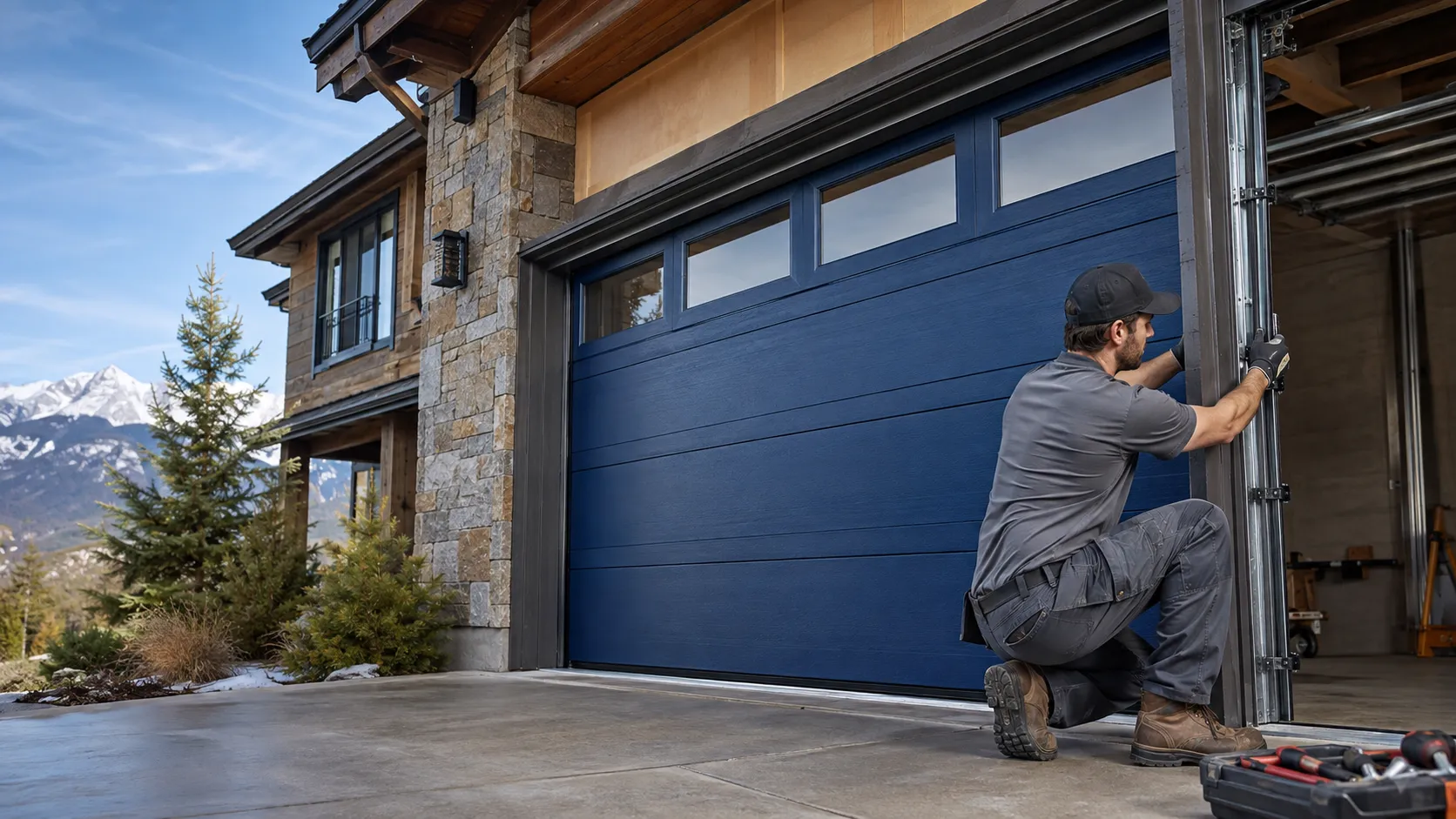
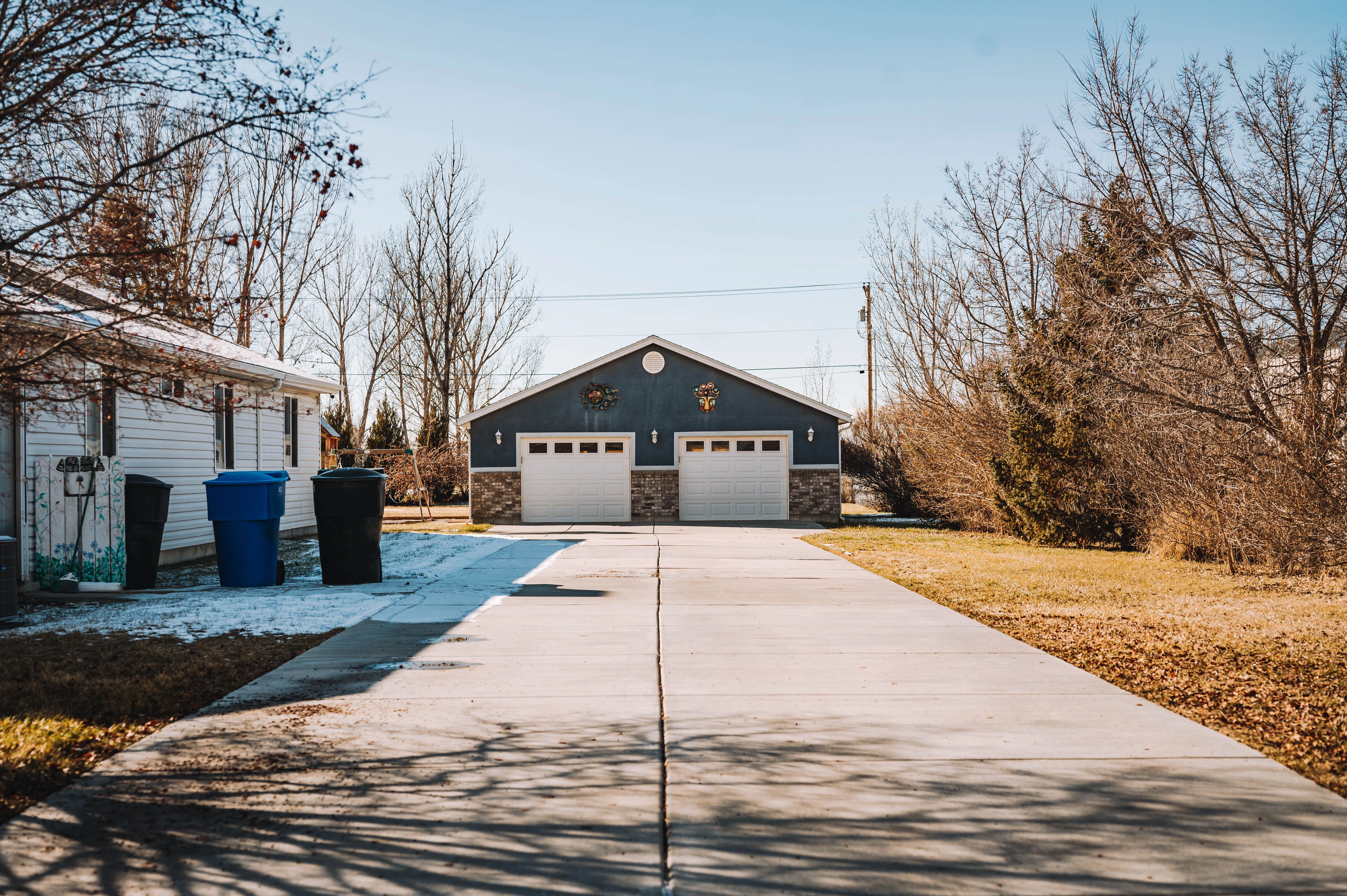
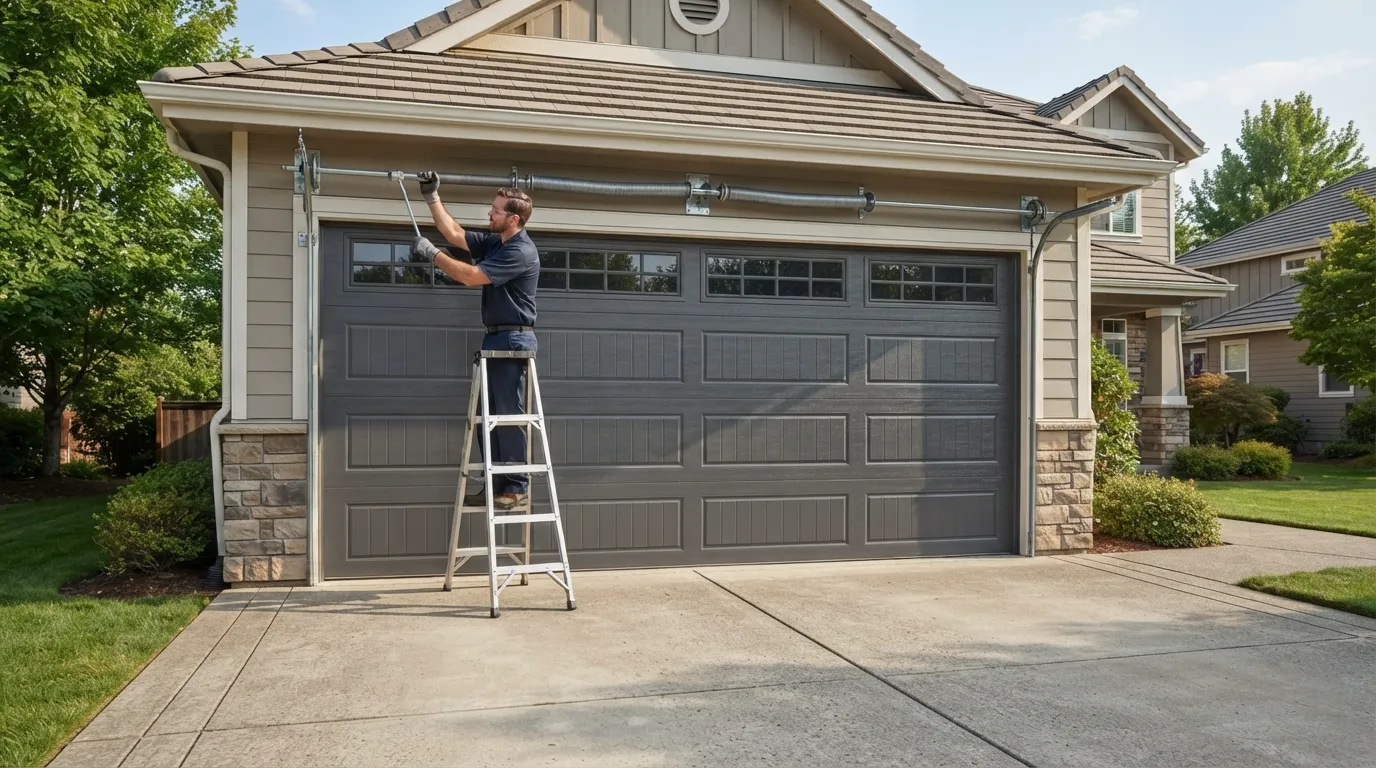
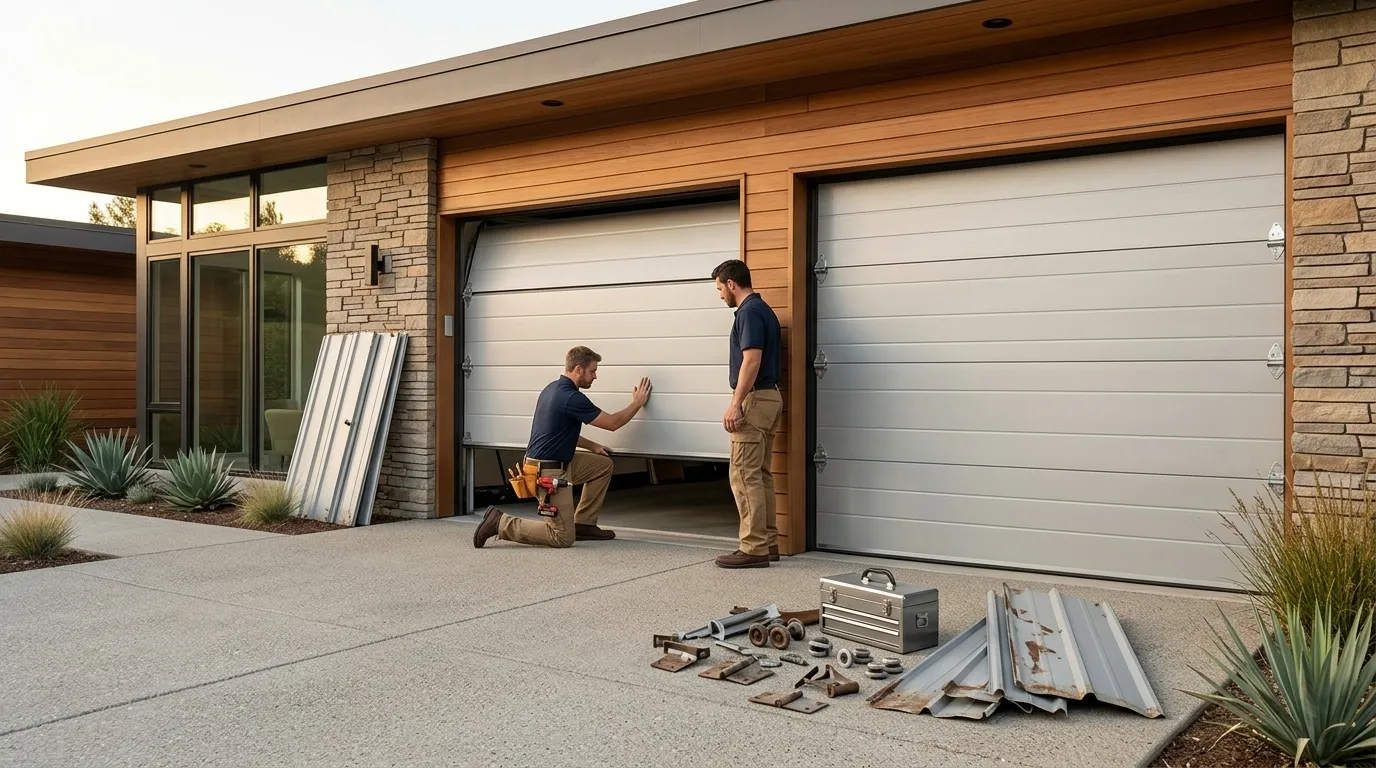
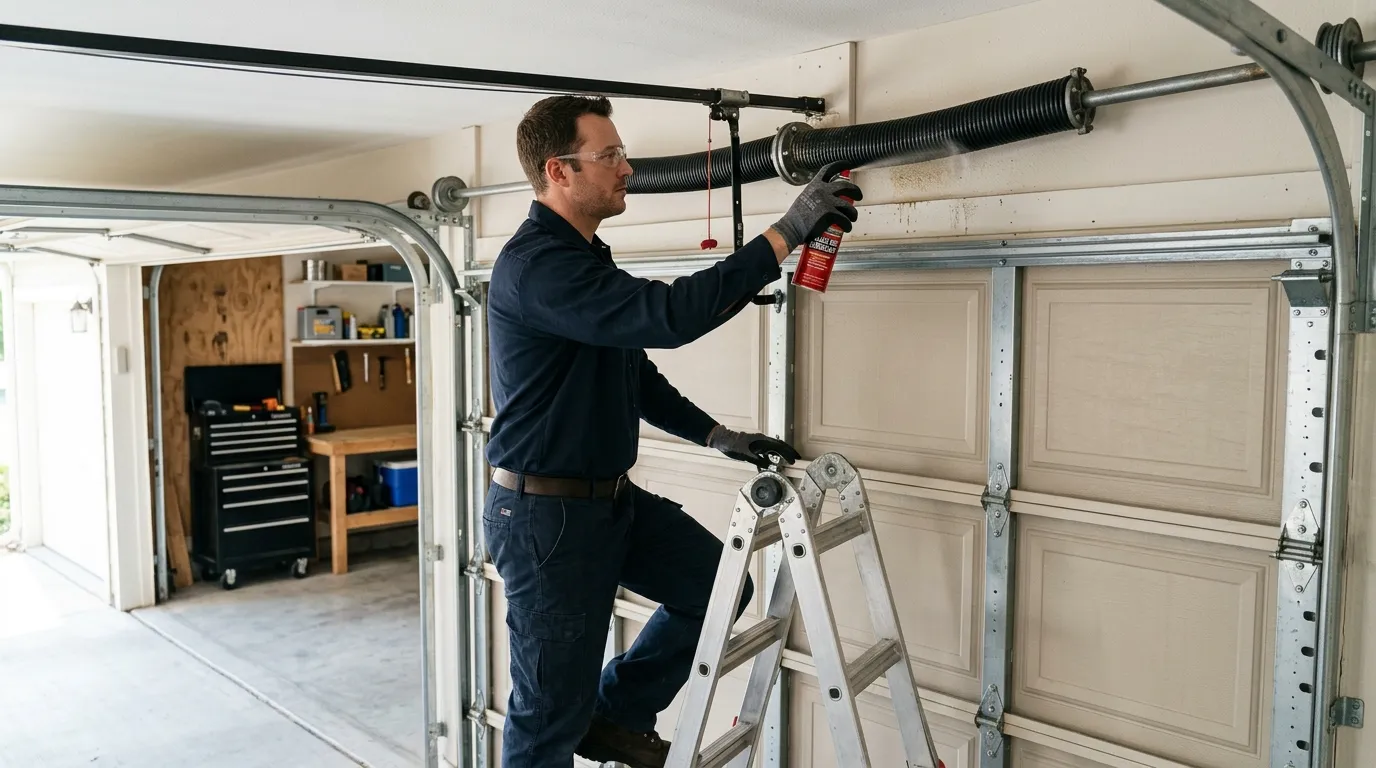
Installation on a newer Raymore home starts with the opening itself, not the door. We measure the header height and track clearance against what's actually there, because a 2002-built garage was framed for a taller door than the 7-footers common in older parts of the service area. We pull the old door and track, check the jambs are square, and set new track to match the width - wide doubles need heavier horizontal track and a reinforced strut on the top panel or the door sags at the center over time.
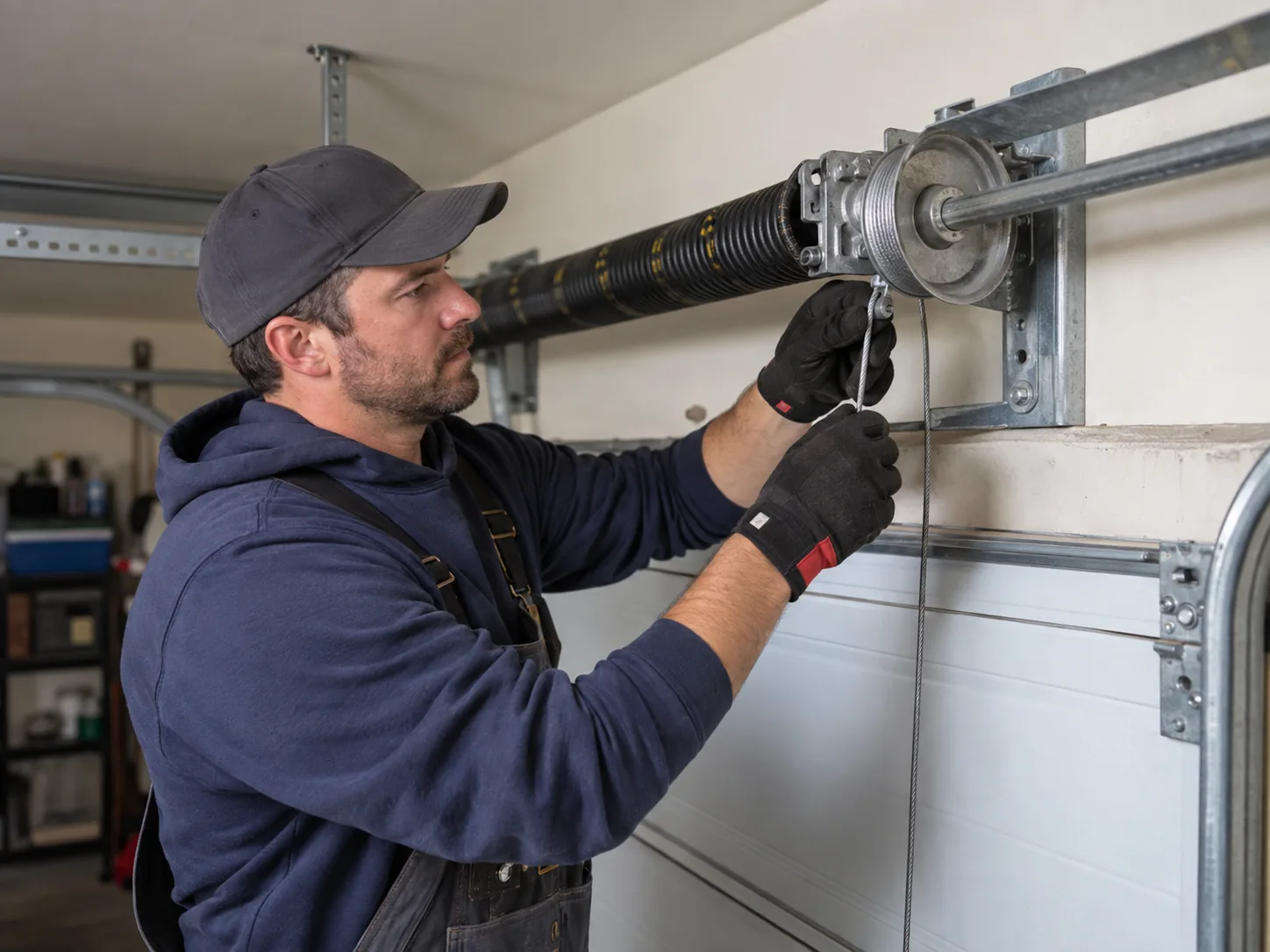
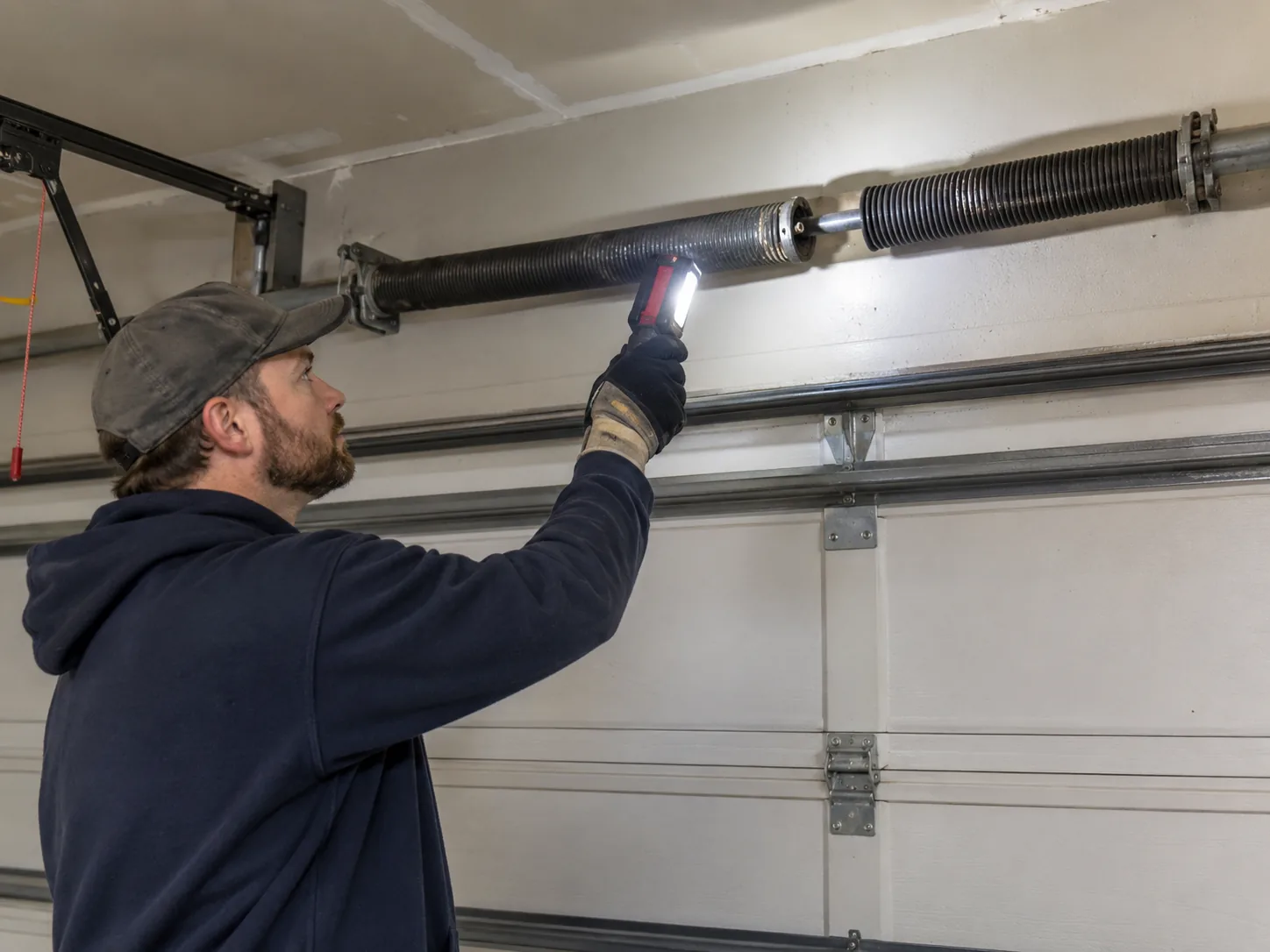
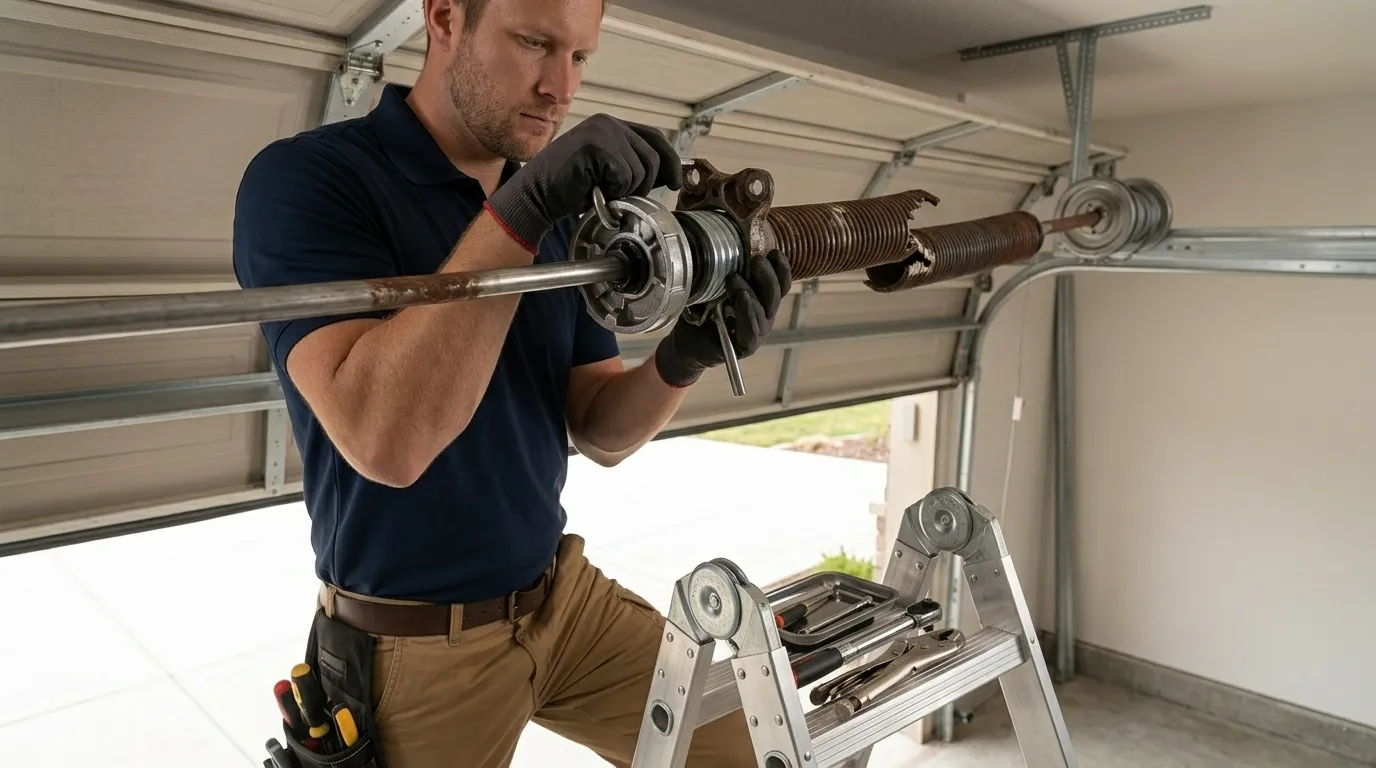
Spring sizing gets calculated to the door's actual weight, which on an insulated steel double runs heavier than the uninsulated doors common on older stock. Guessing the spring size on a door this size is how you end up with a door that either won't stay open or slams down fast - we size it to the panel weight and the drum diameter, not to what happened to be on the shelf. Opener mounting and safety sensor alignment get checked last, since a taller door changes where the sensor beam sits relative to the floor.