Drive-gear fatigue failure
Cycle counts on the original openers - chain-drive units standard on commercial installs through the early 2000s - are catching up too, and the strain shows first in the drive gear, not the motor.
Raymore, Blue Springs
Raymore's commercial buildings mostly date to the 2002 growth wave. We service the steel sectional doors and torsion hardware from that era, traveling 18 miles from Blue Springs.
Popular Services
Watch-outs
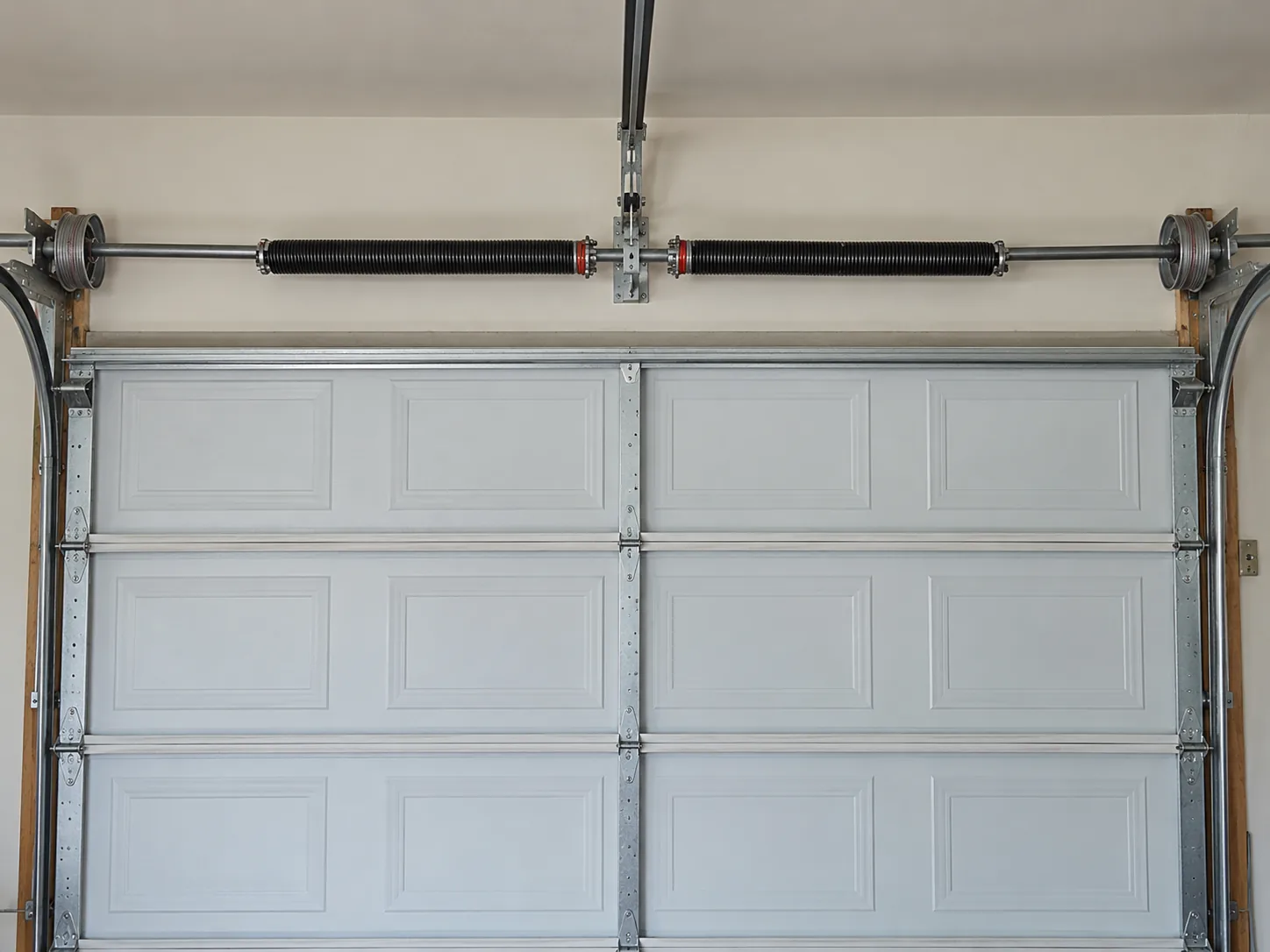
Raymore's commercial stock has a median build year of 2002, which puts most bays and loading doors at 20-plus years of service. That's the point where galvanized torsion springs from that construction wave start losing wind capacity, and the extension springs some builders used on lighter units start showing rust at the coil ends.
Cycle counts on the original openers - chain-drive units standard on commercial installs through the early 2000s - are catching up too, and the strain shows first in the drive gear, not the motor.
Because this area built out later than much of the wider Blue Springs service territory, where 1960s-70s stock is common, Raymore's failures skew toward fatigue rather than obsolescence. You're less likely to find a door nobody makes parts for and more likely to find one that's simply worn out the parts it has.
Track misalignment from repeated freight or delivery traffic is common on bays that see daily use. Weatherseal on the bottom panel goes brittle faster here in Missouri's cold winters, letting in drafts that a tenant will complain about before the door itself fails outright.
The repair
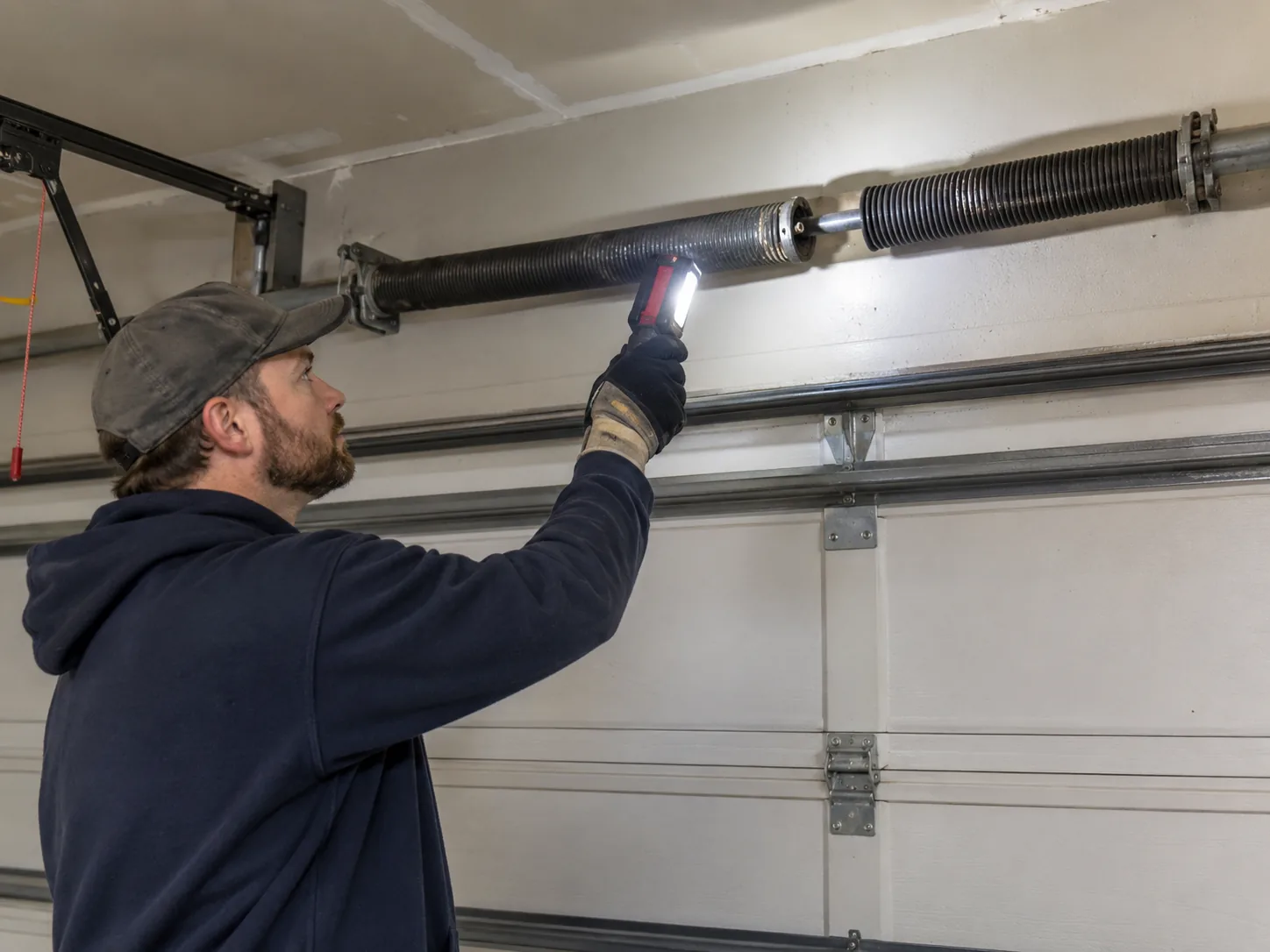
We start by cycling the door under load to hear where the strain is - a torsion spring past its wind count sounds different from a chain gear grinding on worn teeth.
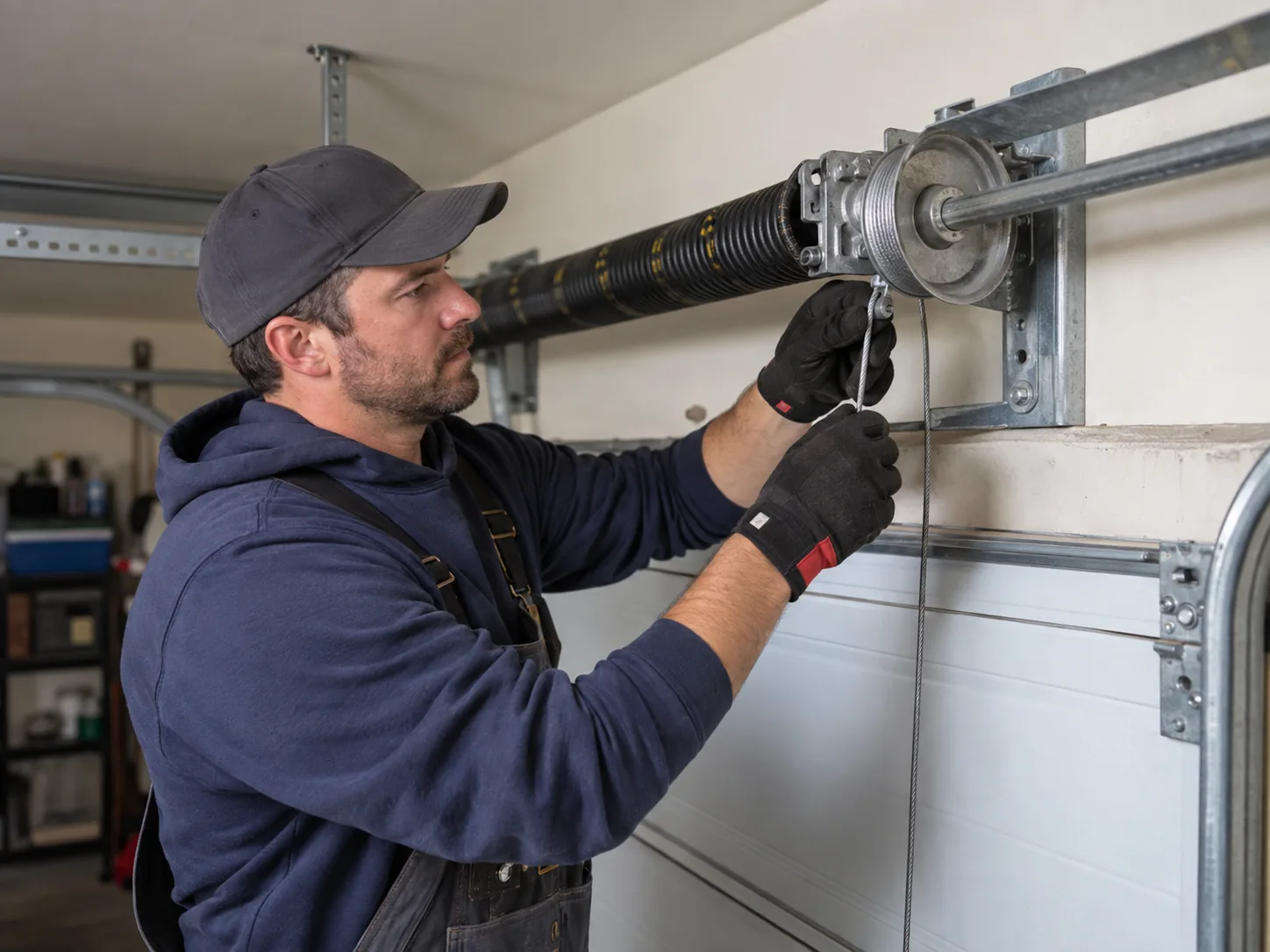
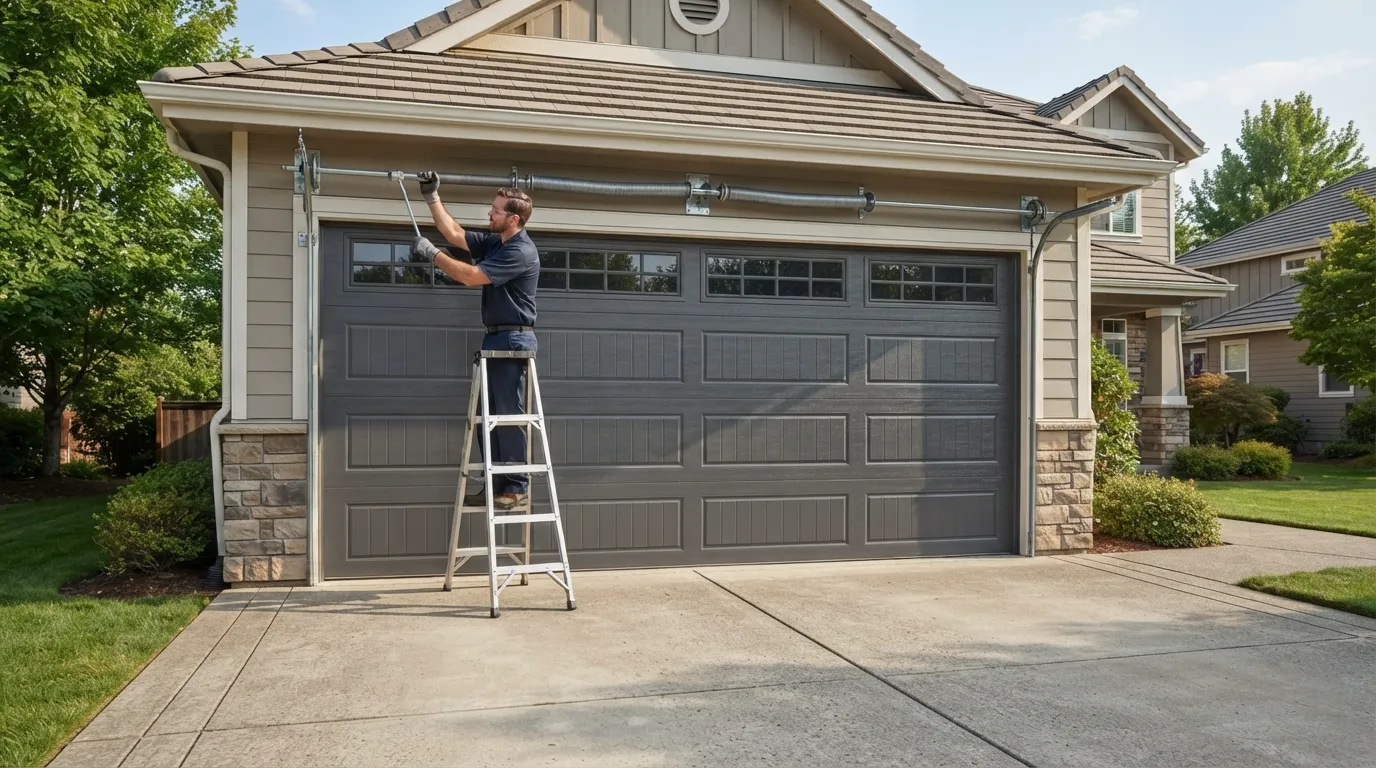
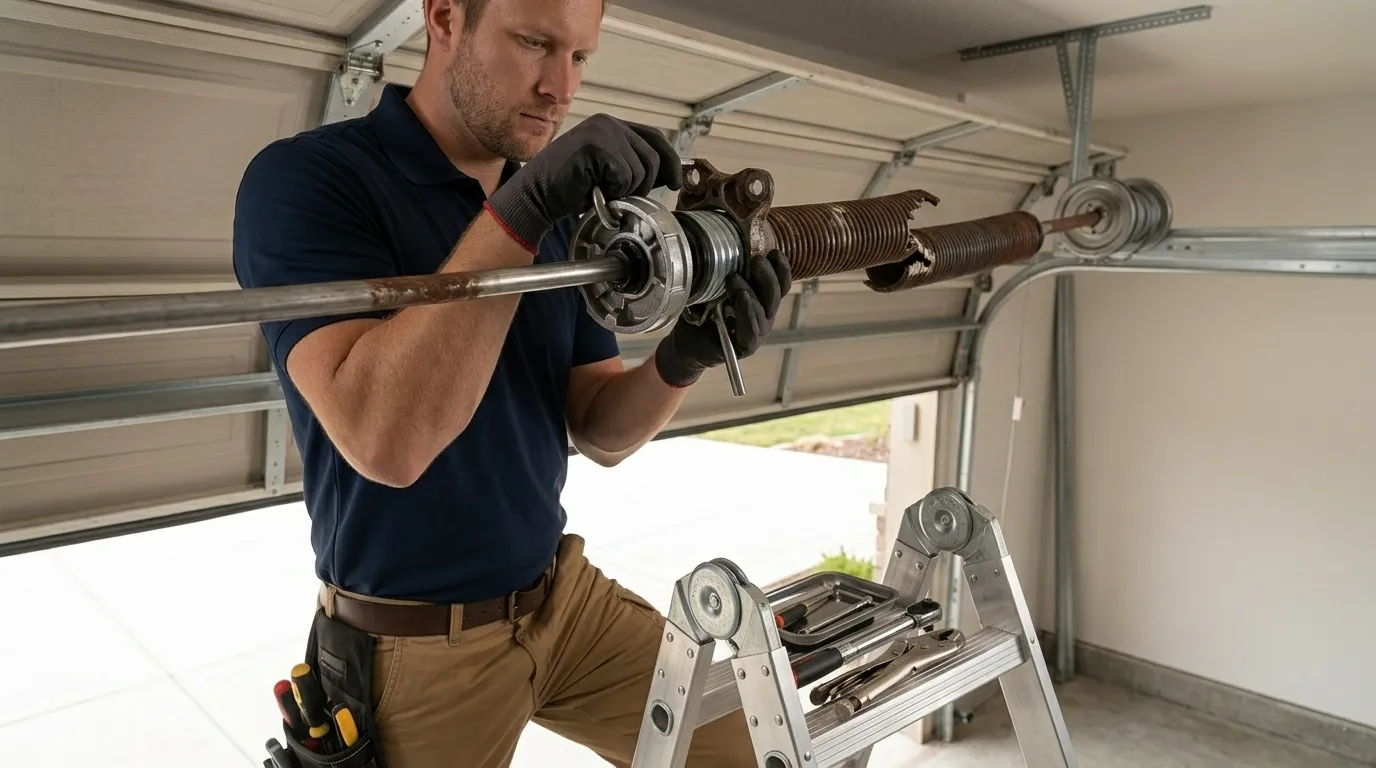
On 2002-era commercial sectional doors, that usually means pulling the spring assembly, checking shaft and drum wear, and replacing the spring rather than patching it; a spring that's lost tension once tends to go again within months.
If the opener is original to the building, we check the gear kit before recommending a swap. Chain-drive commercial openers from that construction period were built for a duty cycle, and replacing a stripped gear kit is often cheaper than a new unit, provided the motor and logic board test out.
We also re-torque hinges and rollers on doors that have seen two decades of daily freight traffic, since that's where a lot of the rattle and drift comes from before anyone notices a real fault.
On the truck
For a Raymore call we stock torsion springs sized for standard commercial sectional doors, since that's the door type most common to buildings from this era. We carry galvanized cable, rollers, and hinge sets rated for daily-cycle commercial use, not the lighter residential parts. Weatherseal stock is sized for the wider bottom channel used on commercial doors, which matters in a cold-weather climate where a poor seal costs a tenant real heating dollars over a winter.
We carry a range of chain-drive gear kits to match openers from the early 2000s commercial construction wave, plus the sensors and wiring commonly paired with them. One honest limit: if a building has a less common opener brand or a custom-width door, we may need to order the part rather than complete the job same-visit. We'll tell you that on-site rather than after we've started.
Warning signs
A tenant calls about a door that's slow to close or won't close all the way - often the first sign of a spring that's lost tension, not an opener problem, even though the opener usually gets blamed.
A door that reverses partway through its cycle on a 2002-built bay usually points to a safety sensor knocked out of alignment by forklift or pallet traffic, easy to fix once you know where to look. A grinding or clicking sound from the header is almost always the chain-drive gear kit wearing down, and it gets louder before it fails completely.
Cold mornings in this climate band can also make a stiff door worse - hardware that was already tight from wear seizes up further once temperatures drop, which is when a lot of these calls come in.
DIY or pro
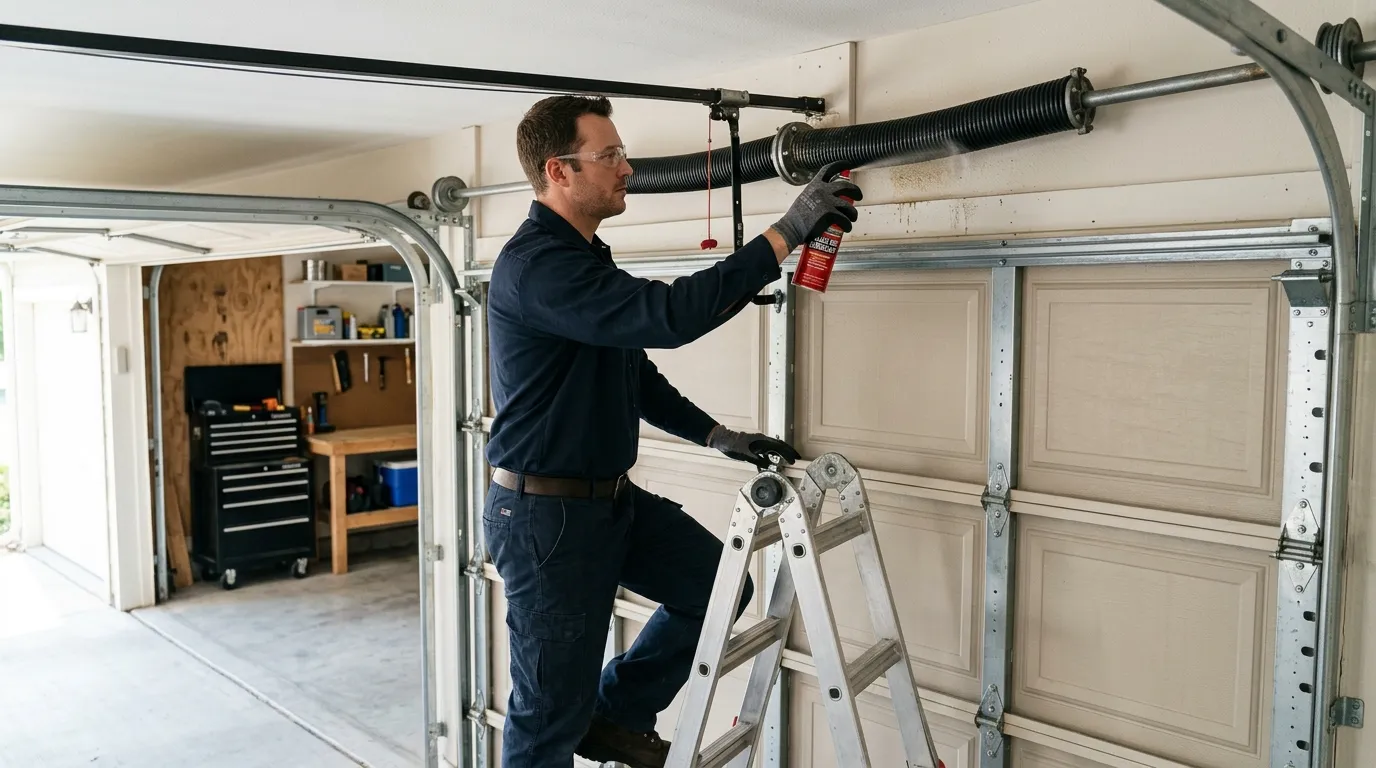
Lubricating rollers, hinges, and the track on a schedule is reasonable for building maintenance staff to handle, and it slows down a lot of the wear we see on daily-cycle commercial doors. Tightening loose bolts on brackets is fine too, as long as the door is down and the opener is unplugged.
Torsion springs are not a DIY job on a commercial door - the spring is under enough load to cause serious injury, and the wind counts on commercial units are higher than residential. Same goes for cable replacement or anything involving the drum and shaft. If a building's income and traffic can absorb the cost of downtime, it's worth calling before a partial fix turns into a full failure during business hours.
Questions
About 18 miles. We travel to Raymore for commercial garage door calls; we don't keep a branch or depot there, so we schedule the trip as part of the service call rather than promising a fixed arrival window.
Generally, yes. Raymore's commercial stock has a median build year around 2002, newer than much of the surrounding service area where 1960s-70s buildings are common. That means more standard steel sectional doors and torsion hardware, and fewer of the odd legacy parts you find in older buildings.
It can. The area sits in a moderate cold climate band, and bottom-panel weatherseal on commercial doors tends to go brittle faster through repeated freeze cycles. A worn seal lets in drafts and raises heating costs for tenants, which is often the first thing that gets noticed.
Explore more
Ready when you are
Blue Springs Garage Door Pros repairs and installs garage doors, springs and openers in Blue Springs, MO and the surrounding area.