Pleasant Hill, Blue Springs

Panel Replacement for Pleasant Hill Garage Doors

Panel replacement for Pleasant Hill's 1990s-era steel sectional doors, run from our Blue Springs shop 14 miles out. Standard sizes, real lead times, no invented quotes.

Panel Replacement for Pleasant Hill Garage Doors in Blue Springs
Serving Blue Springs, MOBackground-checked techsHonest, upfront pricingFast local response

Local causes

Why This Fails Locally

Pleasant Hill is a small market by the numbers - about 3,384 households, nowhere near the volume of the bigger towns closer to Blue Springs. That matters for panel work because it means no shop stocks every profile on the truck on the off chance a Pleasant Hill job comes in. We plan the panel before we load up, not after.

The housing stock here also skews newer than most of the service area. The median home in Pleasant Hill went up around 1993, a good two decades past the 1960s-70s stock that's typical across the rest of the territory. That's actually good news for panel replacement: doors from that era are steel sectional, built to standardized 7-foot and 8-foot rough openings, not the custom widths you find on older subdivisions where garages were framed before anyone agreed on a standard size.

Where panels fail here is usually the same handful of causes - a car backing into the bottom section, a basketball dent, hail pitting on the cold-moderate climate band this whole region sits in, or UV fade that leaves one section a shade off from the rest. None of that is exotic. It's just wear on a door that's old enough to have taken some hits but young enough that parts still exist.

Why This Fails Locally

DIY or pro

Can You Do This Yourself

A single bottom panel on a standard 7-foot or 8-foot steel sectional door is one of the more DIY-friendly garage door repairs, if the door is unwind and the panel isn't structural to a torsion setup with high spring tension.

Spring-proximity hinge unbolting

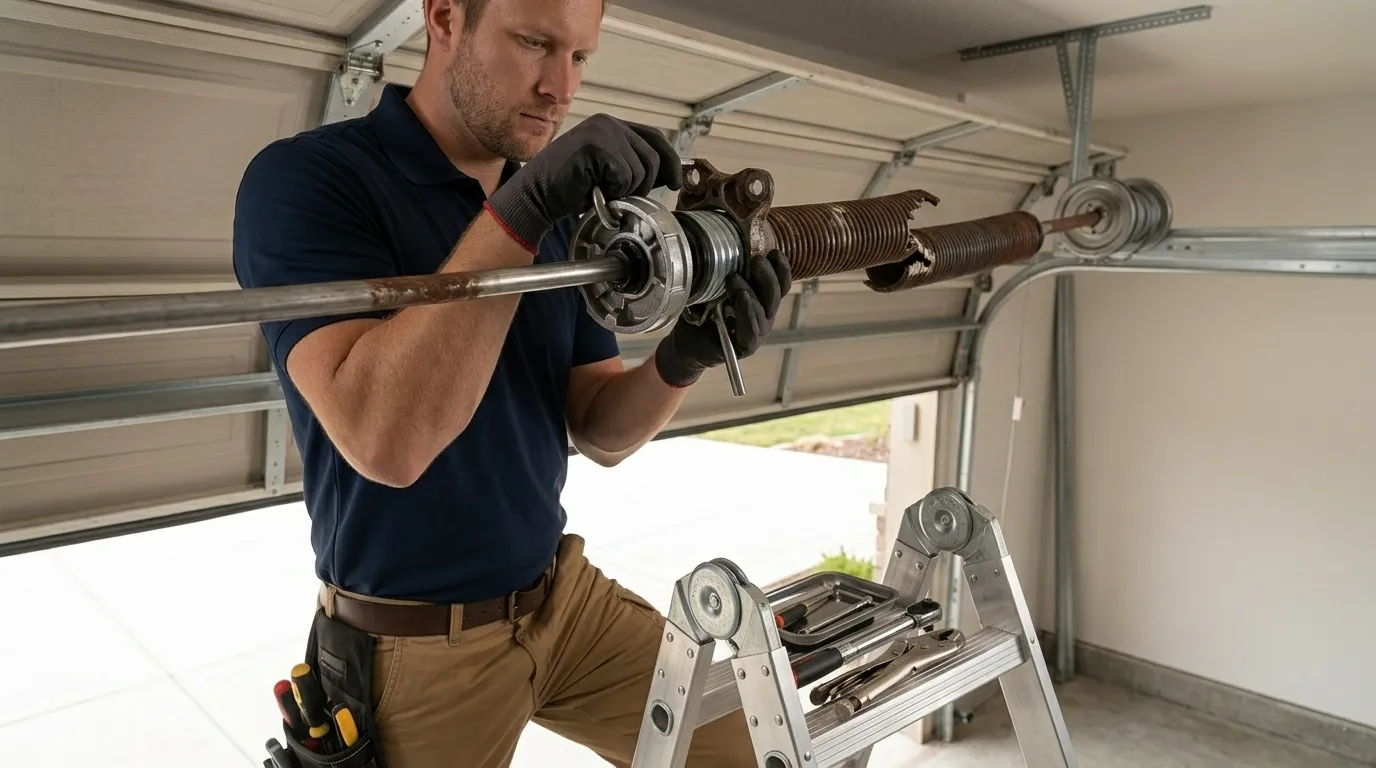
You unbolt the hinges, slide the old section out, bolt the new one in, and re-hang. Where it stops being a weekend job: any panel above the bottom row means working near a loaded torsion spring, and that's not a place to learn on the fly - the spring stores enough force to break a hand.

Decades-old color and profile

Matching an exact color and rib profile on a door that's 20-plus years old is also harder than it sounds; factories change tooling and finishes over time, and a panel that's technically the right size can still look wrong next to the faded ones around it.

Helper and hand-tool necessity

If you're comfortable with hand tools, have a helper, and it's a bottom section on a door with the spring already secured, it's doable. If it's a top or second panel, or the door won't hold its position when disconnected from the opener, call it in.

Warning signs

How It Shows Up

On a door this age, panel damage usually announces itself as a dent that doesn't pop back out, a crack along a seam where the steel has fatigued, or a section that's visibly bowed inward or outward compared to the rest of the door.

Bottom-corner rust-through seams

Sometimes it's less obvious - a panel that's structurally fine but rusted through at a bottom corner where snowmelt sat against the steel over a few winters, which is common enough given the cold-moderate climate this area sits in.

Roller-binding panel warping

You'll also see it in how the door runs. A bent or bowed panel throws the whole section out of true, so rollers bind in the track, the opener strains, and you get grinding or a door that reverses partway up.

Hail-pitted cosmetic damage

On a standardized 7- or 8-foot door, that misalignment is usually fixable without replacing hardware - the track just needs to be reset once the bad panel is out. Sometimes the tell is cosmetic only: a faded or hail-pitted panel next to sections that still look new, which happens more with south- or west-facing doors that catch more sun and weather over the years.

What the Fix Involves

The repair

What the Fix Involves

We start by matching the panel - brand, profile, and color, or as close as the manufacturer's current lineup allows. On a door built around the early '90s standard sizes, matching is usually straightforward since 7-foot and 8-foot sectional dimensions haven't changed much, but exact color match can be a step behind if the original run has been discontinued.

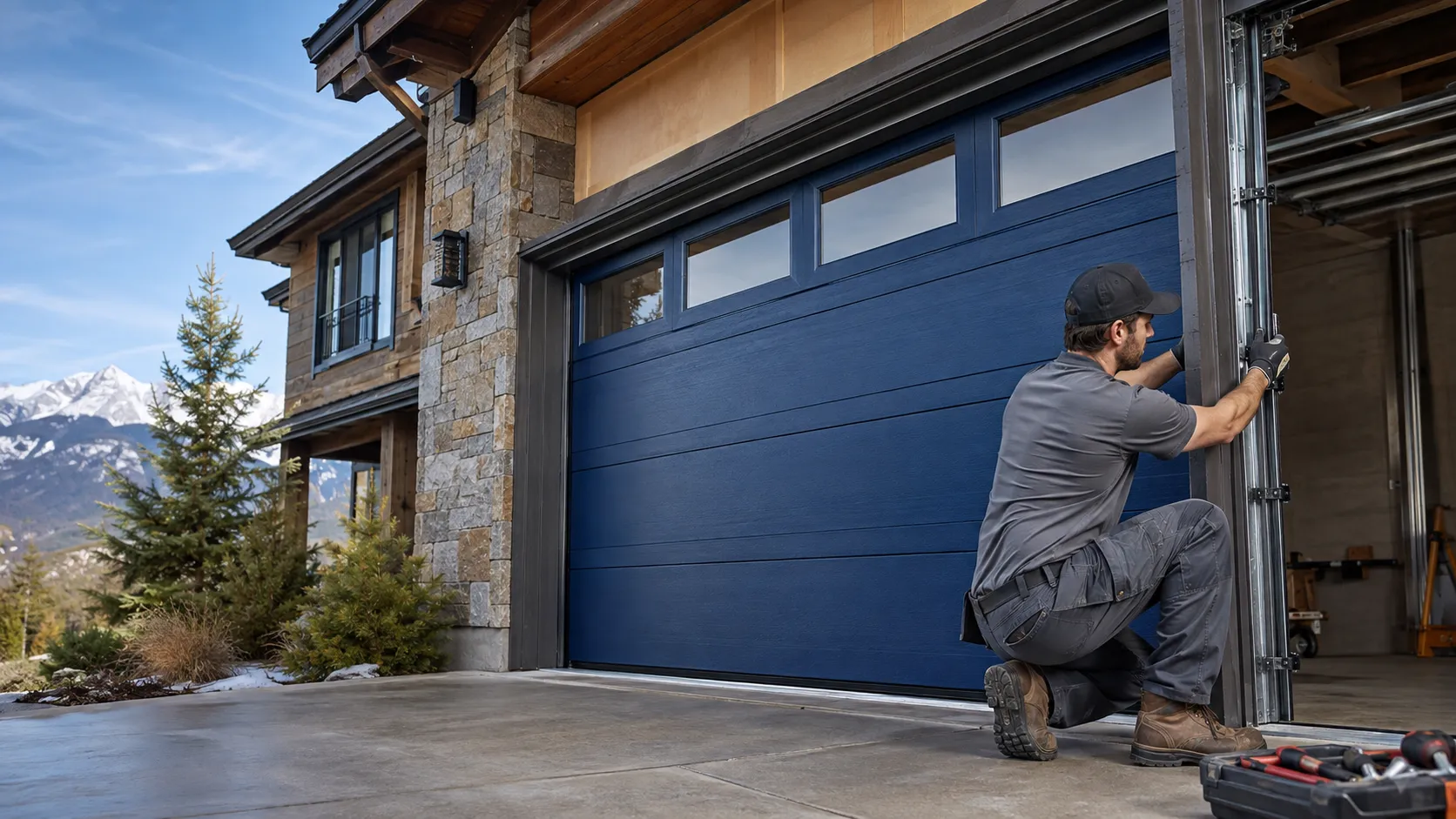
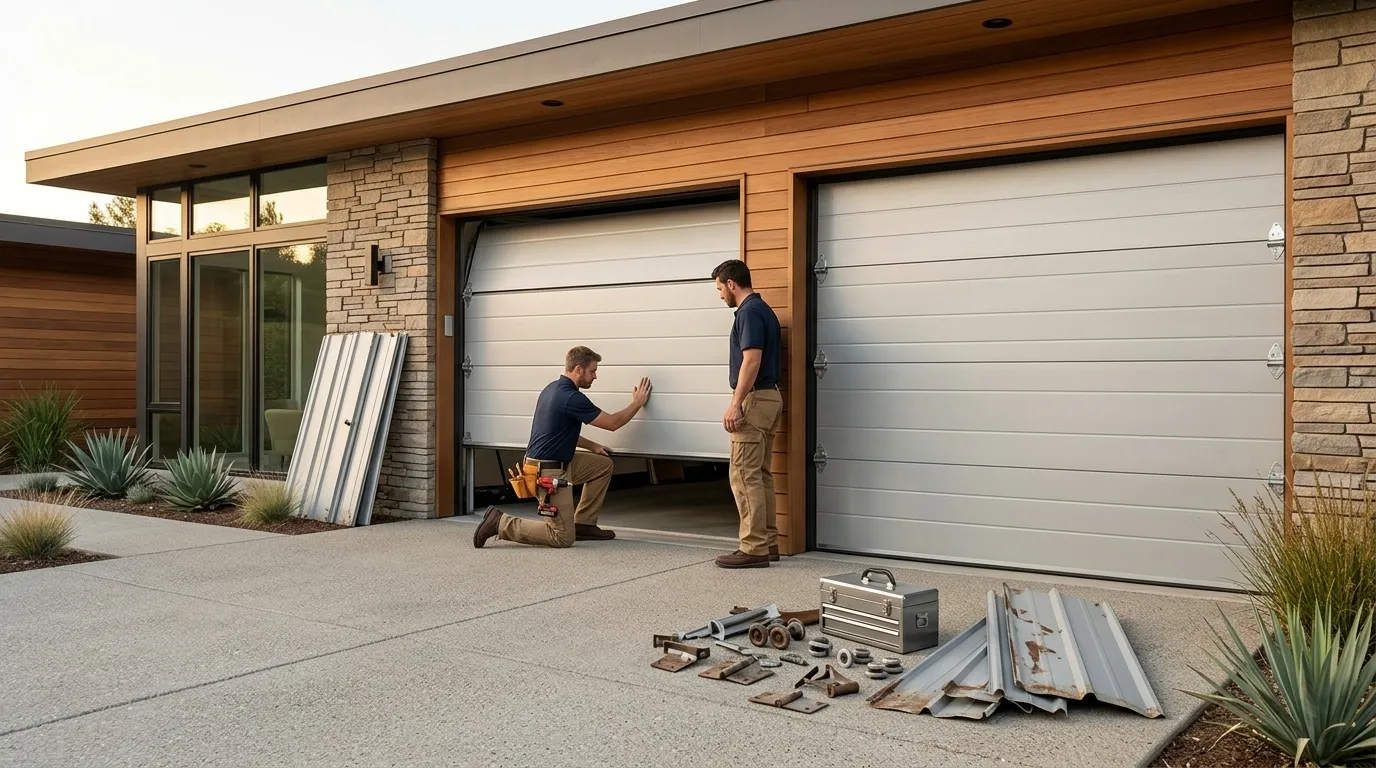
Once the part's in hand, the job is mechanical: disconnect the opener, secure the door in position, pull the hinges and end hardware off the damaged section, swap in the new panel, and re-hang the hinges, rollers, and end caps. If the damage sits below or beside where the torsion spring anchors, we check spring tension and cable alignment before closing it back up, since a panel swap is a normal time to catch a spring that's a season or two from failing anyway.

Last step is a full-cycle test - up, down, reverse-on-obstruction - to confirm the door tracks straight and the opener isn't fighting a misaligned section.

Watch-outs

What Can Go Wrong

The most common surprise on a job like this is color mismatch. Steel garage door finishes fade with UV exposure over the years, and a brand-new panel - even the correct model number - can sit a shade brighter than the rest of the door for a season or two until it weathers in.

Upfront part honesty disclosure

We'll tell you that up front rather than let you find out at pickup. The other risk is hidden track or hinge damage that only shows once the bad panel is off.

Hidden-hinge and track damage

A dent big enough to need panel replacement often bent the roller track or stressed the hinge next to it, and that's an add-on cost we can't quote until we're looking at it in person.

Discontinued-profile full-door replacement

Honest limitation: if the specific panel profile has been discontinued by the manufacturer and no equivalent exists, panel replacement isn't the answer - full door replacement is, even on a door that's otherwise sound. We'll say so rather than force a mismatched part onto a good door.

The Cost of This Job

Pricing

The Cost of This Job

We don't quote a number here without seeing the door, but a few things move the price on a Pleasant Hill job specifically. Standardized 7- and 8-foot sizing from the early-'90s housing stock generally means less custom fabrication than an older, oddly sized door elsewhere in the service area - that tends to keep parts cost predictable.

What does add cost: exact color and profile matching if the original run is discontinued, any hidden track or hinge damage found once the panel's off, and whether the job needs a second trip if a part has to be special-ordered rather than pulled from stock. Given Pleasant Hill sits about 14 miles from our Blue Springs shop, we try to confirm the part before the first visit so it's one trip, not two.

With median household income here running $94,840 - noticeably above the $71,881 figure for the wider service area - we see more owners choose a full door swap over a spot-matched panel once fade becomes visible, simply because the cost gap between the two options matters less to the decision than it might elsewhere.

Questions

Common questions

Will a new panel match the color of my existing door exactly

Not always. Steel doors fade with sun exposure over the years, and a factory-fresh panel can look a shade brighter than the rest of the door for a while. If the original finish is discontinued, we'll tell you before ordering rather than install a mismatch and surprise you.

My house was built in the early '90s - is that a standard door size

Most likely yes. Housing from that era in Pleasant Hill typically uses standard 7-foot or 8-foot sectional openings, which makes panel sourcing more straightforward than on older, custom-framed garages elsewhere in the area.

Do you keep a stock of panels for Pleasant Hill doors

No - we run this from our Blue Springs shop, about 14 miles out, and order the specific panel once we've confirmed brand, size, and profile. We try to lock that in before the first visit so the job doesn't need a second trip.

Is it worth replacing one panel or the whole door

Depends on the door's age and whether the panel's discontinued. If the profile is still made, a single-panel swap is usually cheaper. If it's been dropped from the lineup with no close match, full replacement is often the more honest answer even if the rest of the door is sound.

Ready when you are

Need a garage door sorted in Blue Springs?

Blue Springs Garage Door Pros repairs and installs garage doors, springs and openers in Blue Springs, MO and the surrounding area.

CallGet a quote