
Vintage-opener hesitation stall
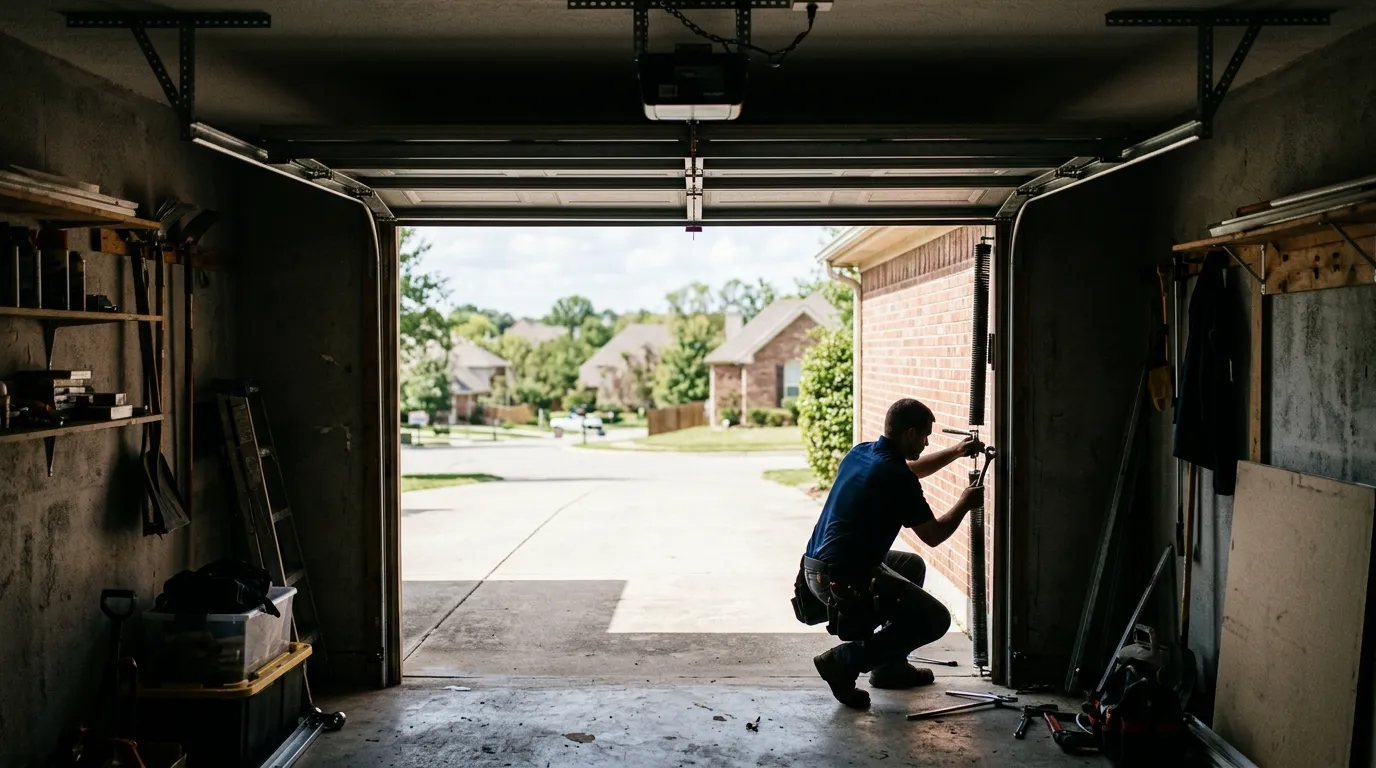
Some homeowners describe the door as "hesitating" - the motor engages, then stalls, then catches again a second later. That's a worn gear, not a spring problem, and it's specific to openers of that vintage.
Pleasant Hill, Blue Springs
Garage door repair and service for Pleasant Hill's 1990s-era homes, built by a crew based 14 miles away in Blue Springs. Openers, springs, tracks, and doors from that build era.
Popular Services
Local causes
The fault we see most in Pleasant Hill isn't the same one we see closer to Blue Springs. Houses here went up mostly in the early-to-mid 1990s, with a median build year of 1993 - a full generation newer than the 1974 median across the rest of the area we cover. That gap matters because it's not the door failing, it's the parts that came with the house: chain-drive openers with circuit boards from that decade, factory-installed extension spring kits on lighter steel doors, and nylon idler pulleys that were never meant to run for thirty-plus years.
By the time a house built in 1993 has hit its early thirties, the opener's logic board is the first thing to go, followed by the drive gear stripping inside the housing. Springs from that era were sized for the original door weight, and if a panel was ever swapped for something heavier, the spring never got upsized to match. We're not chasing rust-through on 1970s hardware in Pleasant Hill. We're chasing electronics and undersized springs on doors that still look fine from the driveway.
DIY or pro
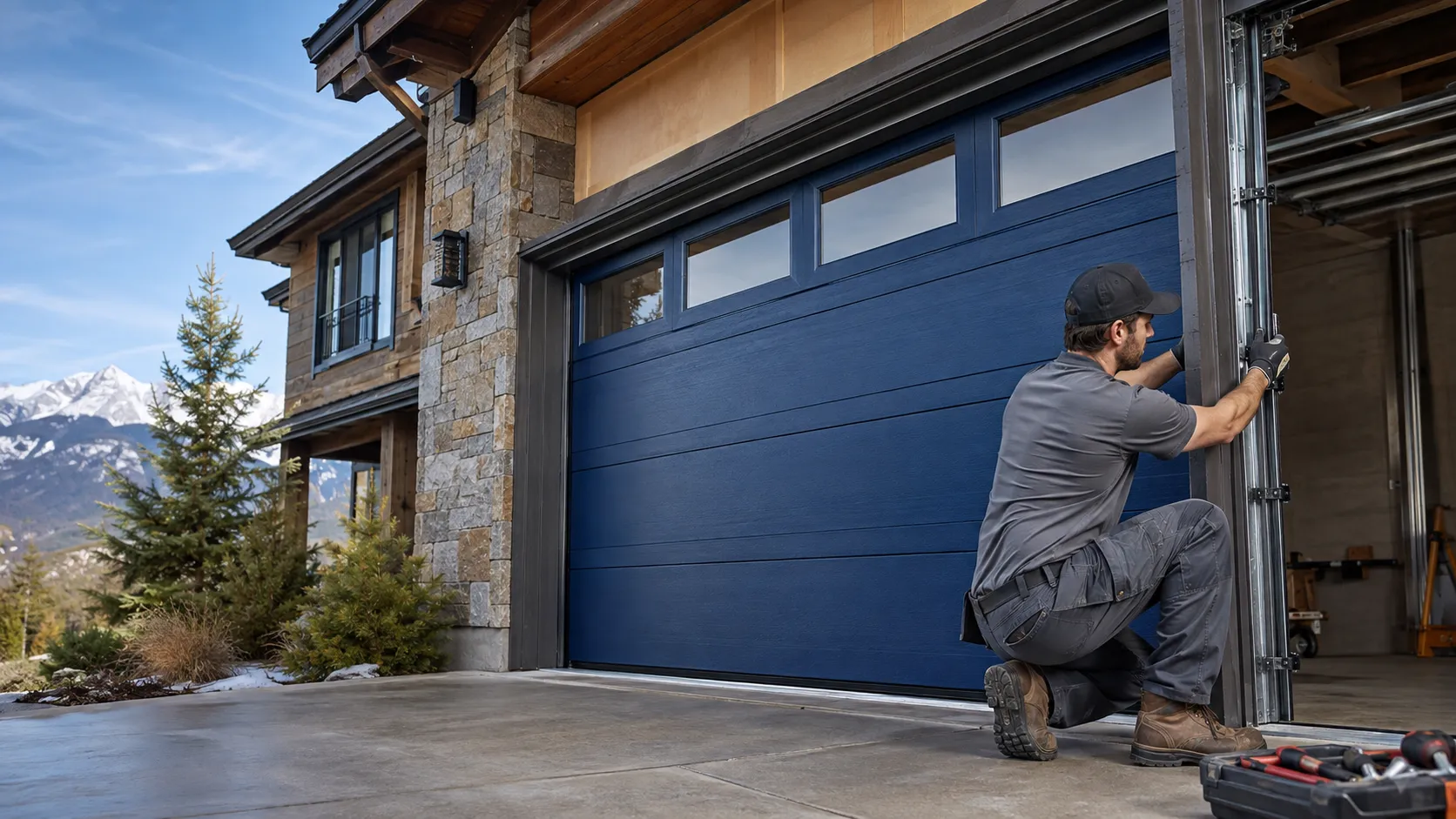
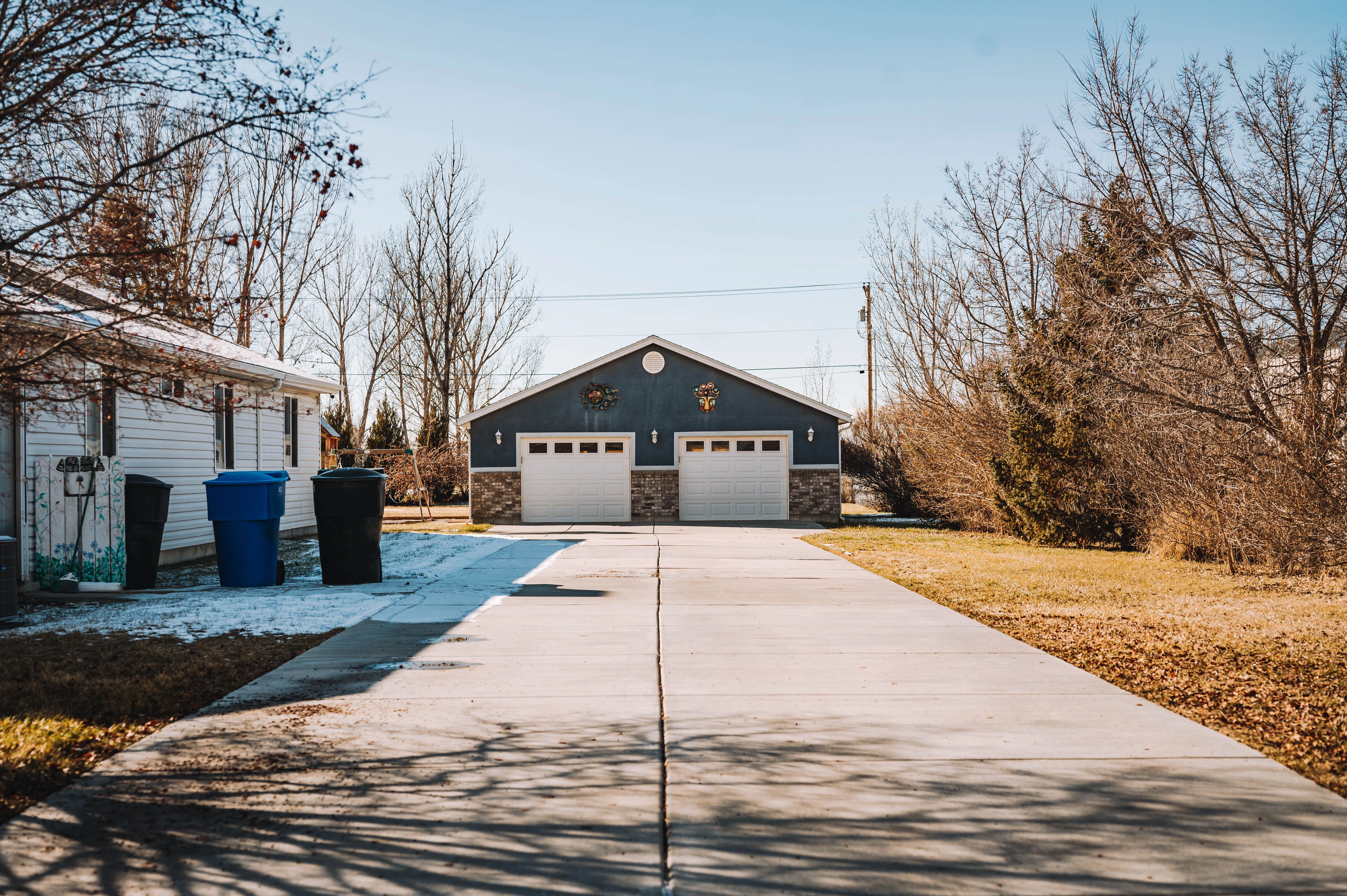
Some of this is fair game for a homeowner with basic tools. Tightening a loose track bracket, replacing worn rollers, lubricating hinges, or swapping a remote battery - none of that needs a service call. Resetting an opener's travel limits after a logic board hiccup is also usually in a manual you can find online.
What isn't worth doing yourself: anything involving the spring system. Extension springs under tension can put someone in the hospital, and torsion springs even more so. If your opener's circuit board is failing - lights flickering, remote losing range, the unit humming without lifting - that's also not a DIY electrical repair once you're past swapping the board yourself, which most people aren't equipped to source or install correctly. Know the line between adjustment and repair, and don't cross it with a spring in the room.
Warning signs
In a house built around 1993, the opener usually goes first. You'll notice the unit running longer than it used to before the door moves, or making a grinding sound as the drive gear wears down inside its housing.
Some homeowners describe the door as "hesitating" - the motor engages, then stalls, then catches again a second later. That's a worn gear, not a spring problem, and it's specific to openers of that vintage.
On the door side, extension springs from a 1990s build start to sag rather than snap outright. You'll see the door sit slightly open at the bottom when closed, or notice it takes more force to lift by hand than it used to.
Cold-weather mornings make this worse - the moderate cold winters we get here stiffen old lubricant and tighten metal-on-metal tolerances just enough to turn a marginal spring into a door that won't budge until the sun's been up a while.

The repair
For an opener from the early '90s build era, the honest fix is usually a full unit swap rather than chasing a bad board - parts for openers that old are getting harder to source, and a new logic board on a thirty-year-old chassis doesn't buy you much life. We'll check the drive gear and rail first, since sometimes that's the whole problem and the motor itself is fine.
For sagging extension springs, we replace the pair - never just one - and check the door's balance afterward with the opener disconnected. If the original springs were undersized for a heavier replacement panel at some point, we size up rather than match what's there now. Track alignment gets checked too, since houses settling since 1993 can shift a track just enough to cause binding that looks like a spring problem but isn't.
Watch-outs
Replacing one extension spring instead of the pair is the most common shortcut, and it's a bad one - the door racks sideways under mismatched tension and eats a roller or a track bracket within months.
Reusing an old spring cable that's already frayed at the drum end is another; it holds until it doesn't, usually while the door's halfway up. On the opener side, the mistake is trying to save an aging chain-drive unit with a patch fix when the gear housing is already worn oval instead of round.
It'll run for a few more weeks and then strip completely, usually at the least convenient moment. We'll tell you straight when a repair isn't worth it - sometimes the honest number is the cost of a new opener, not another hour of labor on the old one.
Pricing
We don't quote a price without seeing the door, since a gear repair, a spring pair, and a full opener swap land in different brackets and Pleasant Hill's newer housing stock tends to need the opener work more often than the spring work. What we can say is that this area's household income runs higher than the rest of our coverage area - $94,840 here against a $71,881 median across the broader service territory - and that tracks with what we see: more owners here choosing a full opener replacement over a patched repair when the unit's original to a 1993 build.
We travel out from Blue Springs for these calls, about 14 miles each way, so we bundle the diagnostic into the service call rather than charging separately for a look. Ask for the number on your specific door before we start; we don't work off assumptions from other job sites.
Questions
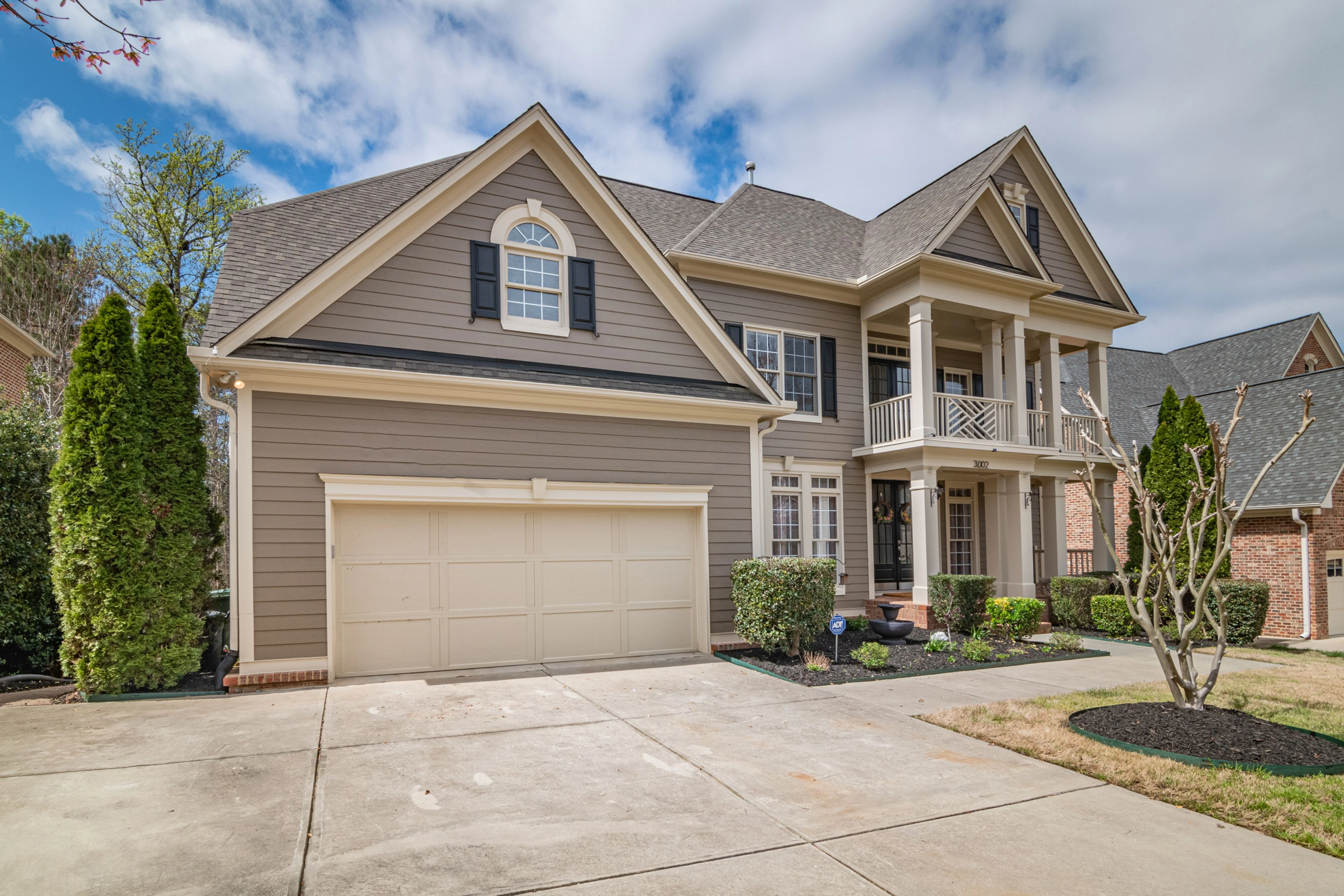
If your house was built around the early '90s like most of Pleasant Hill, the opener is original or close to it. Circuit boards and drive gears from that era are past their expected life, even when the door panel and track look fine. It's an electronics and gear problem, not a door problem, and replacing the opener usually solves it for good.
No. Extension springs work in pairs, and even if only one snapped, the other is the same age and close to the same failure point. Replacing both keeps the door balanced and prevents it from racking sideways, which damages rollers and tracks that were otherwise fine.
Yes. The moderate cold winters here stiffen old grease and tighten metal tolerances on aging hardware. A spring or track that's borderline in summer can bind or refuse to move on a cold morning, especially once the hardware is past twenty-five or thirty years old.
If the gear housing is already worn oval or the board is failing intermittently, repair usually buys a few weeks at best. For openers original to a 1990s build, we'll tell you honestly when a new unit is the better spend rather than billing you for a patch that won't hold.
Explore more
Ready when you are
Blue Springs Garage Door Pros repairs and installs garage doors, springs and openers in Blue Springs, MO and the surrounding area.