
Split spring danger signals
If the door won't open and you can hear or see a coiled spring split at the top, don't unplug the opener and force it by hand; leave it down and call.
Pleasant Hill, Blue Springs
Emergency garage door repair for Pleasant Hill, MO homes built after 1993, serviced from Blue Springs, 14 miles out. Torsion springs, openers, broken cables fixed right.
Popular Services
Local causes
Most houses in Pleasant Hill went up around 1993, well after the older torsion-spring conversions and side-mount hardware common in the tighter, older pockets of the Blue Springs service area. By the early '90s, builders here were putting in factory-standard steel sectional doors on center-mounted torsion springs with chain or belt-drive openers bolted to a wood header. That hardware is more consistent than what you find on 1960s and '70s stock, but it's now 30-plus years old on the original homes, and torsion springs rated for that era's door weight are wearing out at the same time across whole blocks built in the same short window. When one spring goes on a street like this, the neighbor's is usually close behind. Cold-climate temperature swings work on the metal fatigue the same way everywhere in this part of Missouri, but a 1993 door has different failure points than a 1965 one - the coil count, the drum size, and the header framing were all built to a different code minimum. That's the piece that gets missed when someone treats every call the same.
DIY or pro
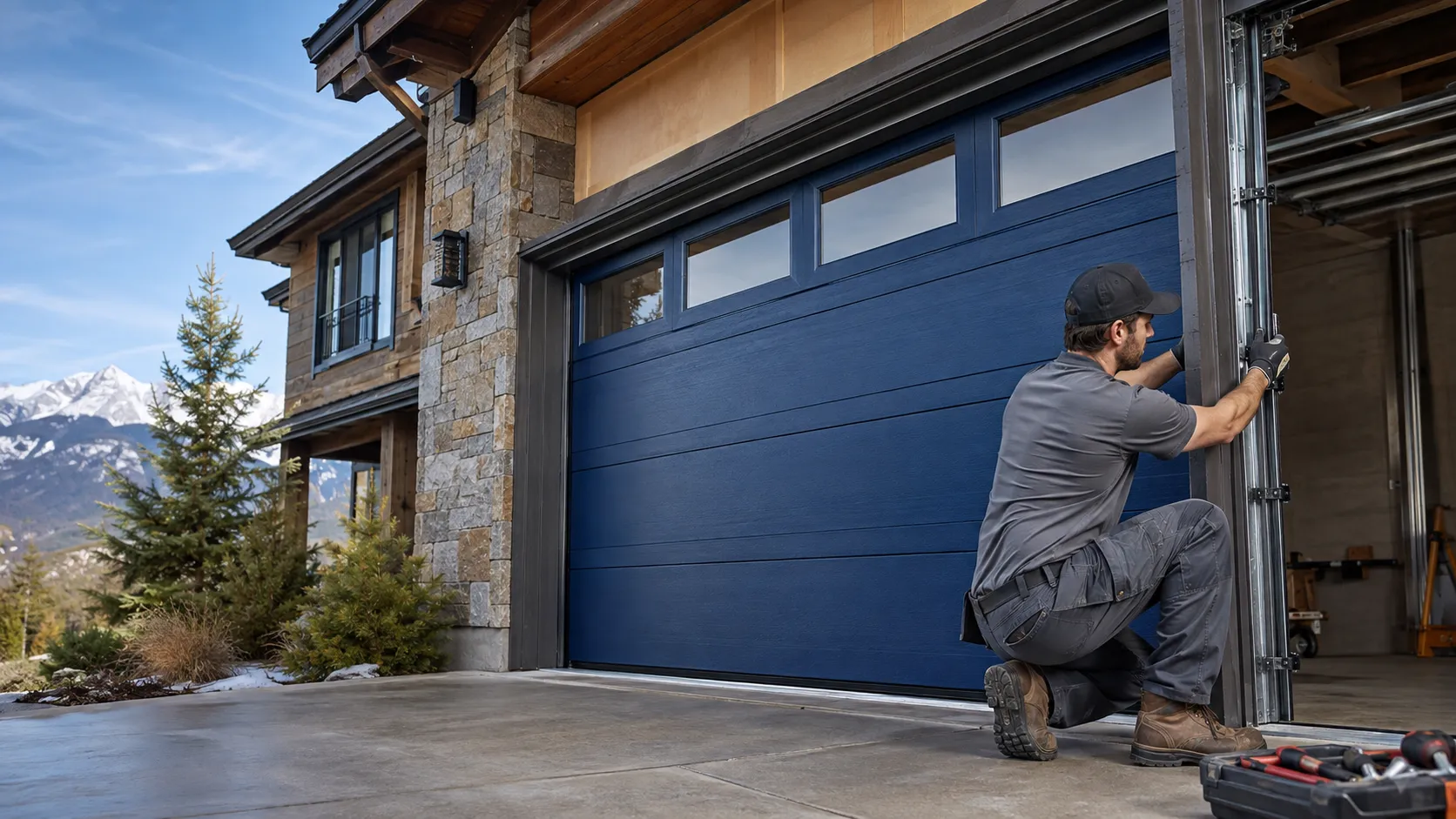
A snapped cable or a spring that's let go is not a homeowner repair - the door is under enough stored tension to break fingers or drop a 150-pound panel on a car or a person.
If the door won't open and you can hear or see a coiled spring split at the top, don't unplug the opener and force it by hand; leave it down and call.
There are a few things worth checking first: make sure the opener isn't just in lock mode, check that nothing's blocking the photo-eye sensors near the floor, and look for a disconnected remote battery before assuming it's mechanical.
Those take five minutes and rule out a false alarm. Past that, track alignment, spring tension, and cable replacement need the right bars and clamps, not a screwdriver and good intentions.
Warning signs
The most common call from this area is a torsion spring that's snapped clean, usually with a loud bang from the garage that homeowners describe as a car backfiring or a shelf falling. The door either won't budge or the opener strains and reverses partway up. Second most common: a cable frays and jumps the drum, so one side of the door hangs lower than the other, or the door runs crooked in the tracks and binds. On the newer opener units common in houses from this build era, you'll also see the logic board trip out - lights flashing, door refusing to respond to the wall button or remote, sometimes after a power blink. None of these are cosmetic; a door that's off-track or hanging on one cable can jump the tracks entirely on the next cycle.
The repair
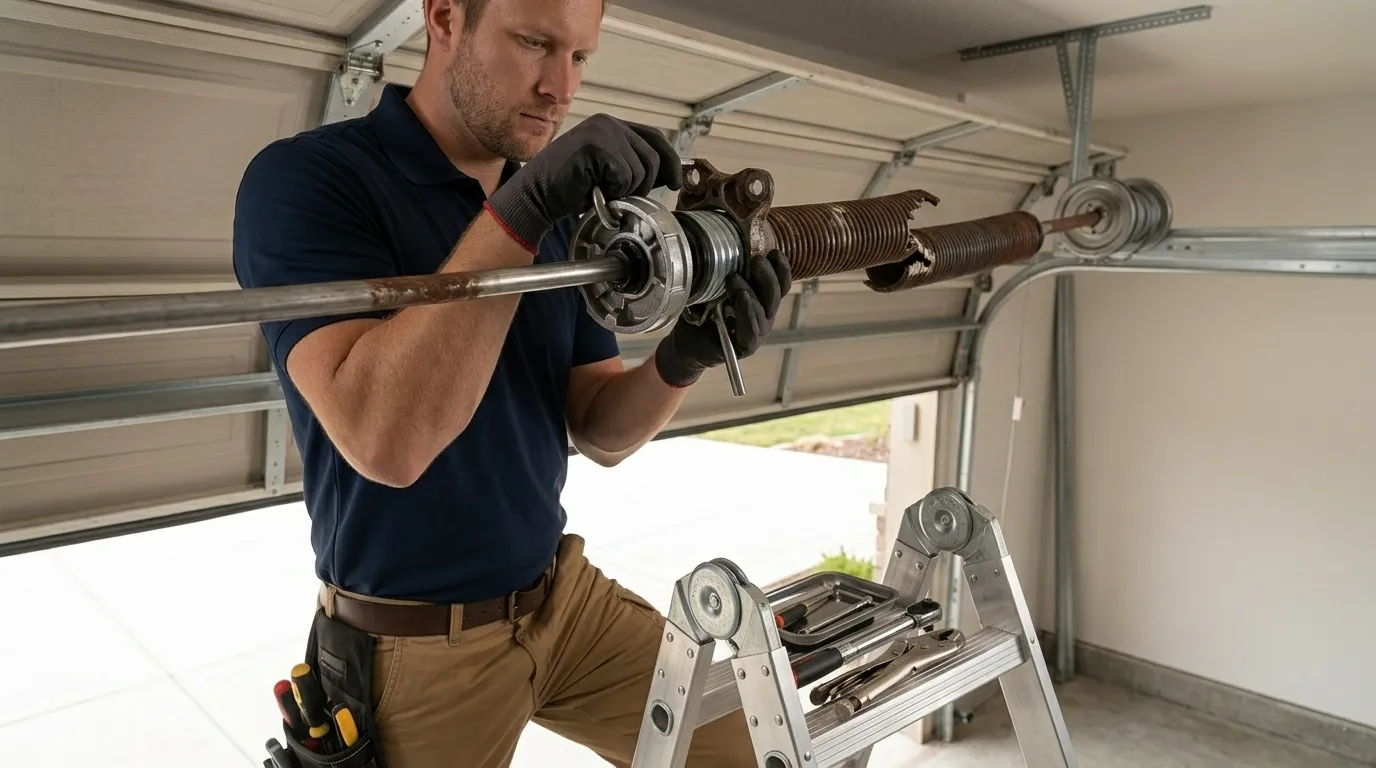
For a broken torsion spring, the job is matching the replacement to the door's weight and drum size, then winding it back to the correct number of turns with the door balanced - too few turns and the opener does all the lifting, which burns it out early; too many and the door won't stay down.
Cable jobs mean pulling both cables even if only one broke, since the other is the same age and about to go. If the opener itself has failed rather than the hardware, that's a separate diagnosis - board, motor, or a stripped gear, not something to guess at over the phone.
On a 1993-era door, we're not usually dealing with obsolete side-mount hardware, so parts are generally in stock rather than special-order, which keeps the job to one visit in most cases.

Watch-outs
The honest limitation: if the door itself is warped, badly rusted, or the track has been bent from a car hitting it, spring or cable repair won't fix the underlying problem, and we'll say so rather than patch it and have you calling again in a month. Reusing an old spring that's mismatched to a new door section is a common shortcut that causes early failure. Winding a spring to the wrong turn count is another - it either strains the opener or leaves the door too heavy to lift by hand if the power goes out, which matters in a cold-climate area where outages happen with ice and wind. On a household budget like the roughly $94,840 median in this area, most owners choose to fix once, correctly, rather than pay twice.
Pricing
We don't quote a number without seeing the door - spring size, cable length, and whether the opener needs anything play into it. What we can say is that a straightforward broken spring or cable on a 1993-built door, with standard hardware and no track damage, is a same-visit repair, not a multi-day parts wait. Homes in Pleasant Hill, 14 miles out from Blue Springs, get the same truck and the same pricing as the rest of the coverage area - distance doesn't change the rate, it just changes how fast we can get there depending on the day's route.
Questions
Pleasant Hill is about 14 miles from Blue Springs. We cover it as part of our regular service area, not as a special trip, so pricing is the same as anywhere else we run.
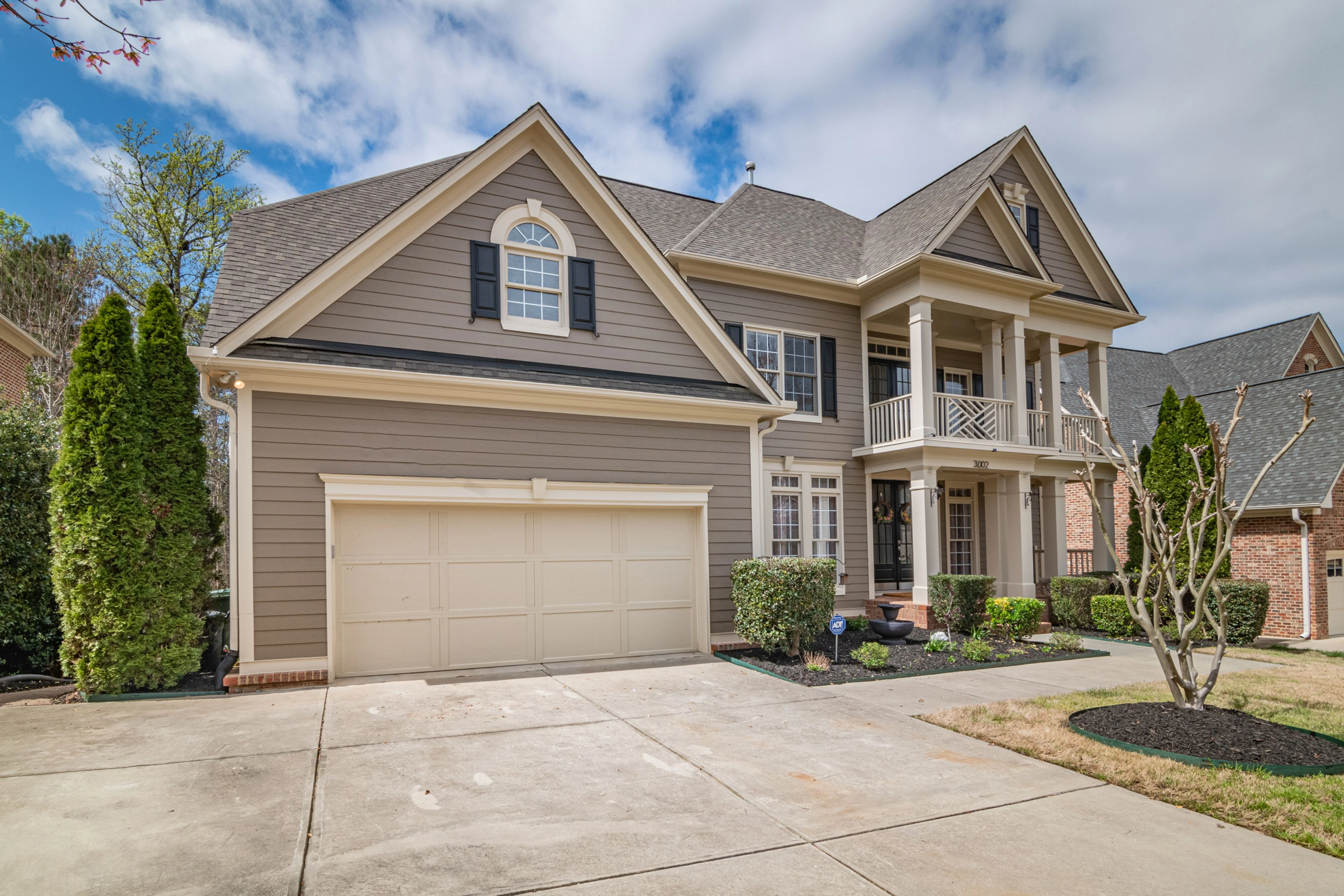
Mostly, yes. With a median build year around 1993, Pleasant Hill homes tend to have center-mounted torsion springs and standard steel sectional doors, rather than the older side-mount hardware you find on 1960s and '70s houses elsewhere in the area.
Leave it alone. A broken torsion spring means the door has no safe way to lift under its own tension. Don't force it by hand or run the opener repeatedly. Call and we'll bring the right spring size for a 1990s-era door.
For a home built around 1993, standard torsion spring and cable sizes cover most cases, so parts are usually on the truck already. If the door has been modified or damaged, we diagnose on site before ordering anything special.
Explore more
Ready when you are
Blue Springs Garage Door Pros repairs and installs garage doors, springs and openers in Blue Springs, MO and the surrounding area.