
Newer-build panel availability
That's different from a lot of the older stock across the service area, where a nonstandard width or a discontinued profile can turn a panel job into a longer wait on parts.
Grain Valley, Blue Springs
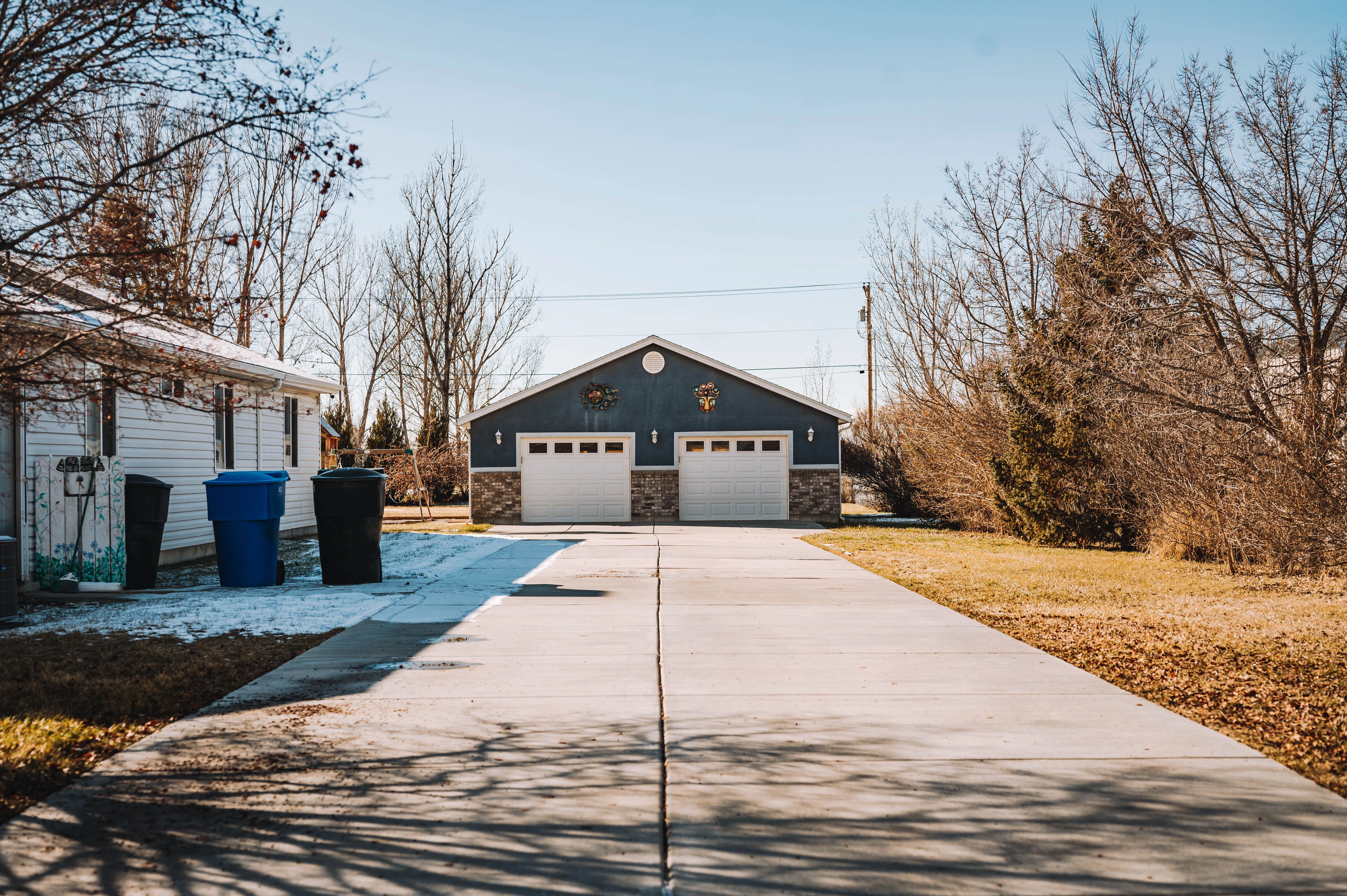
Grain Valley's housing stock runs newer than most of the service area, so panel replacement here usually means matching steel sectional doors built after 2000, not older wood panels.
Popular Services
Booking
Grain Valley has about 5,898 households, which is a small slice of the wider service area we cover out of Blue Springs. That size matters for how panel calls come in here: fewer total doors means fewer total jobs, but the ones that do come up tend to look alike, because so many of these houses were built around the same stretch of years. We don't run a separate branch or yard in Grain Valley - the truck comes the 3 miles in from Blue Springs, same as it does for the rest of the towns on that side of the county. Booking a panel job starts the same way any repair call does: we need the door's brand, the rough age of the house, and whether one panel is damaged or the whole run needs to come off. If you're not sure what you're looking at, our [Grain Valley page](/garage-doors-grain-valley/) covers the other things that go wrong on these doors, since panel damage is usually just one piece of a bigger picture on a given call.
Pricing
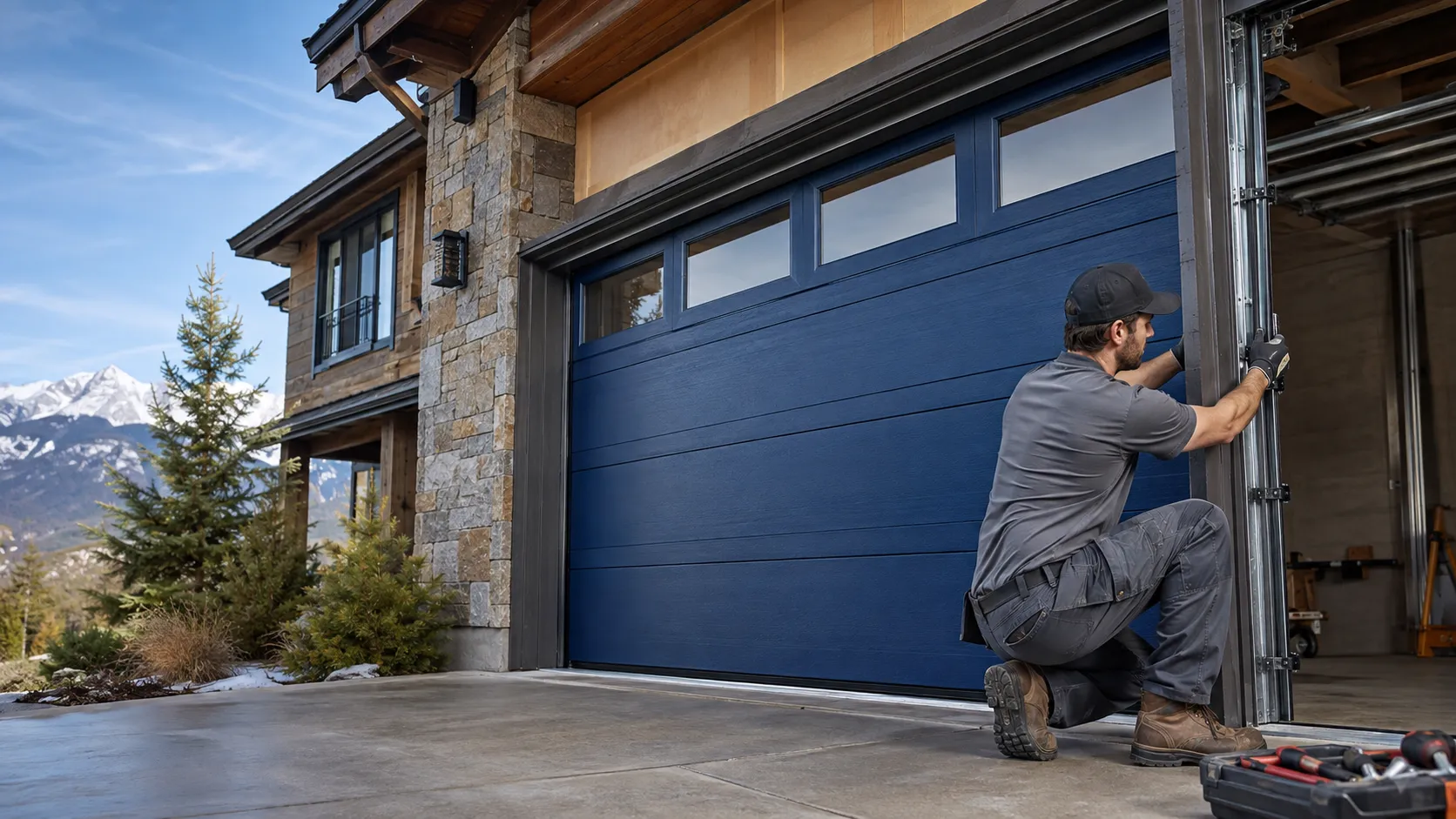
We're not going to quote a number here, because panel cost depends entirely on what's on the door, and that's where Grain Valley differs from a lot of the towns we cover. With a median build year around 2002, most doors here are newer steel sectional units, which usually means the manufacturer still makes a matching panel or a close equivalent. That's the good news. The honest limitation: if your house is one of the earlier ones on this side of town, or the door was a builder-grade model that's since been discontinued, sourcing an exact match can take longer and cost more than replacing the whole door outright. We'll tell you straight if that's the case rather than order a panel that won't sit right. For the general cost breakdown across the wider service area, including older 1960s and 70s stock, that's covered on the [Blue Springs panel replacement page](/garage-door-panel-replacement-blue-springs-mo).
Job timing
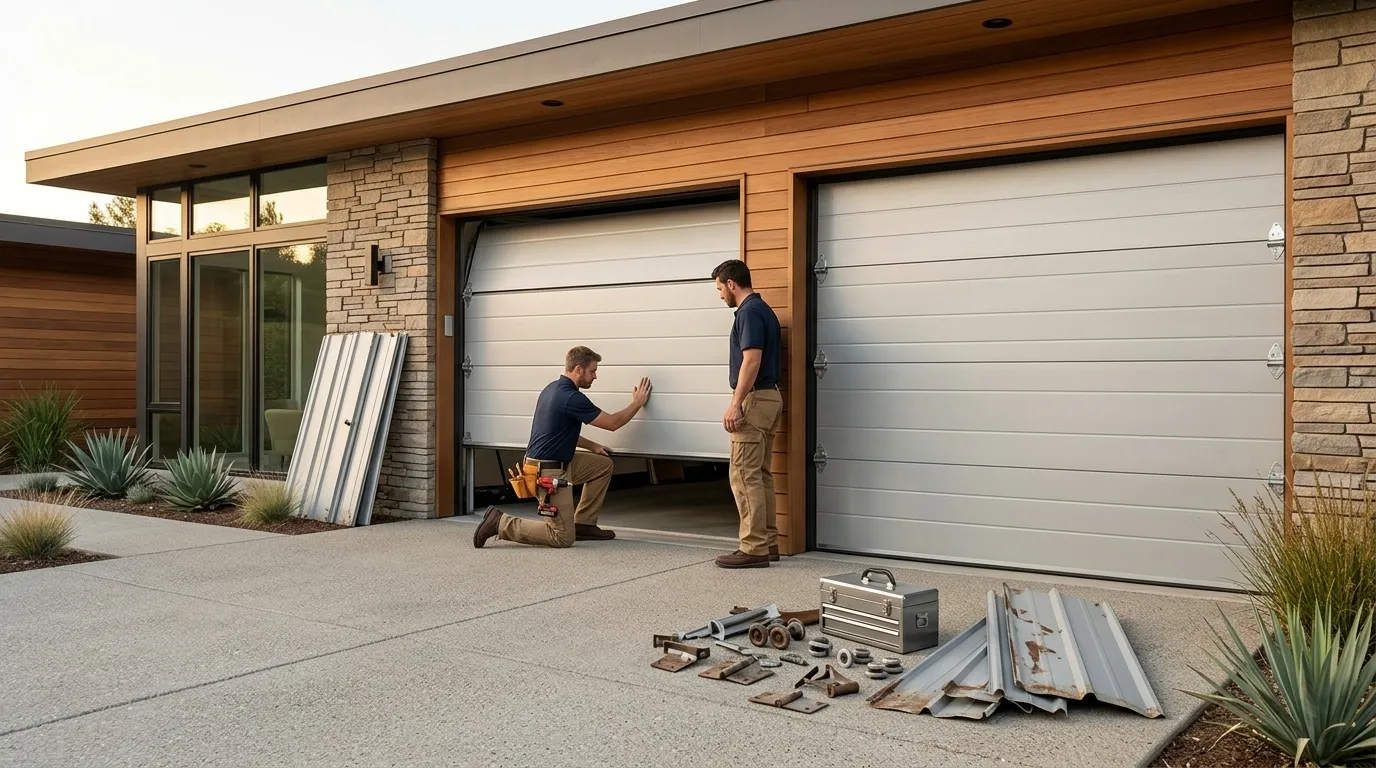
Because the houses here mostly follow standard builder sizing from the late 1990s through the 2000s, a straight panel swap is usually a single-visit job once the part is in hand - measure, order, install.
That's different from a lot of the older stock across the service area, where a nonstandard width or a discontinued profile can turn a panel job into a longer wait on parts.
The climate here is the same cold-moderate band as the rest of the area, so we're still building in insulated foam-core panels rather than the older single-skin steel some of the 1960s and 70s houses still carry.
On the day of the job itself, most of the time goes to getting the door level and the new panel seated tight against its neighbors - rushing that step is how you end up with a door that binds on the track six months later.
Warning signs
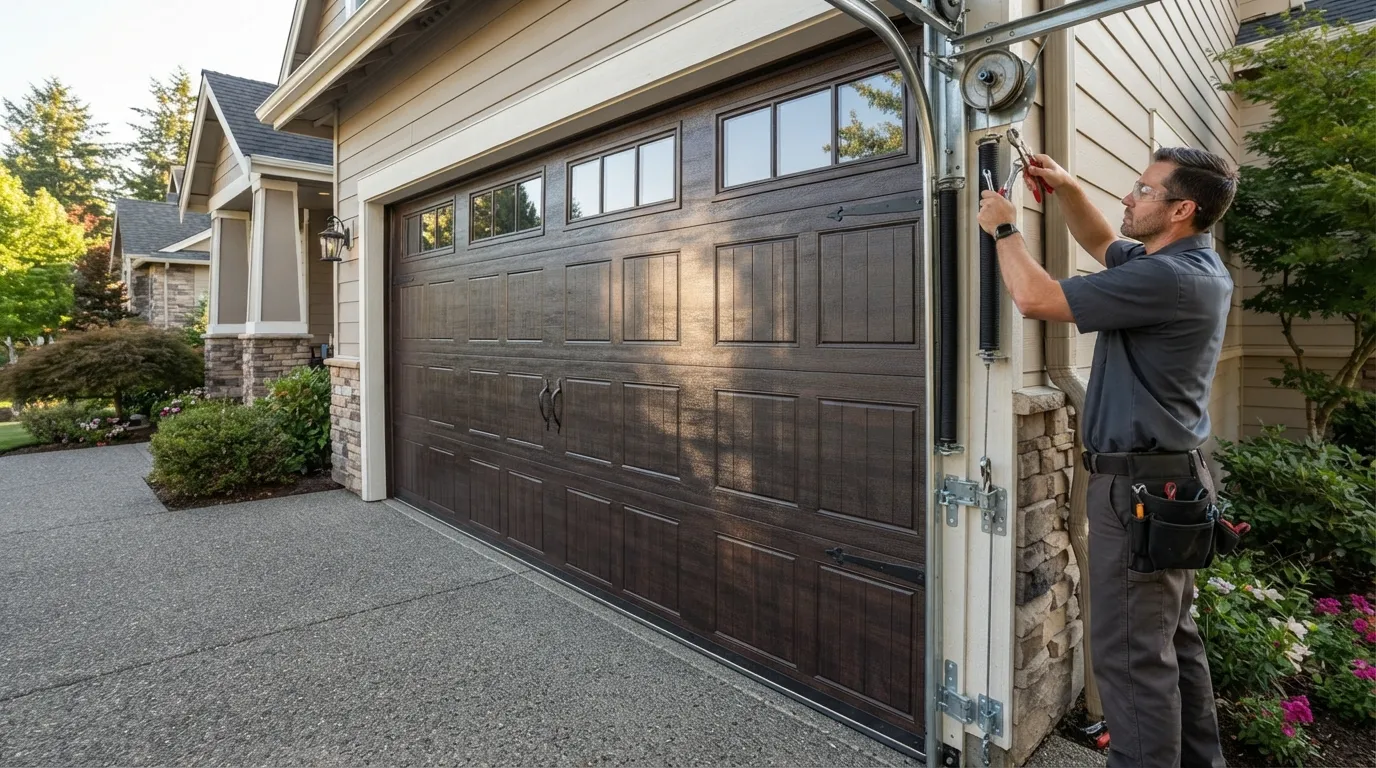
On a newer sectional door, panel damage usually shows up as a dent from a bumper or a mower, or a crack along the foam core where something's hit it square.
Because these doors are steel with an insulated core rather than solid wood, the damage tends to stay contained to one section instead of splitting a whole panel the way an older wood door can.
Cold-moderate winters put some stress on that foam core too - repeated freeze and thaw around a dented seam can widen a small crack into a bigger one over a season.
If you've got a Grain Valley house built closer to that median 2002 mark, the doors going bad are almost always the ones taking daily impact, not age failure on their own. Compare that to older houses elsewhere in the service area, where the panel itself is often just worn out rather than dented - different problem, different fix.
Questions
No. We don't run a stock depot in Grain Valley - the truck comes from Blue Springs, about 3 miles away, and panels get ordered to match your door's brand and age. Because most houses here were built after 2000, matching parts are usually easier to source than on the area's older 1960s and 70s doors.
Grain Valley's median build year runs around 2002, newer than a lot of the wider service area, which averages closer to 1974. Newer doors are steel sectional with standard sizing, so matching panels are more likely to still be made. Older doors sometimes used widths or profiles that have since been discontinued.
Often, yes, if the manufacturer still makes that panel or a close match. If the model's discontinued, or if matching just one panel would leave the door looking mismatched, we'll tell you that up front rather than order a part that won't fit right.
Explore more
Ready when you are
Blue Springs Garage Door Pros repairs and installs garage doors, springs and openers in Blue Springs, MO and the surrounding area.